

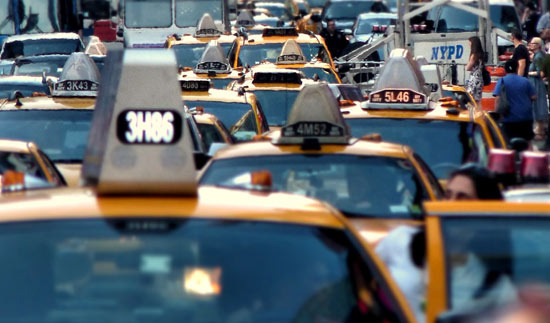
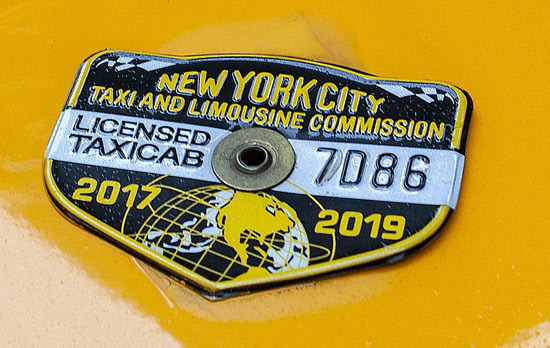
To talk about New York's yellow cabs, we must start with the medallion, to be precise.
At one time, being able to drive a yellow cab in New York was not just having a job.
It was about holding an asset. In the mid to late 2000s, and into the early 2010s, the price of medallions skyrocketed.
At its peak, one sold for over a million dollars, and the saying "you can retire with just one taxi" was no joke.
It was common to buy a medallion with a bank loan, have someone else drive, and collect rental income. In the New York immigrant community, especially among Koreans, Jews, and South Asians, yellow cabs represented one of the most realistic American dreams.
What turned the game upside down was Uber. When Uber first appeared, many taxi drivers dismissed it as insignificant. There were many claims that it was illegal, would soon be regulated, and could never survive in New York. But the outcome was the opposite.
With just a smartphone, rides could be summoned, and fares appeared transparent, making it unnecessary for passengers to hail a cab on the street. Yellow cab drivers waited for customers on the street, while Uber attracted them through algorithms. The rules of the game had completely changed.
The problem was the price of medallions. As demand collapsed, prices plummeted. Medallions that once sold for a million dollars dropped below $200,000 in just a few years, with many falling even further. Drivers who bought them with loans found themselves buried in debt.
While the debt remained the same, income decreased, making it impossible to survive.
During this process, many drivers went bankrupt, and stories of those who made extreme choices made the news.
There was also significant anger directed at New York City and the New York City Taxi and Limousine Commission.
They had promoted medallions as a safe investment, but when the market collapsed, they did nothing.
The war with Uber also played out on the streets. Protests continued, and taxi drivers shouted, "Why are the regulations different when we are in the same transportation industry?"
Insurance, vehicle inspections, and licensing costs were all much harsher for taxis.
Ultimately, New York City limited the number of Uber vehicles and introduced measures like guaranteed minimum income, but the tide had already turned.
The era when yellow cabs held a monopoly was over. While yellow cabs still remain a symbol of New York, their status is no longer what it used to be.
The price of medallions hit rock bottom and has partially recovered, but compared to the past, it is still far too low, and the past feels like a different world.
Many drivers still struggle to make ends meet. Uber drivers also find it hard to say their situation is good. Competition has heated up, and platform fees are high. Ultimately, the winner is the platform, and drivers continue to be squeezed.
Personally, I see the story of New York's yellow cabs not just as the rise and fall of the taxi industry, but as a case showing how vulnerable regulated industries can become in the face of technology.
What was once a stable retirement asset, the medallion, has become a symbol of debt in just a few years.
Even now, seeing a yellow cab on the streets of Manhattan brings a sense of nostalgia and a feeling that an era has passed.







 Victory 1988 |
 El Dorado |
 lightyear |
 Moscow Kim |
 coloradoman |
 nova nova |
 Living in the Eastern United States |

 Whisper |
 MintO |
  yentra |
  Make My Day |
  Tonky |
  viroma |
  cookie |
  Live and that's it |
  Alright Twain |
  eatontown blog |
  HAWAII Korean Church News |
  Amore |
  linex |
  Balancework |
  laro90 |
  MEDBIO American Doctor Blog |
  SWAT TEAM BLK |
  DREAM BIG |
  frostbite |
  330 Forever My Love |