

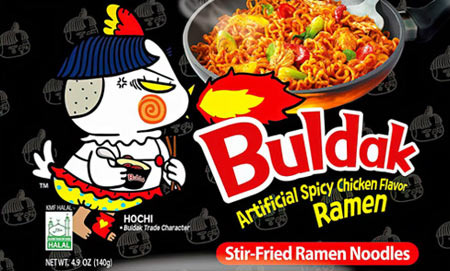
Buldak Bokkeummyeon, just hearing its name conjures up thoughts of spiciness. This instant noodle has gained immense popularity overseas in recent years, driving up the stock price of Samyang Foods as a representative hit product. First launched by Samyang Foods in 2012, Buldak Bokkeummyeon captivates many with its addictive flavor, combining intense spiciness and umami. When it was first released domestically, it gained popularity due to its unique preparation method of being stir-fried without broth, despite initial reviews stating it was "too spicy." Later, as videos of spicy noodle challenges became popular on YouTube, it gained international fame.
The spiciness of Buldak Bokkeummyeon does not hit you immediately; the first bite offers a blend of sweet and salty flavors, making the heat less noticeable. However, as time passes, the spiciness intensifies, strongly stimulating the mouth. This heat can be painful for those who are not accustomed to spicy food, often leading them to desperately seek milk or cold water. For us Koreans, the spiciness is quite intense, leaving a lingering, unique aftertaste of capsaicin. It measures 4,404 SHU on the Scoville scale, and the absence of broth makes the spiciness even more pronounced. Compared to other instant noodles, Buldak Bokkeummyeon feels spicier precisely because it lacks broth.
When eating Buldak Bokkeummyeon, one should be cautious of stomach irritation. Eating it on an empty stomach or too quickly can irritate the stomach, leading to pain, and in severe cases, it can cause abdominal issues during bowel movements. To prevent this, it is advisable to eat foods like milk or eggs beforehand to protect the stomach. Additionally, consuming it with alcohol can put a significant strain on the body, so it is best to avoid that, and eating it before bed can also cause discomfort, so moderation is recommended.
To alleviate the spiciness, consuming milk, soy milk, or tomato juice can be effective. Milk helps dissolve capsaicin, reducing the heat, and many foreigners are often seen drinking a glass of milk while eating Buldak Bokkeummyeon in YouTube videos. Watching them raises the question, "Why do foreigners want to eat such spicy food?" but it is an interesting phenomenon that their adventurous spirit ultimately leads them to enjoy the heat.
In fact, the addictive nature of Buldak Bokkeummyeon comes from the strong capsaicin stimulating the pain receptors. Spiciness is pain, but the brain releases endorphins and dopamine to cope, creating a pleasurable effect. Thus, those who enjoy spicy food find themselves seeking that feeling again after eating Buldak Bokkeummyeon. The search for strong stimulation to relieve stress, followed by the mental clarity afterward, can drive one to crave Buldak Bokkeummyeon again.
In conclusion, Buldak Bokkeummyeon is the best choice for those who love spicy food, but it can be a significant challenge for those who are not accustomed to it. However, the hidden addictiveness within that spiciness can be an attractive element that makes one want to try the noodles again.
As of 2025, Buldak Bokkeummyeon is displayed in supermarkets worldwide, establishing itself as a challenging food that attracts young people globally, beyond just being a simple K-culture phenomenon.







 Moscow Kim |
 Seattle - Emerald City |
 self-evaluation |
 Sandiego Auntie |
 Karina's Blog |
 Dollydori, Lover of Movies |
 Anytime Journey |
 Living in New Jersey blog |
 ringwinds |
 Finding Superfoods |
  lightyear |
  song bang |
  vexomo |
  Indiana Jones |
  meloncat |
  novapixel |
  mortrix |
  Esther 1983 |
  fortbliss |
  My Two Way |
  toastyfox |
  FLORIDA Acus |
  tracker |
  TONTON COFFEE |
  sunrise |
  ultron78 |
  uplifted |
  Folding Instructions |