
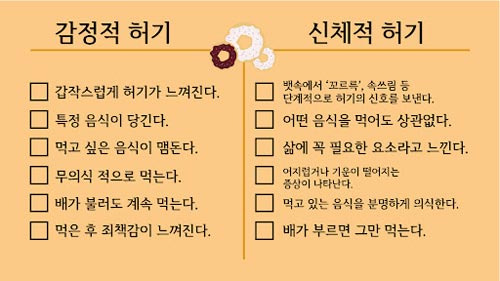
There are days like this in life.
Suddenly, I really want chicken.
I thought it would just be a one-time thing, but I find myself thinking about it the next day. I stop by a convenience store and buy a chocolate bar, and for days, I keep reaching for it. Some people crave ramen, others crave bread, and some crave soda.
"Am I weak-willed?"
Many people think this way.
But it's not just a matter of willpower.
It's because our brains are wired that way.
There is something called the 'reward system' in the human brain. When we eat delicious food, a neurotransmitter called dopamine is released. It's often referred to as the happiness hormone, but more accurately, it signals "do this behavior again."
For example, imagine you eat chicken after work and feel relieved from the stress accumulated throughout the day.
Your brain remembers.
'Chicken = feeling good'
The next time you feel stressed, you'll seek out chicken again.
It's not just because you're hungry; it's your brain recalling that memory.
Especially sweet and fatty foods trigger this response more strongly.
The reason you keep thinking about foods like ice cream, hamburgers, pizza, and snacks is related to this.
These foods are also connected to the environment in which our bodies evolved.
In the past, you never knew when you would find food.
So, when high-calorie food was available, it was advantageous for survival to eat as much as possible.
This habit has persisted into modern times.
The problem is that now there is too much food available.
Whereas in the past, you had to hunt hard for food, now you can just open an app on your phone to see pictures of food.
Convenience stores are open 24 hours, and there are snacks in the fridge.
Your brain operates as it did thousands of years ago, but the environment has completely changed.
Another interesting fact is that lack of sleep makes you crave more food.
When you're sleep-deprived, the hormonal balance that regulates appetite is disrupted.
The signal for feeling full weakens, while the signal for hunger strengthens.
That's why after a sleepless night, you crave high-calorie foods like hamburgers or ramen more.
Stress also has a significant impact.
Have you ever come home after being scolded at work and eaten an entire bag of snacks?
When we're stressed, our bodies try to quickly gain energy.
So, we tend to seek out sweet foods or carbohydrates.
This is sometimes referred to as 'emotional eating.'
The same goes for boredom.
You might not be hungry, but you keep opening the fridge.
You're looking for something to stimulate your mouth.
At this time, it's often not food you need, but rather stimulation.
However, simply resisting what you want to eat isn't the answer.
In fact, if you resist too much, it can lead to binge eating at some point.
Experts advise eating moderately but first considering why you want to eat.
Are you really hungry?
Are you stressed?
Are you bored?
Are you sleep-deprived?
Just knowing the difference can significantly change your eating habits.
Eating enough protein and fiber, drinking water regularly, and getting about 7-8 hours of sleep can also help.
Interestingly, many people find that their snacking decreases the day after a good night's sleep.
If a specific food keeps popping into your mind all day, affecting your daily life or leading to binge eating and guilt, consulting a professional can be a good idea.
Eating is not just a matter of willpower; it's the result of the interplay between the brain, emotions, hormones, and lifestyle habits.
Ultimately, the reason adults crave certain foods repeatedly is not because of weak willpower, but because our brains keep recalling the memory that "that food made me feel good."
Understanding this principle allows you to manage your cravings more wisely rather than blaming yourself. Healthy eating habits start not with restraint, but with understanding your body and brain.






 American Hardcore Band |
 Rice Shop Uncle BLOG |
 Baguette Blog |
 solvix18 |
 novapixel |
 Min's blog |

 Live and that's it |

 Generation X |
 coloradoman |
  lumora |
  Valley Bang |
  pravix22 |
  Cohesive Kong |
  werehere |
  problemo |
  galaxy88 |
  breezelove |
  Minnesota Sonata N |
  hazelnut |
  Korean News American Blog |
  AH LALA |
  Savion |
  pintos |
  Good Good |
  oh my salami |
  Lemonade Cider Planning Director |
  Way to easy |