
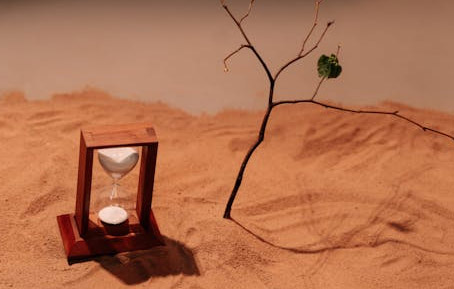
"When did time begin?" is a very profound and philosophical question that prompts exploration of various perspectives on the nature of the universe and existence.
There are various philosophical and scientific interpretations of this question, but primarily the following perspectives are presented.
The most widely accepted theory in current cosmology is the Big Bang theory. According to this theory, the universe began approximately 13.8 billion years ago with a massive explosion known as the Big Bang, at which point both time and space in the universe also began.
It is claimed that before the Big Bang, time itself did not exist. In other words, the concept of "when" is established only after the universe and time were born simultaneously, so the beginning of time can be seen as starting with the Big Bang.
In philosophy, there are various discussions about the nature and beginning of time. For example, Aristotle defined time as the measurement of change, arguing that time only has meaning when change and movement exist.
Therefore, it can be said that time exists only when change begins. In other words, time also began when the universe started to change, and this beginning of change can be understood as the Big Bang.
Some philosophers view time cyclically. For instance, the ancient Greek philosopher Heraclitus said, "Everything flows," understanding the flow of time as an eternally repeating cycle.
From this perspective, there is no clear beginning or end to time, and time can be seen as an endlessly repeating periodic phenomenon.
According to Einstein's theory of relativity, time is not absolute but relative. This means that time is affected by different speeds and gravitational influences, causing its flow to vary.
According to the theory of relativity, time is merely a relative concept associated with specific physical events, and it cannot be said to have started identically across the entire universe, making it difficult to clearly define the beginning of time at a specific point.
Theologically, many religions believe that time began with the creation of God. For example, in Christianity, it is believed that God created the universe and time.
In this case, time began as part of God's creative activity, and the beginning of time is considered an event determined by God's intention and plan. From this perspective, time is part of divine order, and its beginning can be understood as identical to God's act of creation.
The question "When did time begin?" can be interpreted differently across various fields such as science, philosophy, and theology. According to the Big Bang theory, the universe began with a massive explosion approximately 13.8 billion years ago, and time can be seen as having begun then.
However, from a philosophical perspective, the beginning of time can be understood in relation to the nature of change and existence, while from a theological perspective, it can be said that time began with God's creation.
This question allows for various interpretations regarding the nature and beginning of time, and the answers may differ depending on the perspectives of each field.








 Weekend Movie Blog |
 Beauty, Health, Lifestyle Blog |
 coloradoman |
 Superman Cat Blog |
 Victory 1988 |
  Korean Mom |
  My NYC |
  moo moo |
  Mr Oh |
  forevergee |
  festival |
  manchester |
  constant |
  Leapfrog Move |
  vibranto |
  Tora Tora |
  yellowbutter |
  Dolly |
  US Embassy |
  NYC saladbar |
  Finding Superfoods |
  lightyear |
  song bang |
  vexomo |
  Indiana Jones |