
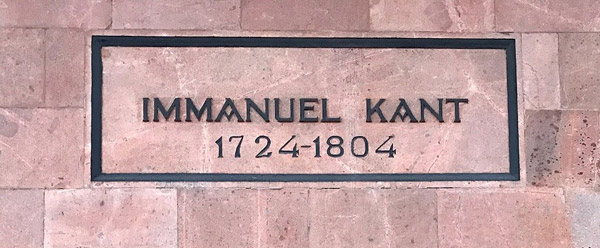
Immanuel Kant (1724-1804) was a German philosopher who created a significant turning point in modern philosophy. Through his representative philosophical achievements, Kant reestablished the foundations of epistemology and ethics. In particular, in his work "Critique of Pure Reason" (1781), he clearly distinguished between empirical knowledge and the role of reason, providing deep insights into how we perceive the world.
Kant addressed the fundamental question of how humans perceive the world. He moved away from the existing discussions of empiricism (Hume) and rationalism (Descartes) and set new conditions for perception. Kant argued that human perception is shaped by a priori conditions. In other words, the basic structures and frameworks necessary for us to perceive the world are not obtained through experience but are inherent abilities from birth.
Through the concept of 'a priori synthetic judgments', he explained that when we perceive the world, we do not simply accept data from the external world but interpret that data through the concepts and frameworks we possess. Humans experience 'phenomena' through their senses, but these phenomena are merely constructed by the frameworks of perception we have.
The Categorical Imperative is the command to "Act in such a way that your action could become a universal law." In other words, one must consider whether the same action could be demanded of others. Through this, Kant placed the standard of moral action not on subjective feelings or situations but on rational and universal principles. This approach emphasizes human dignity and implies that each individual should be respected as an end in themselves.
Kant believed that free will is necessary for humans to act morally. He defined freedom as the ability to make decisions autonomously, arguing that humans should determine what they ought to do through rational judgment, rather than being influenced by external factors or instincts. For Kant, freedom is not merely following desires but the ability to do what is rationally right, which is an essential condition for following moral laws.
Kant was greatly influenced by 'Newtonian science' and emphasized a rational and systematic approach to exploring natural laws.
Kant's philosophy later had a profound impact on modern philosophy, including German idealism. Subsequent philosophers, including Hegel, developed or critiqued Kant's theories, deepening his philosophical legacy. Additionally, Kant's ethics played a crucial role in forming the foundations of modern moral philosophy, such as theories of rights and justice.
Kant's philosophy continues to provide important standards in modern epistemology and ethics, and his way of thinking centered on reason, freedom, and morality remains the basis for many philosophical discussions today. He addressed the core issues of philosophy in new ways, leading modern philosophy to significant milestones.








 Magic Cabbage School of Martial Arts |
 Vacation on Hawaii |
 morvex37 |
 Ari Songhan American Immigration Life |
 Bearded Strawberry Smoothie |
 Doori Ark |

 Min's blog |

 Generation X |
  Anytime Journey |
  Mrs. Duluth |
  jaxter |
  Atlanta Mama |
  Baguette Blog |
  US Embassy |
  Korean Mom |
  My NYC |
  moo moo |
  Mr Oh |
  forevergee |
  festival |
  manchester |
  constant |
  Leapfrog Move |
  vibranto |
  Tora Tora |
  yellowbutter |
  Dolly |
  NYC saladbar |