
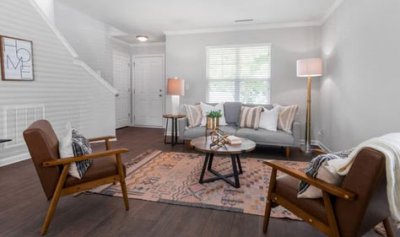
Last month, a couple I met was contemplating their home of over twenty years in Ann Arbor. They mentioned that carrying groceries up to the second-floor kitchen and going back and forth to the basement laundry room no longer felt the same. Since having knee surgery, each step felt more significant. Such consultations have been on the rise lately, as Korean families approaching retirement weigh whether to keep their current single-family homes or move to a condo or townhome that requires less maintenance.
First, let's look at the costs. The average price of a condo in Ann Arbor is $463,524, while single-family homes are around $628,252. Simply put, moving to a condo could free up over $160,000 just from the home price. However, condos come with an HOA fee, which can be thought of as a maintenance fee for the community. In Ann Arbor, this ranges from $200 to $400 per month, and for properties with better amenities, it can go up to $500.
The issue is heating costs. Ann Arbor falls under DTE Energy, with rates at 20.13 cents per kilowatt-hour. For a household using an average of 886 kilowatt-hours per month, this translates to about $178 monthly or approximately $2,140 annually. Across Michigan, heating and cooling account for nearly half of electric bills. Single-family homes tend to have higher heating costs in winter due to their larger space and higher ceilings, while condos often share a wall with neighbors, resulting in less heat loss.
Property taxes are another consideration. Ann Arbor has a tax rate of about 1.5%, meaning a $450,000 home would incur around $6,750 annually. One important point to note is Michigan's Proposal A, which caps the taxable value of a home at the lower of the inflation rate or 5% as long as the owner remains in the same home. This means that older homes are often taxed at a lower rate than their actual market value. Conversely, purchasing a new condo would result in a reassessment at the current market value, potentially leading to higher taxes, which many overlook.
For those over 62, there is a summer deferment program that allows for postponing property tax payments, and if income is below a certain level, they can apply for the Homestead Property Tax Credit, which can refund up to $1,900. As of 2025, this applies to households with an income of $71,500 or less, with reductions starting at $62,500.
Active senior communities, which typically require residents to be 55 or older, are also worth considering. Many of these communities include lawn care and snow removal in their fees, which can be a significant convenience for those who may not be as physically capable as before. However, since HOA fees are a fixed monthly expense, it's essential to calculate whether this fits within a fixed income after retirement.
If they decide to maintain their single-family home, they should also consider unexpected large expenses that can arise annually, such as for roofs, boilers, or plumbing. In contrast, condo repairs for common areas are typically covered by the HOA reserve fund, resulting in relatively lower financial burdens. However, if the reserve fund is insufficient, special assessments may arise unexpectedly, so it's wise to check the HOA's financial status when viewing properties. For retired families with independent children, access to hospitals and large grocery stores often becomes a more critical factor than school districts.
The couple, who were concerned about stairs, ultimately decided to organize their options, including community amenities, management fees, and remaining mortgage balances, into a table to make their decision. They confirmed that while maintaining a single-family home would result in higher monthly expenses, the property tax burden would be lower. The right choice varies for each family. Tax laws, rental regulations, and mortgage conditions can differ by county, so it's advisable to consult with a tax advisor or real estate professional before finalizing any contracts. This article is intended as general market information, not investment or legal advice.
 redsunwalker2001
 SilverCloud96






 Sugar Cream Door Bulletproof Noodles |
 urbanmint |
 |
| 
 Premium Gas Camp |
 CA Real Estate |
 saffronroute |
 crumb |
 marydock |
 rosem |
  horse |
  moodansa 77 |
  zymit |
  maplefox |
  Fun Flex Life |
  hopeful |
  Reeno |
  Coastal city |
  meonetoo |
  Winter bear |
  Peach Jam Eating Laughter |
  Nando Raldo |
  American Man in a Mask |
  wendra |
  silver |
  bada2002 |
  horizon |
  Nanana Nanana Nanana |
  victoria jung |
  Kkikki Ppappa Shout Out Loud |