

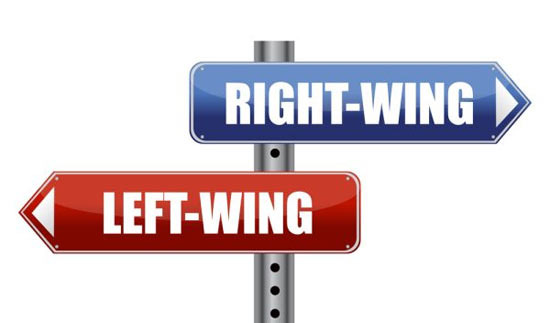
When I see the constant fighting between the right and left in the U.S. based on the two-party system of the Republican and Democratic parties, it sometimes feels like a sports rivalry.
It makes me wonder if we are even from the same country, as communication seems impossible. In the past, we fought over more realistic topics like whether to raise taxes or how far to go with welfare, but those days are long gone.
Now, under the Trump administration following Biden, it seems to me that the conflict is almost entirely about identity rather than policy.
First comes the question of whose side you are on, and only then does the content follow. The right sees the left as people trying to ruin the country, while the left views the right as outdated obstacles.
The reason I avoid political discussions with Americans around me is that I have no idea whether they are right or left. So, if I carelessly bring up political topics that correspond to the opposite side, I often find out later that I have become a target of avoidance.
These days, the media is pouring fuel on both sides. The right only watches right-wing channels and nods along, while the left watches left-wing channels and is convinced that the other side is the problem. Even with the same event, one side claims democracy is collapsing, while the other says justice has been served. Both narratives make sense within their own screens.
Social media exacerbates this. If you speak ambiguously from the middle, no one pays attention. Instead, angry and provocative statements, which label the other as fools or villains, spread rapidly. From the algorithm's perspective, conflict generates good business.
As a result, compromise becomes a boring choice, and only extreme attitudes receive applause. Adding economic issues to the mix complicates things further. As the middle class crumbles and life becomes tougher, people prefer simple scapegoats over complex explanations. Blame the immigrants, blame the big corporations, blame the Washington politicians—anything will do. The problem is that this anger increasingly targets the entire opposing side.
At some point, politics has become not a tool for solving problems but an outlet for stress. Differences in religion, race, and region further solidify this conflict. The daily lives of urban and rural, coastal and inland, educated and uneducated people are vastly different. Opportunities to actually meet and talk have decreased. If we were to meet in person, we would surprisingly find common worries about rent, medical expenses, and children's education, yet we mainly see each other as characters on a screen.
This leads to a strange situation where compromise feels like betrayal, and standing in the middle results in being criticized by both sides.
Ultimately, this conflict is less about who can propose better policies and more about proving whose side you are on.
Therefore, it is unlikely to end easily. To stop this, we need the patience to see each other not as enemies but as neighbors who have made different choices, but American society is currently too busy and too angry.
In my opinion, it seems likely that this animosity will continue for the time being. It feels like it's time for everyone to learn how to hide their tendencies or express them diplomatically.






 Korean Mom |
 novapixel |
 Peter Pan Pet |
 horse |
 Sunset Oregon |
 Eldorado 88 |

 Washington Monument |
 heartbreaker |
  US Embassy |
  My NYC |
  moo moo |
  Mr Oh |
  forevergee |
  festival |
  manchester |
  constant |
  Leapfrog Move |
  vibranto |
  Tora Tora |
  yellowbutter |
  Dolly |
  NYC saladbar |
  Finding Superfoods |
  lightyear |
  song bang |
  vexomo |
  Indiana Jones |