

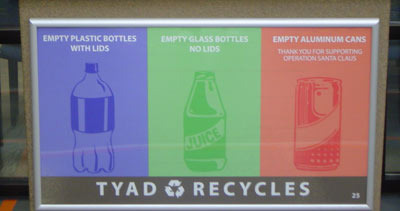
To elaborate on the recycling industry in the United States, it goes like this.
In simple terms, this industry is not just about throwing away trash, but extracting reusable resources to create new value. It has become a significant industry economically, beyond just protecting the environment. Currently, the value generated by the recycling industry in the U.S. amounts to hundreds of billions of dollars annually, and it also creates many jobs. From waste collection to recycling plants and the manufacturing of eco-friendly products, it has become a crucial pillar that increases employment and drives the economy.
The importance of recycling is clear. It plays a significant role in preventing resource waste, reducing greenhouse gas emissions, and stopping the depletion of Earth's resources. Common recyclable items include plastics, metals, paper, and glass, and reusing these materials makes it much more efficient as less raw material needs to be extracted.
The recycling process may seem simpler than it is, but there are important steps involved. First, waste generated from homes, businesses, and commercial facilities needs to be collected and sorted by type. Each region operates a system to separately collect glass, plastics, metals, and paper to send to recycling centers. The next step is at the factory stage, where the separated resources are reprocessed into new products. Plastics become new plastic products, metals turn into machine parts, and paper is transformed back into paper products.
However, one issue is that the U.S. used to export a lot of recycling resources to China, but recently, as China has restricted imports, there is a growing need to handle these materials domestically. Therefore, the recycling system is currently being restructured to focus on the domestic market, and the development of new technologies has become more important.
But there is still a long way to go. The overall recycling rate in the U.S. is lower than expected, especially for plastics, where the recycling rate is insufficient due to technological limitations. Moreover, contaminated waste or mixed materials are difficult to recycle, so it is essential for consumers to properly separate their waste.
In the future, more advanced technologies will be needed. Especially for plastics, new recycling processes must be introduced, and it is also important for the prices of recycling resources to remain stable in the market. This is because fluctuations in the prices of recycling resources can disrupt factory operations or system maintenance.
Ultimately, the recycling industry in the U.S. is an important field that captures both environmental protection and resource recycling while also contributing economically. If combined with a circular economy model and technological innovation, it could develop even further, but it is also true that there are many challenges to overcome. Therefore, building efficient systems, consumer education, and technology development will likely be key tasks moving forward.






 El Dorado |
 lightyear |
 Moscow Kim |
 coloradoman |
 Montgomery Mom |
 Eldorado 88 |


 Washington Monument |
  DREAM BIG |
  frostbite |
  330 Forever My Love |
  dralix58 |
  Gorama Round |
  Skydiving |
  dreamport |
  Yellow Snowman |
  Toaster Pizza Magic Show |
  velvetnom |
  Anytime Journey |
  Mrs. Duluth |
  jaxter |
  Atlanta Mama |
  Baguette Blog |
  Tan Sol |
  US Embassy |
  Korean Mom |
  My NYC |