

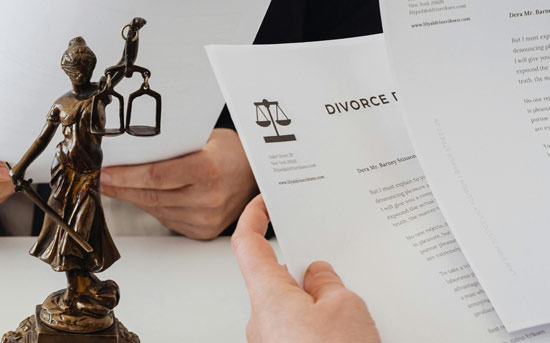
Transferring assets to a spouse right before bankruptcy and then divorcing is risky.
Today, I want to discuss the topic of sham divorces, which have been frequently debated in both the U.S. and Korea, and are treated very seriously under the law.
It can be confusing because there are cases of sham divorces that appear to be legal paper divorces, where individuals try to hide assets and debts. These cases are consistently reported in the news.
Sham divorces and paper divorces may seem similar at first glance, but they have clear legal distinctions. A sham divorce is essentially a fraudulent divorce. It involves a clear intent to deceive the government, creditors, or the court, using divorce as a means to gain illegal benefits such as immigration, tax evasion, bankruptcy, or debt avoidance while actually maintaining a marital relationship. The key here is intent. If it is revealed that the purpose was to deceive from the beginning, it can be considered fraud and lead to criminal penalties.
On the other hand, a paper divorce is legally valid. It involves a genuine dissolution of the marriage, with some degree of separation in living arrangements, and often lacks illegal intent. However, because it is referred to as a paper divorce, it can easily be misunderstood, but it is based on a legitimate mutual agreement or the actual end of the relationship. The problem arises when, despite having a paper divorce, if the couple's real-life situation does not change at all or if they maintain a financial partnership, the court or government may reclassify it as a sham divorce. Ultimately, the difference between the two lies not in form but in true intent and actual living circumstances.
This topic is particularly sensitive among those who frequently travel between Korea and the U.S. or are considering settling in the U.S., as it often comes up in discussions as "I heard there are ways to do that."
A sham divorce refers to a situation where the divorce appears to be finalized on paper, but the actual life remains almost unchanged. The husband may have significant debts or be on the brink of bankruptcy, transferring assets to the wife's name in advance.
Even though they are divorced, they continue to live together, and to outsiders, their relationship does not seem to have deteriorated at all. While it may seem like a rational choice for cool adults, the legal implications are entirely different.
The reasons behind such choices are simpler than one might think. They stem from practical calculations like wanting to protect assets before bankruptcy, reduce taxes, or gain advantageous positions regarding immigration status or welfare benefits. In the U.S., issues like bankruptcy records, tax problems, and medical expenses can become significant burdens throughout one's life, leading to the temptation of thinking, "Isn't it enough to just have a formal divorce?"
However, U.S. courts and government agencies scrutinize these situations very closely. They rigorously investigate whether the divorce was genuine or merely a performance to deceive someone. If the couple continues to live at the same address after the divorce, shares living expenses, or has intertwined bank accounts, insurance, or credit cards, they immediately become subjects of suspicion. If family photos are still posted on social media and there are signs of celebrating anniversaries, it raises even more red flags.
Particularly, transferring assets to a spouse right before bankruptcy is extremely risky. Such actions can be classified as fraudulent asset transfers, and in severe cases, the divorce judgment itself can be nullified. Tax issues are also significant.
If a couple continues to live as an economic unit after divorce, tax authorities may not recognize the divorce and may demand back taxes and penalties all at once. If immigration status is involved, the situation can become even more serious. In such cases, it can escalate to criminal issues, potentially leading to deportation or bans on re-entry.
Ultimately, while a sham divorce may seem like a clever workaround, it is more akin to a gamble that risks one's entire life.
The law is much more meticulous than one might expect, and legal issues will inevitably arise over time. The path chosen to take a breather can turn into a much larger bomb years down the line, so caution is advised.
 NicoleKick






 lightyear |
 Moscow Kim |
 coloradoman |
 Montgomery Mom |
 GOGO SING |
 Weekend Movie Blog |
 Beauty, Health, Lifestyle Blog |
 Superman Cat Blog |
 novapixel |
  Atlanta Mama |
  Baguette Blog |
  US Embassy |
  Korean Mom |
  My NYC |
  moo moo |
  Mr Oh |
  forevergee |
  festival |
  manchester |
  constant |
  Leapfrog Move |
  vibranto |
  Tora Tora |
  yellowbutter |
  Dolly |
  NYC saladbar |
  Finding Superfoods |
  song bang |