
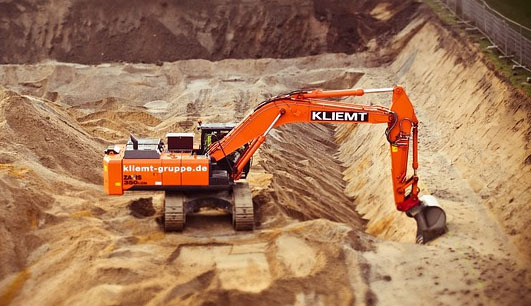
Those who know well understand that NIMBY stands for "Not In My Backyard," which literally means "not in my backyard."
It is used when people agree that development projects or public facilities are necessary, but oppose them being located in their neighborhood.
For example, "We need a homeless shelter. But building one right in the middle of our Korean town is not okay, right?"
"I know we need to increase apartment supply, but not next to my child's school."
"A crematorium? Absolutely not next to our complex."
This kind of attitude is called NIMBY.
Even if a facility is essential for society as a whole, people oppose it out of fear that their property values will drop, the atmosphere will be ruined, or traffic will become congested.
The term NIMBY is believed to have originated around the 1980s. It started with debates over nuclear power plants, landfills, and prisons. Later, it expanded to topics like apartment development, transportation facilities, and low-income housing, growing into a political and social issue.
Now, NIMBY is used to mean more than just simple self-protection.
"Cities must move beyond NIMBYism to grow."
Criticism of this is increasing. The opposing trend is YIMBY—"Yes In My Backyard."
NIMBY means 'I know it's necessary, but not in my neighborhood.'
YIMBY means 'Sure, it's fine to do it in my neighborhood.'
One of the interesting trends in the U.S. real estate market these days is YIMBY, or "Yes In My Backyard."
In the past, when there were plans to build apartments in the neighborhood, residents would protest vigorously. "Our neighborhood is a single-family home district!" They would gather with neighbors in front of city hall, holding signs and raising their voices at public hearings. But now, the atmosphere is slowly changing. Especially the younger generation, who are experiencing the housing shortage firsthand, are starting to question, "Why are we being blocked from building houses in our neighborhood?"
I am a real estate agent in my 40s. I go around different neighborhoods, looking at land and reading the atmosphere and direction of the wind in those areas.
In the past, in cities like LA or San Francisco, where regulations were strict, it took a long time and was a headache to build even a single new building. But these days, strangely enough, it is from those very cities, where housing prices have skyrocketed, that people are starting to say, "Let's stop blocking this. Build some houses in our neighborhood."
California, which could be called the holy land of NIMBY, is now one of the most active places for the YIMBY movement.
In places like San Francisco or Oakland, young tech workers are running for city council elections, campaigning on promises to "build more housing" and gaining support. Of course, there are still many opposing voices. Familiar phrases like "It will ruin our neighborhood's atmosphere" and "Parking spaces will decrease" are still heard. But now, there are also quite a few supportive opinions that balance those voices.
This trend is not just happening in California. It is also seen in places like Austin, Texas, Seattle in Washington, and Denver in Colorado.
As cities become younger, the immigrant population increases, and rent prices soar, people are increasingly agreeing that "the housing shortage is a problem." Especially in cities like Austin, where Tesla's headquarters has moved and tech companies are flocking, there has been a significant influx of population, leading to a serious need for housing, and urban redevelopment is actively taking place. Buildings that used to be single-story shops are now being transformed into five-story condominiums, and residents are accepting the construction of townhomes in parking lots.
However, not every neighborhood experiences the YIMBY phenomenon.
This trend is stronger in areas with higher education levels and progressive political leanings. This is because it is not just a real estate issue, but also seen as a social justice issue. More people are nodding in agreement with the statement, "Is it reasonable that nurses and teachers can't afford to live in this neighborhood because of high housing prices?"
Another point to note is the new perspective on gentrification. In the past, urban redevelopment was strongly associated with the image of "driving out the poor," but now, due to the severe supply shortage, the logic of allowing a more diverse range of classes to live in urban areas is gaining traction. In places like LA and San Diego, the city is actively encouraging the construction of ADUs, or small second units in the backyards of single-family homes.
What I feel these days is this: real estate is not just a simple investment target, but a living entity that moves with the social atmosphere, political tendencies, and economic trends. Ten years ago, people who valued quiet neighbors are now worried, "Will my child be able to buy a house in this neighborhood?" That worry is becoming more of a reality.
In the future, the YIMBY phenomenon will grow even larger. The housing shortage problem will not be solved in the short term, and even if the Federal Reserve lowers interest rates again, there will be no solution if supply does not increase. Therefore, policies are changing, and residents' thoughts are evolving.
From a real estate agent's perspective, these changes present opportunities. Of course, regulations still exist, and resident opposition cannot be ignored. But the fact that the atmosphere is changing signals that permits may become easier to obtain, and development may accelerate. I believe that those who can read this will ultimately seize the next opportunity.
So today, I am also thinking, 'Is there a YIMBY wind blowing in this neighborhood?' while spreading out a map and looking into the neighborhood alleys.






 Weekend Movie Blog |
 Beauty, Health, Lifestyle Blog |
 coloradoman |
 Superman Cat Blog |
 novapixel |
  DREAM BIG |
  frostbite |
  330 Forever My Love |
  El Dorado |
  dralix58 |
  Gorama Round |
  Skydiving |
  dreamport |
  Yellow Snowman |
  Toaster Pizza Magic Show |
  velvetnom |
  Anytime Journey |
  Mrs. Duluth |
  jaxter |
  Atlanta Mama |
  Baguette Blog |
  Tan Sol |
  US Embassy |
  Korean Mom |
  My NYC |