

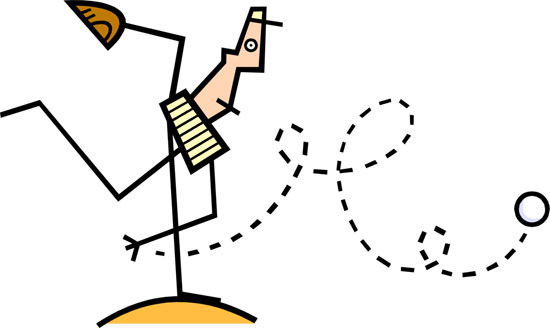
In English, there is the phrase "such a curveball."
The expression "such a curveball" refers to unexpected variables or sudden changes in circumstances. Just as a curveball in baseball deceives the batter by curving at the last moment, this expression is used when things in life or work take a completely different direction than planned.
It is commonly used in American English conversation to describe sudden events, unexpected variables, surprising news, or unpredictable developments.
These days, when looking at international political news, it seems that these curveballs are coming one after another. It is literally a festival of curveballs.President Trump is making headlines with strong claims like, "Greenland must essentially come under our control for U.S. security."
While Greenland may appear as an icy island northeast of the U.S. on a map, it is actually a strategic hub with key keywords like Arctic routes, military surveillance, space monitoring, missile defense, resources, and communications all attached to it. To put it simply, it's like having a huge warehouse in front of your house, and if you can see the entire neighborhood from the roof of that warehouse, you can't help but care about who manages that warehouse.
The issue lies in the approach. If it's just a matter of "let's cooperate," then allies can sit in a conference room, drink coffee, and align numbers and plans.
However, when it escalates to "it must be our land," the conversation changes completely. From that moment, the issue shifts from security cooperation to a matter of sovereignty. When the word sovereignty comes into play, both people and nations change their demeanor. It feels like a close friend suddenly saying, "Isn't it right that I use your living room?"
As a result, Denmark immediately protested, and Greenland began to draw the line by stating, "We will go our own way," while Europe, including the UK and France, started to take action.
Here comes another curveball. The basic grammar of alliances is "let's defend together against external threats," but this scene depicts "as tensions arise within the alliance, the allies send troops, equipment, and strategic plans to the Arctic to soothe each other."
The reason this situation is interesting is that everyone has their own logic. From the U.S. perspective, there is the calculation that "we bear a significant part of the actual defense responsibility, and Greenland is directly linked to the defense of the U.S. mainland." From Denmark's perspective, there is the principle that "Greenland is a part of the Kingdom of Denmark, and the concepts of sale or annexation do not apply."
From the perspective of Europe, including the UK and France, there is an underlying anxiety that "if the line of sovereignty is blurred here, similar logic could emerge anywhere next." For the residents of Greenland, there is a strong sentiment of "please see us as people, not as land." When logic and emotion boil over simultaneously, meetings no longer end as simple discussions.
It becomes even more interesting when this scene is compared to baseball. Normally, the catcher sends signs to the pitcher, and the pitcher throws the ball according to those signs, while the batter tries to hit it. But now, the catcher is also sending signs to the batter, and the batter is looking at the umpire, receiving signs, and hesitating whether to swing or not, while suddenly the first base coach comes to the mound and asks the pitcher, "Aren't we on the same team?"
Meanwhile, the pitches continue to curve wildly.
Ultimately, the core of this festival of curveballs is one thing. In the past, there was an assumption that allies do not doubt each other.
Now, as that assumption begins to shake, everyone is showing scenes of checking their safety measures first.
This is the same among people. When trust is strong, a question like what to have for lunch can be brushed off with "I'm just asking because we're close." However, the moment trust wavers, the same question can be interpreted as "Wait, are you watching me?"
It is difficult to predict how this situation will unfold in the future. However, one thing is certain: Greenland is no longer just an icy island in the corner of the map. It has become a presence on the global stage that everyone is turning to look at simultaneously. And Trump's style of communication tends to throw curveballs more often than fastballs. Before batters can get used to one pitch, another one curves in.
The reason international political news is particularly interesting these days is precisely this. Every day feels like a preview, and every scene has a twist. It is a mix of concern and curiosity about how this festival of curveballs will unfold.
 SandwichSurf






 novapixel |
 Peter Pan Pet |
 horse |
 Sunset Oregon |
 daisypat |
 Pirate Ship Popcorn Maker |
 Total Beauty |
 OC Real Estate Business Information |
 Story Bank |
 California Information News |
  Korean Mom |
  My NYC |
  moo moo |
  Mr Oh |
  forevergee |
  festival |
  manchester |
  constant |
  Leapfrog Move |
  vibranto |
  Tora Tora |
  yellowbutter |
  Dolly |
  US Embassy |
  NYC saladbar |
  Finding Superfoods |
  lightyear |
  song bang |
  vexomo |
  Indiana Jones |