

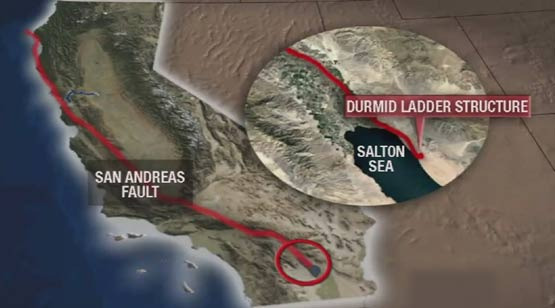
Do you know what the scariest thing is while living in LA's Koreatown these days? It's earthquakes.
Many people living in LA might think, 'Earthquake? Surely not in our neighborhood?' But LA is a city that has already experienced a major earthquake. It was on January 17, 1994, at 4:31 AM. That day was the early morning of Martin Luther King Jr. Day, and most people were deep in sleep. Suddenly, the world turned upside down.
This earthquake is known as the Northridge Earthquake. The epicenter was in the Northridge area, northwest of the San Fernando Valley. The magnitude was 6.7. At first glance, that number may not seem so enormous, but this earthquake, which occurred at a shallow depth (about 19 km), was a direct hit in the middle of the city. This earthquake resulted in a total of 57 deaths, including 4 Koreans, over 9,000 injuries, and more than 20,000 buildings collapsed or suffered significant damage. The economic damage exceeded $40 billion, making it one of the most expensive natural disasters in U.S. history at that time.
The most shocking fact was that many of the buildings that collapsed were 'rated as earthquake-resistant.' This indicates how unpredictable urban earthquakes can be. Apartments with parking on the first floor, concrete column shops, and old brick buildings all crumbled. Even the bridges on Freeways 10, 5, and 118 collapsed, cutting off access in seven locations, leading to widespread power outages, gas leaks, and fires. LA citizens recalled that as soon as the damage was repaired, "the city looked like a war zone again."
The lesson left by the Northridge earthquake is clear: LA is definitely not an 'earthquake-safe zone.' Since then, warning systems, evacuation regulations, and education have been strengthened, and especially, seismic design for earthquake preparedness has been implemented. However, experts emphasize that if the Big One strikes again, there could still be massive casualties and property damage, and building regulations need to be further strengthened.
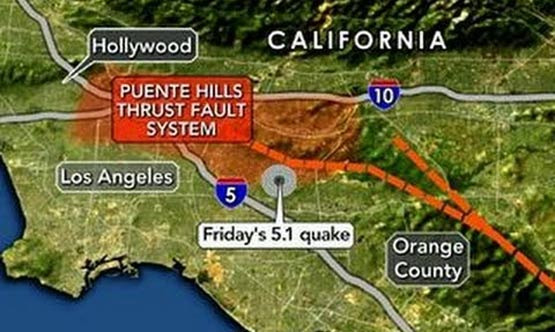
The danger of the Big One lies in the San Andreas Fault, and the serious issue is that it has been quiet for over 30 years.
Have you heard that when an earthquake zone has not experienced an earthquake for a long time, it can be even more dangerous?
The reason is simple. Earthquakes occur when tectonic plates underground push and pull against each other until they can no longer withstand the pressure and suddenly 'snap' out. However, if this stress builds up gradually and is released in small earthquakes, it is actually okay. The concept is that "it's fine to release energy gradually."
The problem arises when it is too quiet. If there have been no significant earthquakes for decades, even over a hundred years, it means that the energy built up underground has not been released. This accumulated force will eventually burst out all at once. This is the principle behind what people call "the Big One."
For example, the last major earthquake on California's San Andreas Fault in the southern region occurred 300 years ago. Since then, it has been remarkably quiet. However, this does not mean it is 'safe'; it is a "dangerous silence." Even now, this fault is moving a few centimeters each year, and these minute movements could accumulate over hundreds of years, leading to a potentially explosive earthquake.
According to the LA Times, six of the seven major fault lines that could cause the most destructive earthquakes in California are located in or span Southern California, and some of these could affect LA's Koreatown. In other words, the ground we walk on every day is a ticking time bomb.
The most well-known fault is, of course, the San Andreas Fault. It stretches an incredible 800 miles (about 1,280 km) from Humboldt County in the north to Imperial County in the south. However, the particularly dangerous section is the Southern California segment, which runs 300 miles from the Salton Sea southeast of Palm Springs to Lake Hughes west of Lancaster.
According to an analysis by the U.S. Geological Survey (USGS), if a magnitude 7.8 earthquake occurs in this segment, it could result in up to 1,800 deaths, 50,000 injuries, and an economic loss of $213 billion (about 300 trillion won). This is not just a simulation; it is a warning based on actual geological data.
Moreover, some of these seven major fault lines have been confirmed to extend beneath downtown LA and Koreatown. There are also 'blind faults' that are difficult to detect because they are not visible on the surface, and faults that were previously unknown have been continuously discovered in recent years. In short, there are "more unknown earthquake faults than known ones."
In this situation, we should not be relieved just because there have been no earthquakes; rather, the reality is that the longer it is quiet, the more we should prepare for 'when will it happen.' Earthquakes are scarier the quieter they are.
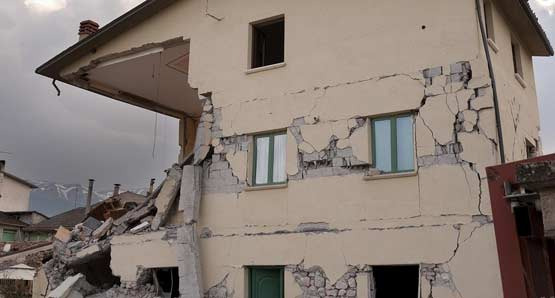
And one more thing to note is the old brick buildings.
Especially in Koreatown or downtown areas, there are still buildings constructed before the 1930s, many of which have not yet undergone earthquake retrofitting. They look old and could be the first to collapse dangerously in an earthquake.
What would happen if a magnitude 7.5 or greater earthquake struck?
Freeways and roads would crack, old buildings would collapse, electricity and water would be cut off, and phones would be down for a while... it could truly become a state of disaster. If the Long Beach port were to stop, logistics across the U.S. would also be paralyzed. We might not be able to buy water or toilet paper.
They say it's not a question of 'if' an earthquake will come, but 'when' it will come. I'm not trying to scare you; I just want to emphasize that if we prepare well in advance, we can reduce the damage more than we think.
California has stunning beach scenery and weather, but beneath that calm lies the risk of an earthquake that could strike at any moment. Especially old brick buildings, apartments that have not been retrofitted, and old shops could suffer significant damage from just one earthquake. In fact, there are quite a few such buildings in Koreatown.
What we need is not fear but realistic preparedness. The 'Big One' is not just a movie; it could be a future scenario for all of us living in Southern California.
If you are reading this article, how about preparing a few bottles of water, a flashlight, and a power bank at home?
Because one day, it might suddenly shake.






 moo moo |
 ultron78 |
 garlic bread |
 Sugar Cream Door Bulletproof Noodles |
 urbanmint |
 U.S. Weather Bureau News |
 Exploring American Life Information |
 Conflite Teacher |
 Soy Angelino |
 US Embassy |
  Korean Mom |
  My NYC |
  Mr Oh |
  forevergee |
  festival |
  manchester |
  constant |
  Leapfrog Move |
  vibranto |
  Tora Tora |
  yellowbutter |
  Dolly |
  NYC saladbar |
  Finding Superfoods |
  lightyear |
  song bang |
  vexomo |
  Indiana Jones |