

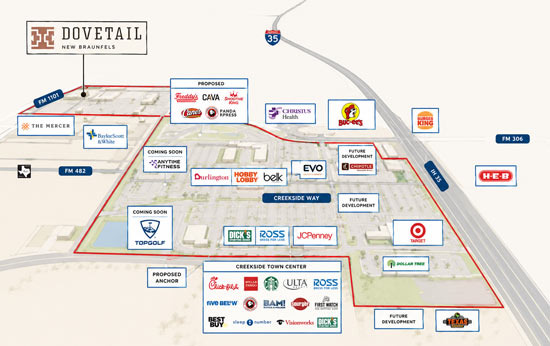
Living in San Antonio, New Braunfels, which is just to the north, has always seemed like a tourist town where you go tubing in the river during the summer or visit the German festival Wurstfest. However, the news now shows that New Braunfels is becoming a completely different city.
Every time I drive north on I-35 towards Austin, I can feel the changes. Just a few years ago, passing through New Braunfels was relatively easy, but now during rush hour, the traffic has noticeably increased. Large housing developments are under construction along the roads, and new apartments, shopping centers, and commercial facilities are constantly being built.
According to a recent SmartAsset survey, New Braunfels has seen a nearly 40% increase in housing over the past five years, making it the second fastest-growing city in the U.S.
The labor force has also increased by 32%, and the real GDP has grown at an average annual rate of 6.8%.
This means that the area is not just becoming a busy place, but the economic scale is also expanding.
The real estate market, too, saw the median home price in New Braunfels around the mid-$200,000s to low $300,000s back in 2019.
However, recently, the median home price has risen to the mid-$400,000s to around $500,000.
For newly built homes, prices start in the $400,000s and can go over $700,000 depending on location and size.
It may seem surprising, but the reason homes are selling for $700,000 is due to their location. You can easily access both Austin and San Antonio.
In fact, many people work for tech companies in Austin while buying homes in New Braunfels, and conversely, quite a few commute from New Braunfels to hospitals or military-related jobs in San Antonio.
However, I wonder if this shared thought is becoming a problem. Many people have thought, "Austin is too expensive, so let's go to New Braunfels."
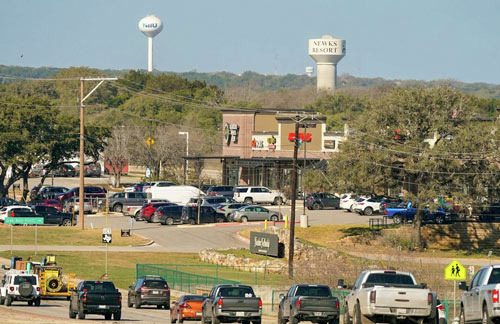
Just a few years ago, New Braunfels was genuinely a great value. The home prices were reasonable, the land was spacious, and it was quiet.
But now, to be honest, it doesn't feel as affordable as it used to.
Of course, compared to Austin, it is still cheaper. With $600,000 in Austin, you can only get a cramped house, while in New Braunfels, you can afford a spacious single-family home.
The problem is that everyone has realized this fact.
When you visit model homes on the weekends, you'll see young couples with strollers everywhere. In the past, retirees were more common, but nowadays, families in their 30s and 40s are much more prevalent. Construction companies are aware of this, so they keep building new developments.
However, personally, I am more concerned about traffic than home prices.
I-35 has always been a road that gets a lot of complaints. But these days, it's really bad.
Try driving north towards Austin on a Friday afternoon. You might wonder, "Where are all these people going?"
Monday mornings are the same. Everyone is commuting to Austin or San Antonio, which is causing traffic congestion to worsen.
TxDOT has been working on widening the road for years, but honestly, it feels like for every lane added, the number of cars doubles.
Even before the construction is finished, new apartments and housing developments are popping up.
So, when I think about New Braunfels these days, I have mixed feelings.
It is definitely an up-and-coming area. It has completely shed its image as a tourist town and is becoming a key city in the Austin-San Antonio economic region.
But on the other hand, I wonder, "Isn't this growing too fast?"
Home prices keep rising, traffic is getting worse, and the relaxed atmosphere that used to characterize New Braunfels is gradually fading away.
Ultimately, New Braunfels now seems closer to being an expensive place because it is popular, rather than a popular place because it is affordable.
Whether this trend will continue is uncertain, but it seems clear that there will be many days trapped on I-35 in the future.
 Kangaroo
 LuckyBridge76







 moo moo |
 ultron78 |
 garlic bread |
 Sugar Cream Door Bulletproof Noodles |
 urbanmint |
 Make My Day |
 History Repeats Itself |
 Helpful Life Stories |
 USA Pharmacy Pharmacist |
 TEXAS Fishing Boat |
  urban legend |
  coolriver |
  Good Neighborhood, Wealthy District Information |
  Ro Ro Car |
  Amber H |
  new sugar |
  Palm 1000 |
  loran |
  donutfield |
  Tennis City |
  sunny7 |
  Questions about firearms while living in America |
  Shoot Me |
  mochifox |
  zucchini |
  Anna Life |
  Exciting FM Radio |
  pet dog |
  toodin |
  rosed |