

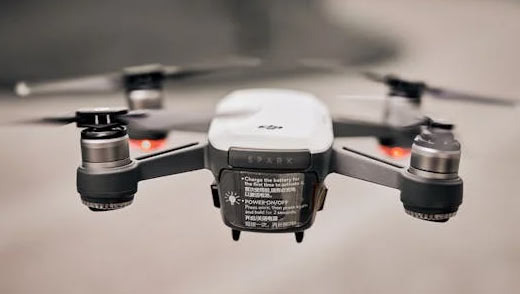
To put it simply, no.
The regulations are stricter than you might think. The FAA sets the basic rules, and then state and local regulations add to that framework.
First and foremost, most areas near airports are off-limits. You should avoid flying within a 5-mile radius.
It's not just major cities like LA and New York; even small airports have similar restrictions. If you fly in those areas and something goes wrong, you'll get caught immediately.
Military facilities? Don't even think about it.
Places like Area 51 in Nevada are off-limits, and all air force bases and training zones are prohibited.
Washington D.C. is even more restrictive. The area around the White House, Capitol, and Pentagon is completely off-limits.
About a 30-mile radius can be considered a "drone-free zone."
Surprisingly, national parks are also off-limits.
When you visit places like Yosemite or the Grand Canyon, you might want to fly your drone because of the beautiful scenery, but it's prohibited by regulation.
This is due to wildlife protection and safety concerns.
Another little-known fact: events can also restrict drone use.
When events like NFL or MLB games are happening, there is a temporary no-fly zone within a 3-mile radius of the stadium.
This is called a TFR, and flying during this time can lead to serious issues.
Urban areas are even more complicated. In Manhattan, New York, it's essentially a complete ban.
Downtown LA, Hollywood, and the Las Vegas Strip also have strict regulations, and flying without permission is nearly illegal.
This is due to the high number of people and the risk of accidents.
One more thing: areas around power plants, refineries, prisons, dams, and hospital helipads are all sensitive zones.
You could get caught for security issues if you take pictures in those areas.
Penalties? They are not just warnings.
There have been cases where people were fined $20,000 for flying in Manhattan, and someone who flew a drone at a California wildfire and interfered with firefighting helicopters faced a $25,000 fine and jail time.
In summary, flying drones in the U.S. is like a "game of finding places to fly."
It's not about flying anywhere; it's about finding permissible areas to operate.
If you fly without knowing these rules, you could lose money or even complicate your life.




 Moscow Kim |
 coloradoman |
 Montgomery Mom |
 GOGO SING |
 Hajiwon Blog Hair Salon |
 Tomex Train Uncle |
 fortbliss |
 Spicy Immigration Life |

 clarion |
  manchester |
  constant |
  Leapfrog Move |
  vibranto |
  Tora Tora |
  yellowbutter |
  Dolly |
  US Embassy |
  NYC saladbar |
  Finding Superfoods |
  lightyear |
  song bang |
  vexomo |
  Indiana Jones |
  meloncat |
  novapixel |
  mortrix |
  Esther 1983 |