

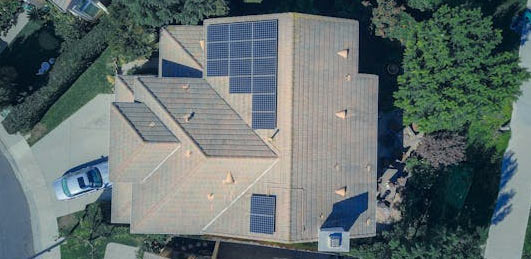
Installing a solar power system on your home roof has a clear effect on reducing electricity bills.
However, to truly feel the savings, several important factors need to be considered.
First, the installation cost is quite high. It usually ranges from $15,000 to $25,000, but currently in the U.S., you can receive a 30% rebate on installation costs through federal tax credits until 2025, which can help reduce the initial financial burden.
Some states also offer additional rebates or benefits, so it's good to check before installation.
Installing solar panels can significantly reduce your monthly electricity bills. Depending on the household, savings can typically range from $100 to $300 per month.
The higher the electricity rates in your area, the greater the savings, and especially during the summer months when air conditioning use is high, the benefits are clearly felt.
The average payback period for installation costs is about 6 to 10 years, but if electricity rates continue to rise, the return on investment can be faster. Solar systems can be used for over 25 years, so you can enjoy benefits for a long time after installation.
If you own an electric vehicle, the savings can be even greater. Since you can charge your vehicle with electricity generated at home, you can also reduce fuel costs. Solar power is a worthwhile investment if you plan to stay long-term and live in an area with sufficient sunlight.
As of 2025, the top 3 states in the U.S. with the highest residential electricity rates are as follows:
-
Hawaii: Hawaii has an average residential electricity rate of about 42.69 cents per kilowatt-hour (kWh), the highest in the U.S. This is mainly due to the reliance on imports for most of the fuel needed for electricity generation.
-
Connecticut: Connecticut's average residential electricity rate is about 33.25 cents per kWh, the second highest. High transmission costs and dependence on energy imports are cited as major reasons.
-
Rhode Island: Rhode Island has an average residential electricity rate of about 33.07 cents per kWh, the third highest. This is also attributed to high transmission costs and dependence on energy imports.
These high electricity rates are determined by various factors, including the geographical characteristics of each state, dependence on energy imports, transmission and distribution infrastructure costs, and renewable energy policies.
In contrast, the states with the lowest electricity rates include North Dakota, Nebraska, and Idaho, which maintain relatively low electricity rates due to abundant natural resources and efficient energy infrastructure.







 moo moo |
 ultron78 |
 garlic bread |
 Sugar Cream Door Bulletproof Noodles |
 urbanmint |
 Helpful Life Stories |
 American Man in a Mask |
 USA Pharmacy Pharmacist |
 Texas Migration Story |
 Texas Migration Story |
  Tonky |
  viroma |
  cookie |
  Live and that's it |
  Alright Twain |
  eatontown blog |
  HAWAII Korean Church News |
  Amore |
  linex |
  Balancework |
  laro90 |
  MEDBIO American Doctor Blog |
  SWAT TEAM BLK |
  DREAM BIG |
  frostbite |
  330 Forever My Love |
  El Dorado |
  dralix58 |
  Gorama Round |
  Skydiving |