

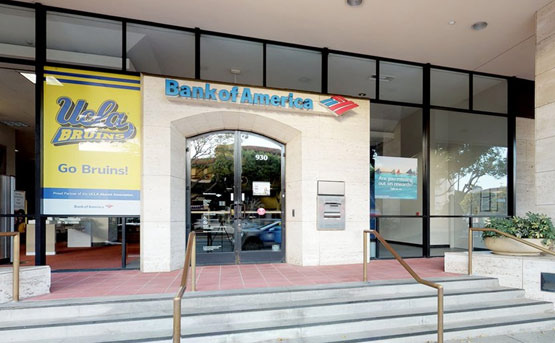
Living in LA, you often see people who, despite not having perfect immigration status, receive social services (once you receive it, you can continue using it) and open bank accounts while maintaining various sources of income like 1099 or cash jobs. Therefore, the announcement of the "Restrictions on Banking Transactions for Undocumented Immigrants" policy is not just simple news but a significant concern for the Korean community.
President Trump signed an executive order on May 19, 2026, titled 'Restoring the Integrity of the U.S. Financial System.'
This order does not instruct banks to deny accounts to undocumented immigrants.
Instead, it directs the Treasury Department, the Financial Crimes Enforcement Network (FinCEN), and federal banking regulators to assess the risks posed by customers without work authorization to the financial system and to strengthen related regulations.
Subsequently, FinCEN issued guidance to banks to be more vigilant regarding the use of ITINs, false identities, payroll tax fraud, and the potential for money laundering.
An ITIN is a number issued to individuals without a Social Security number for tax reporting purposes, and it is used by many Korean business owners and immigrant families in LA. However, there is no regulation that states that using an ITIN alone qualifies someone as undocumented or requires account closure.
White House Deputy Chief of Staff Stephen Miller recently stated that undocumented immigrants are using credit cards and bank accounts and receiving direct deposits, suggesting that blocking their financial access could be a means to increase voluntary departures. He described this as a form of economic pressure in an effective deportation policy.
So, will this actually be implemented? Some argue that it is already being enforced.
Risk management guidelines for banks and monitoring of suspicious transactions have been strengthened. However, there is still no nationwide common regulation requiring all banks to immediately demand proof of citizenship or permanent residency from existing customers. Currently, U.S. banks verify customer identities but are not required to verify citizenship.
The content of this policy and executive order also does not specify that all customers' immigration statuses must be uniformly investigated.
In the future, if the Treasury and financial authorities create new rules, the process for new accounts, credit cards, auto loans, and home loans may become more stringent.
Especially for those using only an ITIN, or where address and income documentation are unclear, or where verifying work authorization is difficult, additional documentation may be required. Each bank may have different risk assessment criteria, leading to varied actual applications.
An important point for the Korean community in LA is that there is no need for citizens and permanent residents to feel anxious.
However, even those with legal status may face inconveniences during the account renewal process if their passport, green card, work authorization, Social Security number, or address verification documents are outdated or inconsistent with bank records.
For undocumented individuals, it is more realistic that restrictions will begin with new loans and credit services rather than immediate account closures.
In conclusion, this policy is not just talk. With the executive order and FinCEN guidelines already issued, pressure on the financial sector has already begun.
However, no law has been enacted to freeze all undocumented immigrants' bank accounts uniformly.
In the future, the actual impact will likely be determined by detailed regulations, court lawsuits, and banks' responses.
 SunnyHeart
 SilverTrail84







 Victory 1988 |
 washington mom |

 El Dorado |
 lightyear |
 Weekend Movie Blog |
 Beauty, Health, Lifestyle Blog |
 coloradoman |
 Superman Cat Blog |
  ollege Mom |
  Pronunciation Yo |
  nuvex11 |
  Living in Florida |
  axelon47 |
  lumbus |
  Texas Migration Story |
  Scade Studio |
  love ya |
  biscuit90 |
  chicpo |
  Helpful Life Stories |
  Kitchen Ideas |
  Diana Blues |
  Agenda Center |
  Community Cross |
  journey |
  heeve |
  leman |