

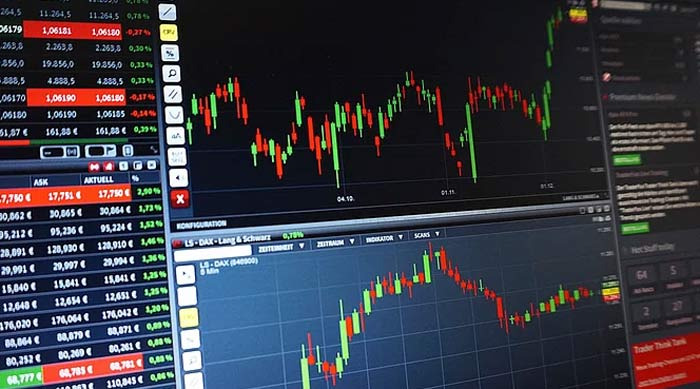
Honestly, it seems like the US stock market is like that. It feels unstable, yet when it rises, it seems like it will keep going up, and when it falls, it suddenly crashes...
The Black Thursday of 1929 was like that, as was the subprime crisis in 2008, and the pandemic in 2020.
Now, with the Nasdaq and S&P 500 hitting all-time highs, the mood is good, but there's a feeling of "Isn't it too high? Isn't a big drop coming again?"
Historically, if we were to point out five major events when the stock market crashed, the first would be the Great Depression that started with Black Thursday in 1929, the second would be Black Monday in 1987, the third would be the dot-com bubble burst in 2000, the fourth would be the financial crisis in 2008, and the fifth would be the shock of the COVID-19 pandemic in 2020. These five can almost be called the 'Top 5 Historical Crashes' of the US stock market.
Looking at these cases, there was a commonality: the atmosphere was always good just before the crash, and there was talk of the possibility of a drop.
Then one day, suddenly, things escalated, leading to a chain reaction.
The situation in September 2025 is somewhat similar. Stock prices are hitting record highs daily, and everyone is optimistic due to the AI boom, but internally, there is only anxiety.
If a major crash were to occur in the future, what scenarios could there be?
In my view, there are several scenarios where a major crash could happen.
First, the collapse of the New York financial market bubble. There are many claims that tech stocks and the real estate market are overvalued. Once prices start to decline, it could spread like dominoes. If the panic selling doesn't stop at some point, a major correction could occur.
Second, a large natural disaster like the LA earthquake. After the Kobe earthquake in Japan in 1995, the Japanese stock market experienced a huge shock, losing market value of ¥1000 trillion, and it took some time to recover. In the US, the California economy, which includes IT, film, agriculture, and logistics, could shake the entire country if it collapses.
Third, the collapse of the cryptocurrency market. Cryptocurrencies like Bitcoin are now intertwined with institutional finance, so if a major crash occurs, it could spread anxiety to the stock market as well. This part still has many shortcomings to be considered a black swan.
These three are not separate but interconnected. If an earthquake occurs, insurance companies and the financial sector will be shaken first, and if the financial sector shakes, cryptocurrencies will plummet, and if cryptocurrencies collapse, tech stocks will take a direct hit.
Of course, unlike in 1929 or 1987, there are safety measures in place now, such as circuit breakers, emergency funding from the Federal Reserve, and cooperation among global central banks.
But the problem is always 'human emotions.' Everyone says, "The AI era is different," but the moment that statement is made could be the most dangerous time.
In my opinion, in the short term, a 10-20% correction is the most realistic scenario, and if a major shock occurs, a 30-40% drop is entirely possible.
The lesson from historical crashes is simple: it's crucial where the spark ignites.
We don't know when, but if there is another major correction in the stock market, it will likely be the same.




 newyorker 101 |
 Things to Do to Buy a House |
 U.S. Weather Bureau News |
 International Court |
 NYC saladbar |
  Tonky |
  viroma |
  cookie |
  Live and that's it |
  Alright Twain |
  eatontown blog |
  HAWAII Korean Church News |
  Amore |
  linex |
  Balancework |
  laro90 |
  MEDBIO American Doctor Blog |
  SWAT TEAM BLK |
  DREAM BIG |
  frostbite |
  330 Forever My Love |
  El Dorado |
  dralix58 |
  Gorama Round |
  Skydiving |