

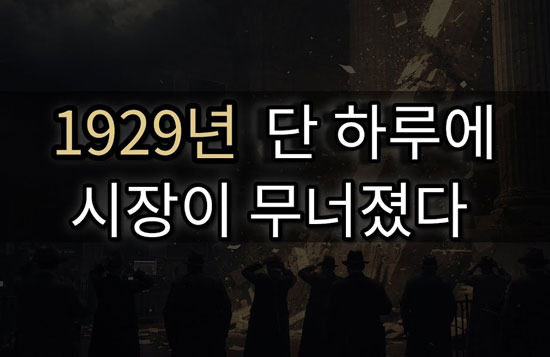
These days, watching the state of the stock, real estate, and even cryptocurrency markets in Korea honestly sends chills down my spine more than once.
As foreign media continues to warn, this is not just a case of Korea being a bit hot right now.
If you know economic history, a vivid scene will flash through your mind: the landscape just before the 1929 Great Depression in the United States.
World-renowned economic journalists like Andrew Ross Sorkin have recently raised alarms right here.
What they point out is that the 'mechanism of destruction' that brought down Wall Street a century ago is being eerily replicated in 21st-century Korea.
The Sweet Poison of "Democratizing Finance"
The 1920s in America were known as the 'Roaring Twenties.' The logic that dominated the market back then is surprisingly similar to today. It was all about "democratizing finance." Until then, stocks were the exclusive domain of a few wealthy individuals, but in the 1920s, a system emerged where ordinary people could buy stocks with just a small margin. With just $10 of my own money, I could borrow $90 to buy $100 worth of stocks; people called it 'equal opportunity.'
What about Korea today? The name has only changed to sound more sophisticated. Credit lending, margin trading, leveraged ETFs, and 'young-geul' (borrowing to the last penny). With just a few clicks on a smartphone app, an environment has been created where you can bet multiple times your assets.
Investing with borrowed money is packaged as a smart investment strategy, while investing without loans is dismissed as 'foolish.' The scene of a shoeshine boy whispering stock tips a century ago has now been replaced by 'hot stock recommendations' in group chats and YouTube channels. The structure hasn't changed. It's that wicked kindness that makes even those without money jump in like moths to a flame.
A Religion Named Innovation: From Radio to AI
The more chilling commonality is the 'blind faith in technology.' The keyword that drove people crazy in the 1920s was 'radio.' The radio was not just a household appliance; it was revered as a divine tool that would change the way humanity communicates. The stock prices of radio-related companies soared to the Andromeda galaxy, regardless of their performance.
What do we have around us now? AI (artificial intelligence), secondary batteries, superconductors. Of course, I'm not saying these technologies are fake. The problem lies not in the reality of the technology but in the 'intensity of belief.' The moment analysis disappears and faith takes over, the market becomes a religious group that has lost its rationality. The logic that "this technology will change the world, so the current price is cheap" has been repeated in 1929, during the dot-com bubble in 2000, and now.
Whether a company's profits can cover the interest on its debt is irrelevant. Only the size of the 'dream' determines stock prices.
The Most Expensive Sentence in Human History: "This Time is Different"
There is a dangerously misleading sentence that leads investors to ruin.
"This time is different."
There has not been a single case in history where this phrase did not end in tragedy. In the 1920s, people believed that "the American economy has entered a new era of eternal upward movement." The same is true today. In fact, due to the development of social media, the speed at which this collective hypnosis spreads is almost light-speed. Stories about how the neighbor made money with Bitcoin or how the person across the street quit their job thanks to stocks stimulate the brain in real-time. FOMO (fear of missing out) paralyzes rational judgment, and in the end, it is always the ordinary individuals who come in last, having taken on the largest debts.
The Fuse of Chain Explosions: The Fear of Forced Liquidation
The real fear begins in a downturn. A market built on debt collapses at a speed that is exponential rather than arithmetic. When prices fall below a certain level, the system ruthlessly executes 'forced liquidation.' Stocks are thrown onto the market at market prices, regardless of my will.
This sell-off leads to further price declines, which in turn causes more margin calls, triggering even larger forced liquidations. This is the mechanism that created the Black Thursday of 1929. Modern systems may buy time with circuit breakers or central bank interventions, but they cannot stop the process of liquidating massive debts. Just administering painkillers without removing rotten flesh won't cure the disease.
What is the government doing, you ask? Policymakers are always caught in a dilemma.
They fear that bursting the bubble will lead to a recession, yet leaving it alone will undoubtedly become an uncontrollable bomb later. Ultimately, their choice is always 'passing the buck.' They continue to inject liquidity like a drug, hoping it won't explode during their term.
My feelings about the current Korean market are close to helplessness beyond just chills. I can't help but think that the dazzling fireworks that seem like an opportunity might actually be the last spark burning someone's life away.
"The rise created by debt will ultimately collapse due to debt."
This is a universal law that has not changed, whether a century ago or now.
Even as technology advances and trading speeds increase to the millisecond, human greed and the resulting costs are executed without a single error.
The market is currently showing us a pattern that is very familiar. If jumping in knowing that the end of that pattern is a cliff is human nature, then there is nothing more to say.
However, at least the excuse of "I didn't know" won't hold up. History has already sent multiple warnings.






 Twist Kim |
 U.S. Weather Bureau News |
 Community Cross |
 Conflite Teacher |
 SEVEN SEVEN |
 newyorker 101 |
 PPAP Pineapple Pen |
 Eating Gukbap and Working Hard Deer |
 Encyclopedia of New York and Surrounding Areas |
 NYC saladbar |
  hot chocolate |
  SODA MAKER |
  james kim |
  All About Cars |
  lomira98 |
  calmbridge |
  oneonly |
  Brighto |
  racuse |
  Total Beauty |
  crystal |
  Good Hotels |
  raspberry7 |
  Que que |
  Well Done Sir |
  dance dance |
  sweetpepe |
  vegas mom |
  Olivia's Blog |
  cathywhite |