

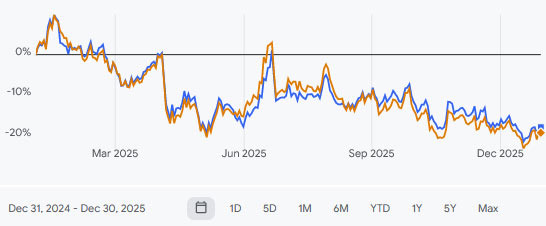
The news of the change of government in Venezuela seems to suggest that international oil prices will initially fluctuate slightly upward and then gradually stabilize over time. The market always first reflects the fear of an immediate oil shortage in prices, and only later adjusts for how much more oil will be released.
Venezuela is one of the countries with the largest oil reserves in the world. The change in its regime is not just a diplomatic news item but an event that shakes the very foundation of the global energy market. In the short term, it is likely that oil prices will bounce upward at the beginning of the regime change. In reality, power transitions rarely occur quietly. The anxiety of potential clashes between pro-government and anti-government forces, resistance from armed groups, and the possibility of chaos resembling civil war spreads immediately through the market.
This atmosphere itself adds a fear premium to oil prices. Additionally, concerns that oil facilities may become targets of destruction or that management personnel may leave, causing production to temporarily halt, further compound the issue. The administrative vacuum created during the collapse of the existing state-owned oil company and the establishment of a new administrative structure complicates export contracts and shipping schedules. The market reacts sensitively to these minor disruptions, and all of this becomes kindling that pushes oil prices upward in the short term.
However, once the regime change stabilizes and relations with the West normalize, the flow will completely change. From this point, strong downward pressure will act on oil prices. The key factors are the easing of sanctions and the resumption of investment. The decline of Venezuela's oil industry is not due to a lack of resources but rather a combination of sanctions, aging equipment, and management collapse.
Once sanctions are lifted after the regime change, the volumes that have been traded covertly will flood into the official market. At the same time, as global oil companies re-enter with capital and technology, pipeline repairs and modernization of refining facilities will begin in earnest. Production has the potential to recover to the levels of its past heyday. This change is not just a recovery but a structural shift that pushes the global supply curve to the right. As the logic of oversupply strengthens, oil prices will be pressured downward in the long term.
Moreover, the variable of OPEC+ plays a significant role. Current oil prices are supported by a production cut system led by Saudi Arabia and Russia. However, if Venezuela embarks on large-scale production increases, this balance will inevitably be disrupted. If countries that were participating in the production cuts begin to express dissatisfaction with why some are increasing production while they are reducing it, cohesion will weaken, and competition in production will ensue.
As a result, the speed of oil price declines will accelerate. Furthermore, Venezuelan heavy crude oil is very well suited for refining facilities on the U.S. Gulf Coast. Once supply normalizes, not only crude oil prices but also the prices of petroleum products like gasoline and diesel will decrease, leading to a reduction in actual energy costs. This could lower global inflationary pressures and create a positive environment for monetary policies in various countries.
In conclusion, the Venezuelan variable initially shakes the market significantly, but over time, it serves as a dual card that pressures prices downward. In the short term, political turmoil and administrative vacuums will cause oil prices to fluctuate, while in the medium to long term, the lifting of sanctions and the resumption of investment are likely to lead to downward stabilization of oil prices through expanded supply.
While the extent of the decline may vary depending on external variables such as global economic trends or carbon neutrality policies, the mere fact that a massive supply source like Venezuela is normalizing creates an environment where the global economy can expect a significant low oil price bonus.





 Moscow Kim |
 coloradoman |
 Montgomery Mom |
 GOGO SING |
 Hajiwon Blog Hair Salon |
 newyorker 101 |
 Things to Do to Buy a House |
 Lunch and Dinner Mexican Taco |
 International Court |
 French fries |
  Finding Superfoods |
  lightyear |
  song bang |
  vexomo |
  Indiana Jones |
  meloncat |
  novapixel |
  mortrix |
  Esther 1983 |
  fortbliss |
  My Two Way |
  toastyfox |
  FLORIDA Acus |
  tracker |
  TONTON COFFEE |
  sunrise |
  ultron78 |
  uplifted |
  Folding Instructions |