

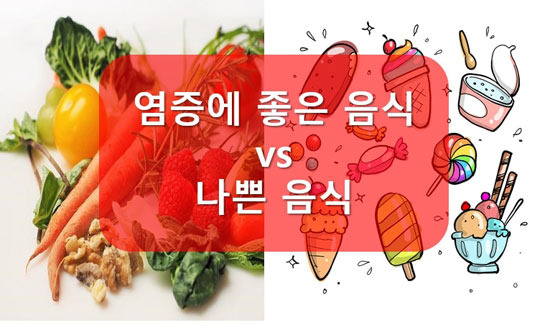
These days, the stories circulating on the internet about foods that are good for inflammation are half true and half nonsense.
Some claim, "If you eat this, your inflammation will disappear completely," but they don't explain why. Inflammation is not something that appears and disappears with just one food eaten over a day or two.
Ultimately, whether a food is good or bad for inflammation can be neatly summarized by four criteria: how it regulates blood sugar, what type of fats it contains, whether it has anti-inflammatory nutrients that the body can actually use, and which gut bacteria it supports.
First, let's look at blood sugar. Eating a little sugar doesn't immediately cause problems. The issue lies with a diet focused on refined carbohydrates and sugar. Such foods spike blood sugar levels right away and then crash them back down. Riding this roller coaster daily puts the body in a constant state of stress, which can lead to chronic inflammation. Many people say, "I'm not diabetic, so I'm fine," but inflammation is already quietly progressing in the pre-diabetic stage.
The second factor is fat. It's ignorant to label all fats as bad, but consuming them indiscriminately is even more problematic. A diet high in saturated fats from sources like beef fat, butter, and lard is a shortcut to increasing inflammation. In contrast, unsaturated fats found in olive oil, avocado oil, and nuts work to reduce inflammation in the body. Yet, many people are still trapped in the mindset that "oils always make you gain weight." It's not the oil that causes weight gain, but the overall diet.
The third factor is anti-inflammatory nutrients. Foods rich in fiber, vitamins, minerals, and antioxidants like polyphenols act as firefighters that extinguish inflammation in the body. Flavonoids, abundant in fruits and vegetables, reduce oxidative stress and lower inflammation signals themselves. Not knowing this leads many to seek solutions in a single supplement, but high-dose capsules can often burden the liver. There are reasons why it's advised to consume these nutrients through food.
The fourth factor, often overlooked, is the gut. Gut bacteria literally determine who gets fed. A diet high in refined carbohydrates, fried foods, artificial sweeteners, and red meat kills off beneficial gut bacteria that thrive on inflammation, allowing harmful bacteria to flourish. Conversely, consistently eating fiber and fermented foods increases beneficial bacteria in the body. If the gut is damaged, even the best foods will only have half the effect.
Therefore, when looking at foods said to be good for inflammation, spices like turmeric should be consumed in moderation as powder, not in pill form, which can be risky. The same goes for plant oils. There's no need to idolize olive oil while demonizing seed oils. Simply switching from butter to plant oils can reduce inflammation. However, oils high in saturated fats, like coconut oil or palm oil, are exceptions.
Nuts and seeds are effective even in small amounts. A handful is sufficient, but eating a whole bag while claiming it's "health food" is self-justification. Most fruits are fine. If you're concerned about blood sugar, choose berries or apples, which raise levels slowly, and eat them with protein or fats rather than alone. Fish doesn't need to be eaten daily; twice a week is enough. Lastly, fermented foods like yogurt and kimchi should be consumed regularly for gut health, with no reason to avoid them.
In conclusion, I honestly think that those who rush to find supplements to reduce inflammation based on trends are misguided. Reducing processed foods, increasing the proportion of plant-based foods, and being mindful of the types of fats consumed is likely the most reliable method.







 neroyo |
 nivex85 |
 Old English |
 nixxon |
 LIZ Legal Information Blog |
 Cali M Law Group |

 Various Knowledge and Information in the USA |

 U.S. Weather Bureau News |
  manchester |
  constant |
  Leapfrog Move |
  vibranto |
  Tora Tora |
  yellowbutter |
  Dolly |
  US Embassy |
  NYC saladbar |
  Finding Superfoods |
  lightyear |
  song bang |
  vexomo |
  Indiana Jones |
  meloncat |
  novapixel |
  mortrix |
  Esther 1983 |
  fortbliss |
  Moscow Kim |