

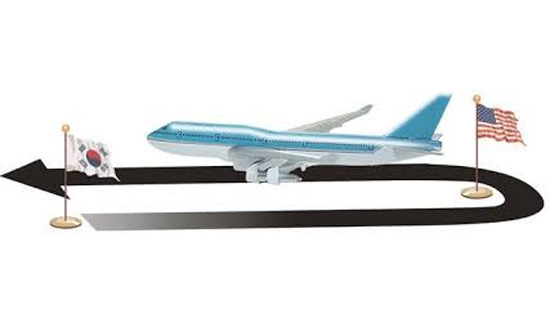
When attending gatherings of Koreans, a story that occasionally comes up is, "Living in Korea in spring and fall, and in America in summer and winter is perfect."
It sounds easy, and the more you think about it, the more it seems like an art. It feels like a life that only picks the best parts from both countries, and a retirement life that is the ultimate dream.
However, when it comes to reality, it looks to me like it's more than just a 'pie in the sky'—it resembles a 'poisoned chalice.'
Anyone who has crunched the numbers knows how brutal the costs are to maintain that romantic idea of 'living half and half.'
The first wall you hit is money. Living half and half means maintaining two households.
One house in Korea, one house in America. Whether renting or owning, the fixed costs are doubled. Maintenance fees, taxes, utilities, internet, mobile phone, insurance, vehicle maintenance—all of these expenses occur simultaneously in both countries. On top of that, you have to add the cost of airfare. Even just two round trips a year for a couple can be quite expensive. Once you start flying business or premium economy, the costs balloon. Only a small elite can afford this.
The second issue is physical stamina. When you're young, long-distance flights feel like travel, but for couples over 60, it becomes laborious.
Flying for over 12 hours, adjusting to time differences, moving through airports, unpacking and repacking takes a toll on the body. If you repeat this several times a year, it becomes not health management but health depletion. For those with joint, blood pressure, or cardiovascular issues, it poses a significant risk.
The third issue is healthcare. Living half and half complicates health insurance planning significantly.
You need to maintain American insurance while also taking out private or actual expenses insurance during your stay in Korea, and if you stay long-term, you must consider Korean health insurance as well. When illness strikes, deciding which country to seek treatment in becomes a stressful decision. In emergencies, it's even more complicated. You have to constantly reassess which country's hospital is better, how to transfer records, and how to continue prescriptions.
The fourth issue is relationships. You cannot fully belong to either side.
If you frequently travel from America to Korea and do not stay long in Korea, it becomes difficult to connect with people, whether at church or gatherings. Treating everyone every time you meet is only feasible for a day or two... One of the important factors in post-retirement life is avoiding isolation, but living half and half can actually deepen that isolation.
The fifth issue is administration and taxes. Determining tax residency, income reporting, account management, and asset management becomes complicated.
You have to calculate which country's tax laws to follow each year, and a small mistake can lead to significant problems. This presents a high management difficulty for the average retiree.
Therefore, realistically, living half and half is a lifestyle only possible for those with substantial assets (at least over $5 million plus ongoing financial income) who can afford to hire professional accountants and lawyers. For ordinary people, it's a story from a picture book.
The same goes for reverse immigration. Just because you return to Korea for good healthcare doesn't mean everything becomes easier. You have to redesign everything from relationships, cultural stress, housing costs, healthcare access, to issues with children, pensions, and asset transfers. Emotionally it feels like home, but systemically it's another country.
Ultimately, the most realistic choice for most ordinary people is to base themselves in one country and use the other as a place to visit.
Living half and half may seem appealing, but once you try it, the cost to maintain that appeal is too high. That's why many people may only talk about it without making the choice.







 sparkling |
 oh my salami |
 saffronroute |
 You Only Live Once |
 Texas Real Estate Blog |
 Cali M Law Group |

 Various Knowledge and Information in the USA |

 U.S. Weather Bureau News |
  Tora Tora |
  yellowbutter |
  Dolly |
  US Embassy |
  NYC saladbar |
  Finding Superfoods |
  lightyear |
  song bang |
  vexomo |
  Indiana Jones |
  meloncat |
  novapixel |
  mortrix |
  Esther 1983 |
  fortbliss |
  Moscow Kim |
  My Two Way |
  toastyfox |
  FLORIDA Acus |
  tracker |