

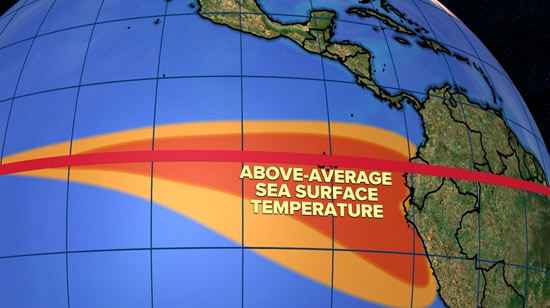
Recently, as I watch the news, it seems the whole world is buzzing with stories about El Niño.
This year, a powerful El Niño is forming in 2026, and warnings are pouring in that it could lead to significant climate disasters, as history has shown.
What exactly is the problem that has the media and experts so tense, flooding us with news about El Niño?
As I read the news, I recognized the vulnerabilities of the world we stand on.
The Great Counterattack of Nature: The Fear of 'Super El Niño'
The first issue that stands out is the high likelihood that this El Niño will be an unprecedentedly strong 'Super El Niño,' going beyond simple climate change. El Niño is a natural phenomenon that shakes global weather as the winds and sea temperatures in the Pacific change. Looking back in history, El Niño has always been deadly.
The history of tragedy: The collapse of the Moche civilization in Peru 1,000 years ago and the political and economic crises in ancient Egypt were both linked to El Niño.
The formation of the Third World: Particularly, the famine brought on by El Niño in 1877-1878 claimed millions of lives in tropical regions and laid the groundwork for the global inequalities we see today between developed and developing countries.
The reason experts are recalling these horrific historical events to warn us is that the data currently being observed is alarming.
If the forecasts are accurate, humanity will have to face unimaginable heatwaves, droughts, heavy rains, and pandemics once again.
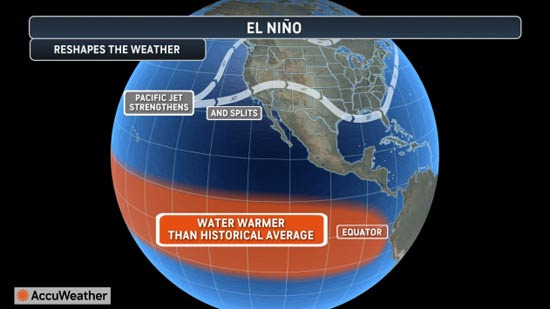
In 2026, Humanity Faces a 'New Vulnerability'
Of course, modern society is different from the past. Weather observation systems have advanced, agricultural technology has become more sophisticated, and there are reserves of resources. As the article mentions, large-scale famines like those in the past may not occur. The real problem is that the current global system is precariously vulnerable to the massive shock of El Niño. The world is standing on the edge due to multiple adverse factors.
Collapse of food and resource supply chains: Due to the effective closure of the Strait of Hormuz, farmers worldwide are suffering from severe fertilizer shortages. Even if they want to farm, they cannot.
Energy crisis: Wars and conflicts in places like Ukraine and Iran have caused energy prices to skyrocket, draining the budgets of poorer countries on energy costs.
Disintegration of safety nets: To make matters worse, developed countries, including the United States, have drastically cut aid and official development assistance (ODA) to impoverished nations for diplomatic and political reasons. The 'last safety net' to withstand the crisis has disappeared.
Perfect Storm: The Prelude to Domino Collapse
Ultimately, the fundamental reason for the flood of news is that the climate disaster (El Niño) and human-made geopolitical crises (war, supply chain disruptions) are on the verge of creating a 'Perfect Storm.'
History testifies that powerful El Niños have always exploited "the existing weaknesses of human society." The current weakness in 2026 is the 'unstable international situation and economy.' If drought strikes major grain-producing areas worldwide, such as Brazil, Africa, and China, the food market, already suffering from fertilizer shortages and high prices, will quickly collapse.
"When food prices skyrocket, the poorest countries will be the first to fall. This is not just a matter of hunger. The deepening poverty leads to severe malnutrition, which can trigger social discontent, civil wars, riots, national bankruptcies, and a domino effect of large-scale refugee crises."
The flood of El Niño news is not simply a weather forecast saying, "This year will be very hot and rainy." It is a warning that nature is about to strike a massive hammer on a system of international society that has cracks.
We cannot stop the natural phenomenon itself. However, the vulnerabilities created by humanity can be mitigated through solidarity and policy.
As the current world chooses the path of self-preservation, reducing aid and engaging in conflicts, it is a critical moment to reflect on whether we can withstand the fierce waves of the upcoming Super El Niño.
The reason the media continues to address this issue is likely to inform us that there is little time left to prevent this catastrophe.
 TofuGymKing
 Eagle5thYr







 novapixel |
 NEXT ROUND |
 Encyclopedia of New York and Surrounding Areas |
 washington mom |
 California Dreamer |
 Study Abroad Life Know-How Tips |
 coloradoman |

 Victory 1988 |
 Sunny's Travel in America |
  Great TOWN NEWS |
  Open Flex Mind |
  Hartford Blog |
  unified |
  Generation X |
  ringwinds |
  American Food Information & Calories |
  Hawaii Maui Kahului |
  calvorn |
  fernando park |
  newyorker 101 |
  coffeee |
  |
|  Christopher |
  sylven |
  Sammy Beach |
  Bliss O |
  blue ocean |
  greenlight |
  Watanaka Karametibaksa |