

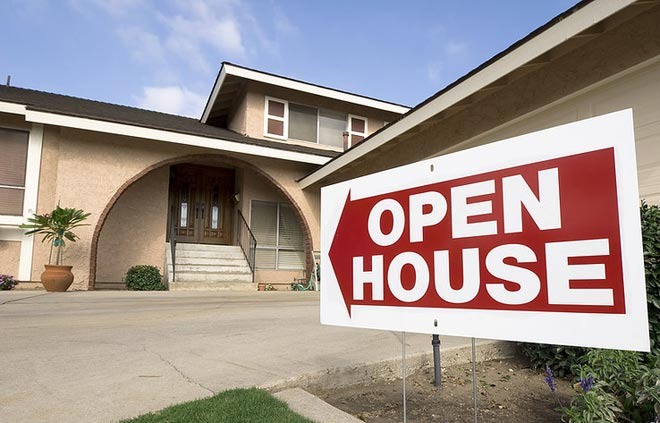
Some places are too expensive, and others are too cheap... Even for the same million dollar home, the standards vary greatly by region.
In good neighborhoods in LA's Koreatown or Orange County, you can barely buy a typical single-family home with 2-3 bedrooms for a million dollars. But if you go down to Florida or Texas, you can get a much larger and nicer home for that money.
With a million dollars, you can find homes with at least 2 garages and a swimming pool, and some places have yards that are two or three times larger. Of course, there is a bit of a property tax burden, but there are many excellent neighborhoods in Texas or Florida where a $500,000 home is quite nice.
It's amazing how the value of money can differ so much by region.
The issue is that no matter how different home prices are, what really matters is whether you can afford it each month.
When getting a loan from a bank, there are a few basic criteria. One of them is the '28/36 rule', which states that you shouldn't spend more than 28% of your pre-tax monthly income on housing costs, and your total debt shouldn't exceed 36%.
There is also a '35/45 rule', which considers it acceptable to spend up to 35% of your pre-tax income or 45% of your post-tax income. A more conservative guideline is the '25% rule', which suggests spending only up to 25% of your post-tax income on housing-related costs.
These days, interest rates are around 6.5%, so if you buy a million dollar home with a 20% down payment and a 30-year mortgage, your principal and interest payments would be about $5,057 per month. When you add property taxes and insurance, depending on the area, it can be close to $6,000.
To afford this, your pre-tax monthly income would need to be at least $18,000 to $20,000. That translates to an annual salary of about $200,000. Honestly, this is not easy unless you are in a professional field like medicine or law. Moreover, these days, many people have to use a 'jumbo loan'. The limit for regular home loans is about $806,500, but a million dollar home exceeds that.
In expensive areas like Alaska or Hawaii, the limit can go up to $1.2 million, but in most areas, a jumbo loan is necessary. However, it's not easy to get one. The interest rates are higher, and the conditions are stricter. For a jumbo loan, you generally need a credit score of at least 680, and a down payment of at least 15% is required.
Additionally, to prepare for situations where you might lose your job or need money urgently, you should have about six months' worth of mortgage payments saved up. Your debt-to-income ratio (DTI) also needs to be kept below 45%. Calculating this, a person with a $200,000 salary has about $7,500 left over each month, and someone with a $150,000 salary has about $5,600, making a million dollar home quite tight financially.
In conclusion, buying a million dollar home is not so much a 'dream home' as it is realistically the domain of 'high-income earners who can dual-income'.
According to Zillow, while prices may seem similar, in reality, when you combine mortgage interest, taxes, and insurance, more than half of your salary goes towards housing.
Just looking at home prices might make you think, "This is doable," but when you do the math, you wonder, "Is this even possible?"
These days, it has become a world where you can barely buy a typical single-family home for a million dollars, showing how much things have changed.







 ultron78 |
 garlic bread |
 Sugar Cream Door Bulletproof Noodles |
 urbanmint |
 |
| 
 Helpful Life Stories |
 American Man in a Mask |
 Hajiwon Blog Hair Salon |
 Make My Day |
 TEXAS Fishing Boat |
  Korean Mom |
  My NYC |
  moo moo |
  Mr Oh |
  forevergee |
  festival |
  manchester |
  constant |
  Leapfrog Move |
  vibranto |
  Tora Tora |
  yellowbutter |
  Dolly |
  US Embassy |
  NYC saladbar |
  Finding Superfoods |
  lightyear |
  song bang |
  vexomo |
  Indiana Jones |