

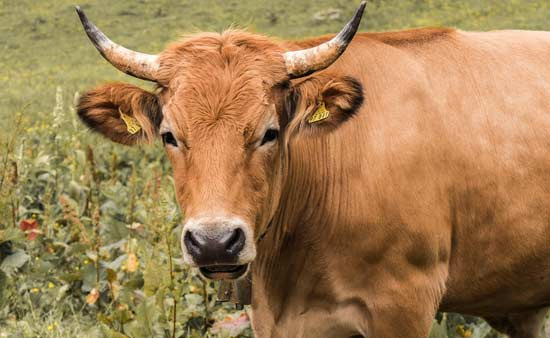
Texas is one of the largest beef production areas in the United States, and beef prices are relatively cheap compared to other states.
Here, steak is a staple, and barbecue brisket is very famous.
However, these days, when I go to the grocery store, I can't help but wonder, "Why do beef prices keep rising?"
Recently, when I look at the meat section of H.E.B., I am shocked by how much the prices of ribs have risen.
Even when trying to buy in bulk at Sam's Club or Costco, the prices are still too high.
My kids love braised short ribs...
I need to spend about $30 for a meal that can comfortably feed four people...
In the past (about four years ago?), $15 was enough. Prices have risen too much.
So I looked for news and found that the total number of cattle in the U.S. is at its lowest level in 70 years as of 2025.
Even looking at Texas cattle, the scale of the barns has slightly increased, but since the number is already low, it is difficult to meet the demand.
Fewer cattle mean a supply shortage, which inevitably leads to a spike in beef prices.
Additionally, there is high demand for U.S. fresh and processed meat in countries like Korea, Japan, China, and Europe, leading to significant exports.
In particular, there is increasing demand for specific cuts like short ribs, tongue, and liver.
The annual export amount is said to be as high as $1.3 billion, which explains the rising prices.
Meanwhile, in Texas, ongoing droughts since 2020 have prevented grass from growing properly.
Thus, ranchers have to spend more on alternative feed like grains and hay.
When grain prices rise, feed costs also increase, which ultimately reflects in meat prices.
It's not just the grain prices that have risen. Running a ranch involves various fixed costs such as fuel, electricity, labor, insurance, and loan interest.
Recently, all these costs have increased, making it possible for ranchers to operate at a loss.
From the ranchers' perspective, they might think, "It's great that beef prices are rising," but in reality, their profit margins often decrease.
Cattle take about 3 to 4 years to grow from birth to market weight.
So even if prices rise now, the supply won't recover immediately. There are also many issues with the pricing policies of intermediate distributors.
The U.S. Department of Agriculture (USDA) and related agencies predict that the current shortage of livestock is likely to continue into 2025. ㅠㅠ
Import regulations, political and economic uncertainties regarding Mexican beef are also reducing import volumes.
Recently, trade conflicts with Mexico and issues with parasites have reduced supply, and trade agreements with countries like the UK have also affected Texas beef prices.
Drought, feed prices, insurance and interest burdens, and the breeding cycle that takes several years... all of these factors seem to be contributing to the rising prices.
Even though Texas is the home of beef, the continuous rise in prices signals that the supply shortage structure is becoming entrenched.
Now, even Texas barbecue has become burdensome due to meat prices...
I wonder if I should stick to much cheaper pork and chicken for now.







 Khan Film Blog Production |
 dermoon |
 hoosierdaddy |
 sun walker |
 Let's Be Like a Salt-like City Person |
 Helpful Life Stories |
 American Man in a Mask |
 Hajiwon Blog Hair Salon |
 Make My Day |
 TEXAS Fishing Boat |
  Korean Mom |
  My NYC |
  moo moo |
  Mr Oh |
  forevergee |
  festival |
  manchester |
  constant |
  Leapfrog Move |
  vibranto |
  Tora Tora |
  yellowbutter |
  Dolly |
  US Embassy |
  NYC saladbar |
  Finding Superfoods |
  lightyear |
  song bang |
  vexomo |
  Indiana Jones |