
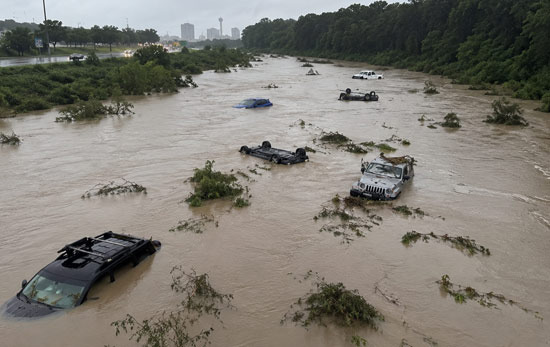
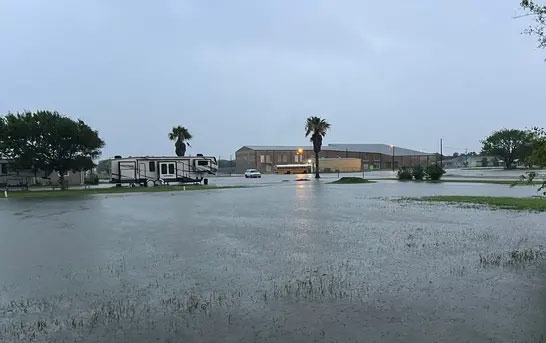
Roads that seemed harmless transformed into rivers in just a few minutes. Therefore, in San Antonio, the phrase "Turn Around, Don't Drown" is taken very seriously.
Even shallow-looking water can sweep vehicles away in an instant. In fact, data from the San Antonio Fire Department shows that there are specific intersections where vehicle flooding rescues occur repeatedly.
Additionally, in the summer of 2025, significant flooding also occurred in the nearby Hill Country area. The Central Texas flood in 2025, originating from the Guadalupe River basin, resulted in over 100 deaths and shocked the entire state of Texas.
Campgrounds and riverside communities in Kerr County suffered extensive damage, and San Antonio residents were reminded that "we must never let our guard down regarding floods in this area."
Tornadoes cannot be completely ignored either. San Antonio lies on the southern edge of Tornado Alley, and watches or warnings are often issued in the spring.
While not as frequent as in Dallas, strong thunderstorms and hail are experienced every year. Therefore, one of the first things to do after moving here is to enable notifications from the National Weather Service on your phone.
Another event to remember is the winter storm Winter Storm Uri in 2021. During that time, San Antonio also experienced power outages and water service interruptions lasting several days.
Texas is generally weak in winter infrastructure, so a single cold snap can disrupt city functions. As a result, locals still tend to stockpile essentials like bottled water, flashlights, and power bank batteries.
San Antonio is a city that is very sensitive to heavy rain and flooding. However, unlike California, there is little concern about major earthquakes, and there is no tsunami risk. Ultimately, what's important in this city is "not to underestimate the roads on rainy days."
In fact, those who have lived here for a long time often prefer to stay home on rainy days. It's not out of fear, but because they have seen firsthand how dangerous the waterways in San Antonio can be.
So what are the advantages? The biggest advantage of the weather in San Antonio is that "there are no extremely uncomfortable seasons."
Compared to other major cities in the U.S., this is quite noticeable. For example, Chicago or New York has long, harsh winters that effectively limit outdoor activities for months. Conversely, Phoenix has such intense summers that going outside during the day can be burdensome. However, San Antonio has short, mild winters, resulting in lower heating costs, and snow rarely disrupts daily life.
Another positive aspect is the amount of sunshine. With many sunny days throughout the year, there is less depression and it's easier to maintain an active lifestyle. Compared to cities like Seattle, where cloudy days can stretch on for long periods, the difference is quite significant. Spring and fall are also relatively long and pleasant, providing many opportunities for golf, walks, and outdoor activities.
In terms of humidity, it is less sticky than in eastern major cities, so even with summer heat, the feeling of suffocation is relatively low. Overall, I believe that San Antonio's biggest advantage is that it has "comfortable weather" rather than "perfect weather," resulting in significantly less extreme stress.
 Chase60Meals
 ColaBoatCrew







 Victory 1988 |
 Smile Face |
 Helpful Life Stories |
 Casa Mia |
 Study Abroad Life Know-How Tips |

 TEXAS Fishing Boat |
 solvix18 |
 Texas Migration Story |
  USA Business News |
  Samsung My My |
  bubblo |
  tartbear |
  Washington Monument |
  Forever Young |
  crystalx |
  Spaghetti Flying Religion |
  lunarpath |
  Another Eden Channel BLOG |
  sprinkletop |
  bongo |
  savannah choi |
  Successful Manager Kim's Team |
  crystalo |
  Canvas Pro Blog |
  Time Management Enthusiast |
  Cap Com |
  nixxon |
  kevin Kim |