
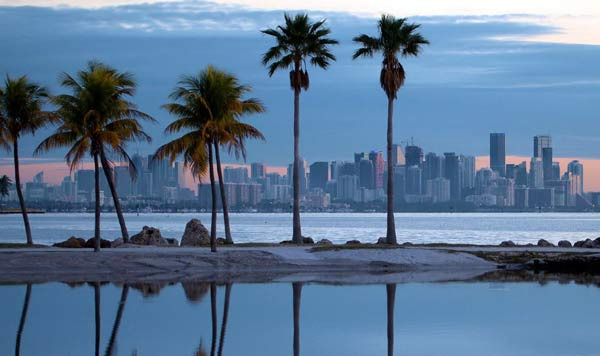
Tall and slender palm trees lined up along Miami Beach. The sky is blue, the breeze is warm, and amidst it all, the palm trees stand almost as symbols. In fact, the image of palm trees is strong throughout Florida, but in Miami, their presence is much more pronounced.
It is harder to find places without palm trees than to find those with them, from streets, beach promenades, resort entrances, to condo complex entrances. They feel more like icons that visually define the city of Miami rather than just trees.
If you think about why these palm trees thrive so well, the answer is simple. Miami is a region that is warm year-round and has no cool winters. With a climate similar to Southeast Asia or the Caribbean, the average temperature in winter hovers around 20 degrees. Thanks to this, palm trees grow continuously throughout the four seasons. In the rainy summers, their growth rate increases, and they withstand winter without frost damage. It is truly a paradise for palm trees.
Moreover, the soil is often sandy and well-drained, preventing root rot. Plants that can withstand sea breezes and high humidity are rare, but palm trees thrive in such environments. The Miami weather, where rain can pour and then sunshine bursts out immediately, is a perfect match.
Another interesting aspect is the diversity of species. It is not just the long coconut palms that come to mind. There are various forms such as Washingtonia palms, royal palms, areca palms, coconut palms, and sabal palms. The royal palm has a smooth trunk and a lush top, resembling a 'crowned palm,' while the Washingtonia palm is tall with leaves that spread out like an umbrella.
Miami does not plant palm trees just for aesthetics. There is a deep urban image strategy at play. People remember places with palm trees as warm vacation spots. So, when driving along the beach road, the palm tree line stretches out beautifully, pleasing the eye. It's great for taking photos, and tourists naturally feel, 'This is a vacation vibe.'
However, they are not just pretty. Tall palm trees are vulnerable to typhoons and hurricanes. When strong winds blow, leaves can tear, and fallen leaves accumulate on the road, requiring cleanup. Because coconut fruits are heavy, during typhoon season, there are times when fruit removal is necessary due to safety risks.
Additionally, palm trees have a surprisingly low ability to provide shade. Their leaves spread only upwards, failing to block the sunlight that shines down, leading to complaints from passersby that "they look great, but there's no shade." Therefore, actual shade trees are mixed with live oaks, mango trees, and mahogany trees.
Upon closer inspection of the Miami palm tree landscape, well-maintained landscaping patterns become apparent. The beach road features tall royal palms planted at regular intervals to create lines, residential areas use areca palms for privacy screens, urban bustling areas emphasize verticality with Washington palms, and parks enhance the vacation feel with coconut palms. The same tree serves different roles depending on the location.
Ultimately, Miami's palm trees are not just ordinary trees. They possess survival abilities perfectly suited to sunlight and humidity, symbolize the city's vacation image as landscaping elements, serve as decorations that entice tourists to take photos, and at times, can be a nuisance due to falling fruits during hurricanes.






 oh my salami |
 Komet Park |
 Victory 1988 |
 US Home Buying Information Home Insurance |
 Dr. Kelso |
  DREAM BIG |
  frostbite |
  330 Forever My Love |
  El Dorado |
  dralix58 |
  Gorama Round |
  Skydiving |
  dreamport |
  Yellow Snowman |
  Toaster Pizza Magic Show |
  velvetnom |
  Anytime Journey |
  Mrs. Duluth |
  jaxter |
  Atlanta Mama |
  Baguette Blog |
  Tan Sol |
  US Embassy |
  Korean Mom |
  My NYC |