

Oregon, where Portland is located, has a property tax burden that is about average among U.S. states.
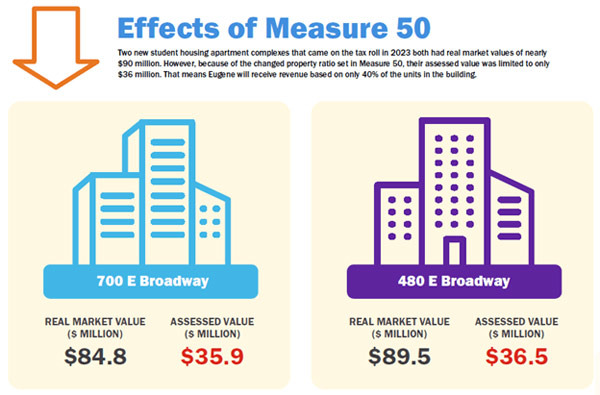
The most significant feature of Oregon's property tax is that the increase in assessed value is limited to a maximum of 3% per year due to Measure 50, which was passed by voter referendum in 1997.
Even if market values rise sharply, the assessed value, which is the basis for tax calculation, increases much more slowly. Therefore, long-term homeowners tend to pay lower taxes compared to current market values. In contrast, new homebuyers are taxed based on the current assessed value, which may feel like a heavier burden initially.
In Multnomah County, the effective tax rate for Portland homes is approximately between 1.0% and 1.3%. For example, if a home has a market value of $500,000 and an assessed value of $350,000, the annual property tax could range from about $3,500 to $4,500.
The actual tax rate varies depending on the school district the home is in, special tax districts (such as local fire departments, sewer districts, etc.), and more. You can check the exact tax details by entering your address on the Multnomah County Assessor's website.
Oregon has a unique structure where there is a state income tax but no state sales tax. As a result, property taxes and income taxes are key revenue sources for local governments and schools. A significant portion of the funding for Oregon public schools is distributed through the state government, and there are mechanisms in place to adjust for property tax disparities to prevent school funding inequalities.
In Oregon, including Portland, various bond measures and tax issues related to school budgets are regularly put to a vote by residents. The Portland Public Schools (PPS) district, which oversees Portland's public schools, decides on bond measures for school facility improvements or educational program expansions through public votes every few years.
If these bonds pass, additional tax rates may be added to local property taxes, increasing the amount taxpayers owe. If you are considering buying a home or living long-term in the area, it is important to look into this aspect beforehand.
Portland Public Schools (PPS) is the largest public school district in Oregon, educating about 49,000 students.
The budget is primarily funded through state allocations, federal grants, and local property taxes. In recent years, PPS has faced budget shortfalls, leading to some school closures and program reductions. This has sparked significant controversy within the Portland parent community, and school budget issues have become a major topic in local elections.
In addition to PPS, there are separate school districts operating near Portland, such as Beaverton, Lake Oswego, and Tigard-Tualatin. Each of these districts has different property tax areas and budget structures, and the Lake Oswego district is particularly known for its high educational standards, which contributes to higher home prices in the area. Korean families who prioritize their children's education should carefully consider school district boundaries when looking for a home.
Property tax payments can be made annually or quarterly throughout Oregon. In Multnomah County, tax bills are typically sent out in October, with a payment deadline of November 15. If you pay in full by this date, you may receive a discount, and there are options for installment payments in February and May. Late payments incur monthly interest and penalties, so it is advisable to mark the payment schedule on your calendar.
Oregon has property tax relief programs (Deferral and Exemption) for seniors, disabled individuals, and low-income residents. Homeowners who are 62 years or older, or disabled and meet certain income criteria, can apply for benefits that allow them to defer property tax payments until the end of their residency (upon death or sale of the home). There are also exemption provisions for veterans. These programs can be applied for at the Multnomah County Assessor's office.
In addition to property taxes, Portland homeowners should be aware of the Metro Housing Bond and the Preschool for All tax. The Metro Housing Bond is a bond measure aimed at providing affordable housing in the metro area, which applies an additional tax rate, while Preschool for All is in the form of an income tax but may be included in some property tax bills. The tax structure in the Portland area is somewhat complex, overlapping at the state, county, metro, and city levels, so it is recommended to consult with a tax advisor or real estate professional before purchasing a home.
In conclusion, Portland's property tax rates are not extremely high or low compared to other major cities in different states when looking at surface rates alone. However, when additional rates from various local tax districts and school bond rates are added, the actual amount owed can be higher than expected.
Given Oregon's reliance on income and property taxes without a sales tax, it is important to understand the overall tax burden structure and develop a long-term financial plan.
 SunnyHarbor75
 RunWhatcha
 ArkEk
ArkEk





 moo moo |
 ultron78 |
 garlic bread |

 urbanmint |
 Sunset Oregon |

 copanda |
 Time Management Enthusiast |
 Oregon Our Neighborhood Story |
  road98 |
  Churros Train Conductor |
  gleeful |
  Burbank Lee |
  Olivia's Blog |
  Bushing Around Life |
  Active |
  Cherokee Rose |
  Kor. Master |
  Holey Moley |
  Conflite Teacher |
  Hodong Prince Over Flex |
  Mist inn |
  citrus pop |
  Onion Ring |
  phoenixia |
  viewtop |
  loverun |
  Kim Do Sun |
  SEVEN SEVEN |