

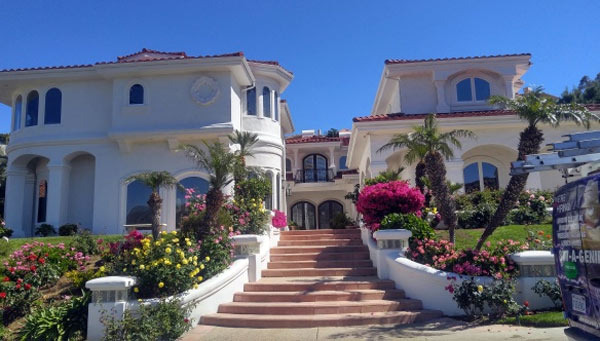
When discussing high-value properties in the LA real estate market, the term "mansion tax" inevitably comes up.
Starting in 2023, this policy was officially implemented in Los Angeles, adding an extra tax on high-value real estate transactions. The name alone tends to raise eyebrows. Perhaps due to the connotation of the word "mansion," it feels like a tax aimed squarely at the wealthy, and indeed, it poses a significant burden for those dealing in high-end homes or large commercial properties.
The purpose of this policy is to generate funds to address the increasingly severe housing crisis and homelessness issues. Many people can feel the urgency of this problem when observing the rapid rise in home prices and the situation on the streets in LA. Thus, the city has determined that a strong measure is now necessary. The target is all residential and commercial real estate transactions exceeding $5.15 million.
While it may seem distant for those buying and selling a single home, the high threshold has completely changed the atmosphere among investors and asset holders at the upper end of the LA real estate market.
If the transaction amount is between $5.15 million and $10 million, an additional 4% tax applies; if it exceeds $10 million, the tax increases to 5.5%. While these numbers may not seem impactful at first glance, selling a home for $8 million incurs a tax of $320,000. In many areas, that amount is equivalent to the price of a whole house.
This tax is levied all at once during the transaction, similar to a transfer tax, making the burden feel much heavier. As a result, for those owning high-value homes, every decision about when and how to sell has become a part of their investment strategy. The revenue generated will be used for low-income housing construction and homelessness support programs, with the city of LA expecting to generate nearly $600 million in additional revenue each year through this measure.
As soon as the policy was implemented, the market reacted immediately. Just before the rollout, there was a surge of listings from actors and retired entrepreneurs trying to avoid the tax, and reports circulated in the industry about celebrities and large investors proceeding with sales. In fact, many ultra-high-end properties were being sold at reduced prices to finalize transactions, while those who missed the timing were left sighing.
Commercial real estate is no exception, as developers and investors scrambled to restructure project timelines and sales strategies. Reactions are understandably mixed. Supporters argue that given LA's housing crisis and homelessness issues, such a strong policy is now necessary. The logic is that for the city to progress, someone must bear a greater burden.
On the other hand, opponents worry that a decrease in transactions could stifle economic activity, impacting related industries, including construction and finance. There is also a realistic concern that high-net-worth individuals and investors may flee to other cities to avoid the tax burden. Ultimately, the mansion tax has become a variable that alters the structure of the LA real estate market and the flow of funds.
As the policy is still in its early stages, the market has not fully adapted, and complaints and debates continue to arise. However, it will take several years to determine how realistically this policy can achieve its goals of alleviating the housing crisis and addressing homelessness.
What is clear is that if you are considering real estate transactions in LA, the mansion tax is no longer an option but a necessary condition to understand. The most reliable way to survive in this market, as always, is to quickly grasp information and strategically adapt accordingly.






 ultron78 |
 garlic bread |
 Sugar Cream Door Bulletproof Noodles |
 urbanmint |
 |
| 
 Weekend Movie Blog |
 Beauty, Health, Lifestyle Blog |
 coloradoman |
 Superman Cat Blog |
 novapixel |
  Korean Mom |
  My NYC |
  moo moo |
  Mr Oh |
  forevergee |
  festival |
  manchester |
  constant |
  Leapfrog Move |
  vibranto |
  Tora Tora |
  yellowbutter |
  Dolly |
  US Embassy |
  NYC saladbar |
  Finding Superfoods |
  lightyear |
  song bang |
  vexomo |
  Indiana Jones |