

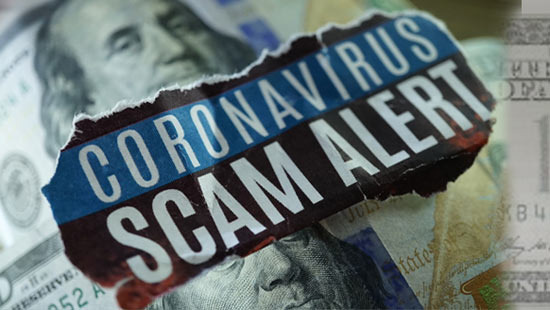
It still angers me to recall that during the pandemic, while the world was in chaos, the largest relief fund in U.S. history became prey for scammers.
As of 2026, the money that disappeared back then is still being tracked, and the investigation is becoming increasingly thorough over time. From the perspective of a taxpayer in the U.S., this incident is not just news; it feels like a crime that has robbed my wallet.
The central organization currently pursuing this case is a government-wide task force called the 'COVID-19 Fraud Enforcement Task Force.'
The Department of Justice is leading the overall investigation, while the Small Business Administration's Office of Inspector General is dedicated to investigating fraud related to PPP and EIDL business relief funds, the IRS Criminal Investigation Division is tracking the flow of money, and the Department of Labor's Office of Inspector General is focusing on unemployment benefit fraud. The fact that this is not a single agency but a comprehensive government investigation shows how seriously the U.S. views this issue.
It is estimated that at least $280 billion was lost during the pandemic.
This is a number that is hard to imagine for ordinary people like us, but in Korean currency, it exceeds 370 trillion won.
As of 2026, about $10 billion has been recovered or frozen. While this amount may seem small compared to the total, the problem is that the investigation is still ongoing. Assets such as supercars, mansions, luxury goods, and cryptocurrencies purchased with the stolen money continue to be seized and returned to the treasury. The stories of Lamborghinis, Ferraris, gold bars, and Bitcoin in the news are all related to this case.
People are still going to jail. Thousands have been indicted so far, and the main perpetrators who committed fraud systematically have received sentences of 10 to 20 years. The excuse of "I thought it was free money" did not hold up.
Moreover, the statute of limitations for pandemic-related fraud has been extended to 10 years, meaning investigators can still knock on doors into the 2030s. This essentially means it will follow them for a lifetime.
So, can money still be found now? It is not easy, but there is still a possibility. Digital traces such as paperwork, IP addresses, account movements, and fake company information left at the time are continuously being reanalyzed using AI and big data technology. Over time, hidden traces are becoming more apparent.
In conclusion, this case is not over; it is ongoing. The fact that our tax dollars have vanished into the luxurious lives of criminals evokes feelings of betrayal beyond anger, but at least the U.S. government is not covering up this issue and is pursuing it to the end.
The anonymous reporting hotline is still open, and investigations are ongoing across the United States. Even if not everything can be recovered, the message that those who commit fraud will inevitably pay a price seems to be clearly conveyed.






 Moscow Kim |
 coloradoman |
 Montgomery Mom |
 GOGO SING |
 Hajiwon Blog Hair Salon |
 heartbreaker |
 Washington Monument |
 Eldorado 88 |

 manchester |
  constant |
  Leapfrog Move |
  vibranto |
  Tora Tora |
  yellowbutter |
  Dolly |
  US Embassy |
  NYC saladbar |
  Finding Superfoods |
  lightyear |
  song bang |
  vexomo |
  Indiana Jones |
  meloncat |
  novapixel |
  mortrix |
  Esther 1983 |
  fortbliss |