

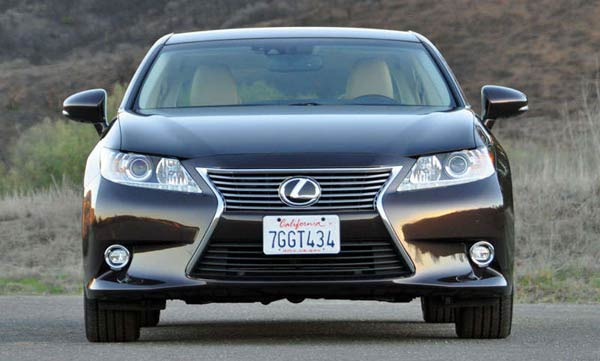
These days, when the topic of buying a new car comes up in the U.S., it often starts with laughter.
"Is this really the price for this car?" Such comments come up because prices have skyrocketed. The average price of a new car has surpassed $50,000.
That's over 70 million won.
In the past, spending $30,000 would get you a decent car...
Now, that amount is enough to buy a decent used car.
New car prices have risen a staggering 33% compared to 2020, and honestly, if you ask if incomes have increased that much, the answer is no.
But the real comedy lies in the monthly payments. The average monthly payment has exceeded $760, and for trucks, it's common to see payments over $1,000.
Spending $1,000 a month just to drive a car? That's almost the cost of a one-bedroom apartment.
And cars lose value over time. It's not an asset; it's like pouring money into a leaky bucket.
Currently, auto loan interest rates are in the 6-7% range, which feels completely different from the 2-3% rates a few years ago.
So, people are extending the loan terms to lower their monthly payments.
In the past, loans were typically 60 months, at most 72 months, but now 84 months is standard, and even 100-month loans are available.
It's a structure where you're paying off a car for over 8 years. By then, the car has already lived its life.
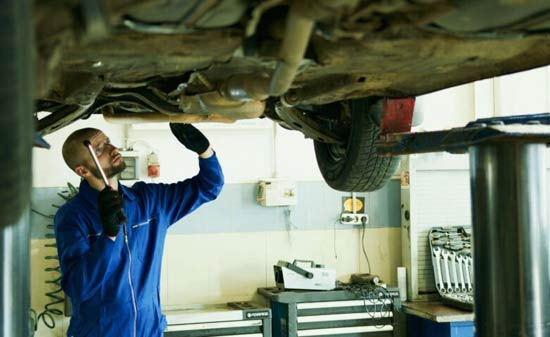
But there's something even scarier.
If you stretch it out that long, the total interest adds up significantly.
And the car's value decreases over time.
Eventually, the loan balance can exceed the car's value, leading to what's commonly referred to as a 'negative equity' situation.
In simple terms, if you sell the car, you still owe money.
What if you get into an accident? The insurance payout might not cover the remaining balance, leaving you with debt and no car.
So, the atmosphere around us has changed a bit.
In the past, when someone said, "I got a new car," everyone would be envious, but now the first question is, "How much is your payment?"
People genuinely ask out of concern. They've seen too many people struggle for over 5 years trying to keep up appearances.
To trade 8 years of freedom for just a whiff of that new car smell seems like a strange deal when you think about it.
Given this situation, many are naturally turning their attention to used cars.
Especially those that are reliable and long-lasting. There are some names that consistently come up.
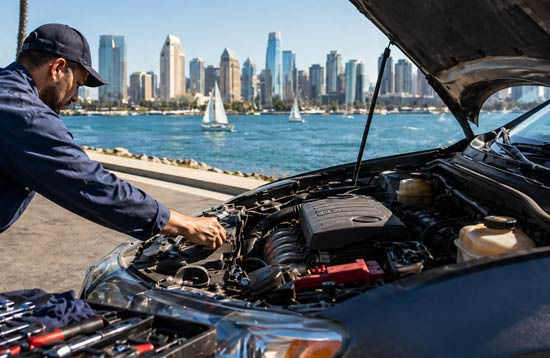
Looking at the current trend, Toyota and Honda are still top of mind.
In the U.S., these names are almost official.
Models like the Toyota Corolla and Toyota Camry have a strong reputation for lasting at least 200,000 miles.
The Honda Civic is similar. In the SUV category, the Honda CR-V is consistently chosen, and for those wanting a bit more luxury, the Lexus ES is also popular.
It's like a Toyota engine dressed in luxury, known for being reliable and long-lasting.
But honestly, Hyundai has also made significant strides lately. The old sentiment of "domestic cars are not great" is no longer prevalent.
When you look at Hyundai models like the Elantra, Sonata, Tucson, and Kia Sorento, there are plenty of examples of them lasting over 200,000 miles.
With proper maintenance, they can last a long time. The image of them breaking down quickly has diminished significantly.
Ultimately, choosing a reliable, long-lasting car is the real way to save money.
A car is just a means of transportation. But think about it: if $1,000 is leaving your account every month for 7 or 8 years, that's not just the cost of the car; it's money that could have gone towards your lifestyle, travel, or investments.
We're no longer in an era where getting a "new car" holds much significance.
Choosing a proven used model to drive stress-free for a long time is much better.
To be honest, that new car smell? It fades in a month.
What remains is the payment. The prestige is temporary, but the payments last a long time.
 TennisPal







 Way to easy |
 holy cow |
 Soy Angelino |
 SKy Face |
 gleeful |
 Learn English Accurately |
  U.S. Supreme Court Judge Kim |
 Korea News Economic News |
 Sandiego Auntie |
 Hardworking Running Bobby Kim |
  Con Cheese |
  softmoony |
  Breaking Bad Drama |
  New York Queens Native Blog |
  Shinbaram Dr. Blog |
  vivavida |
  limestone |
  oster |
  daddyyo |
  neapolis |
  seadoll |
  ansdal |
  Vivid U.S. Regional Information |
  Vasila's Newlywed Blog |
  Arizona Cowboy |
  merry merry |
  Hoorah Ooorah |
  Fragile Me |
  Rowland Mama |