

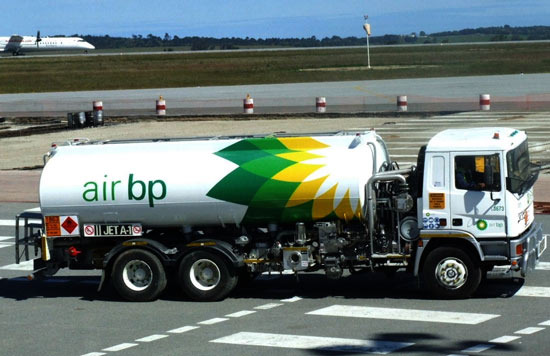
These days, the news keeps mentioning a "jet fuel shortage," but is there really a lack of fuel? The answer is no.
There is fuel available. The problem is that it's not arriving on time.
It's stuck in transit. Especially if the routes from the Middle East to Europe are blocked, the inventory decreases rapidly.
Calling it a "shortage" only confuses people more.
The situation in Europe is even more absurd. Currently, the available inventory can last for about 6 weeks, or 42 days.
If the supply continues to be blocked, it will diminish in no time. Particularly, if it drops below 23 days, there will be no solution.
It won't just end with price increases; flight cancellations will become a reality.
Why is it so vulnerable? Ultimately, it's a structural issue.
Europe has reduced its refining capacity by cutting back on refineries.
Instead, it has shifted to a structure that relies on imports, a significant portion of which is tied to a single route.
In the aviation fuel market, South Korea has a surprisingly large share. South Korea has well-established refining facilities, making it a 'refining and exporting country.'
In particular, South Korean refineries process crude oil imported from the Middle East into aviation fuel and then export it.
In fact, not only Japan, Southeast Asia, and Australia, but also parts of the western United States rely heavily on South Korean aviation fuel.
In certain regions, nearly 70-80% of aviation fuel imports come from South Korea.
With supply becoming unstable, discussions of aviation fuel prices reaching $200 are emerging, but it's important not to simply accept that the price has gone from $100 to $200.
This doesn't mean that the actual average price is $200; it's more of a warning that it could reach that point in the future.
But the key factor is speed. When the price quickly rises from $100 to $140 or $150, airlines will find it hard to cope.
This industry consumes fuel at an alarming rate, so even a slight increase can flip profitability.
As a result, they cut routes that aren't profitable. They eliminate the cheapest seats.
The outcome is that flight routes decrease while prices rise. Consumers are left with fewer options and have to pay more.
The U.S. is not safe either. The western region is particularly sensitive. Areas like California, Washington, and Hawaii rely heavily on external aviation fuel.
If the supply from regions like South Korea is disrupted, they will be directly affected. Movements to reduce certain routes are already being observed.
In summary, war breaks out. Routes are blocked. Fuel doesn't arrive on time. Inventory decreases. Prices rise. Airlines cut routes.
And in the end, it's the consumers who pay more.
They keep concentrating supply in one area, raising prices when problems arise, and reducing options. And the costs quietly trickle down to consumers.
Ultimately, the term "inventory shortage" is a nicely packaged expression.
And the result is that getting plane tickets this summer is a lost cause.







 celtics |
 candytip |
 Gold Bar |
 Pirate Ship Popcorn Maker |
 Montgomery Mom |
 Learn English Accurately |
 Egg Steamed Pot |
 U.S. Supreme Court Judge Kim |
 Balancework |
 Victory 1988 |
  Swift Falcon |
  venture |
  SPAM 101 |
  choi family |
  zoryan |
  cloud0 |
  SKy Face |
  wonder |
  Dragon Lee |
  productionblog |
  What can make money? |
  Oklahoma Hoya OK |
  prixon74 |
  Roman Pan |
  USALATU BLOG |
  Sunshine Blog |
  Minnesota Small Business |
  Strawberry Pancake Warrior |
  amolayo |