

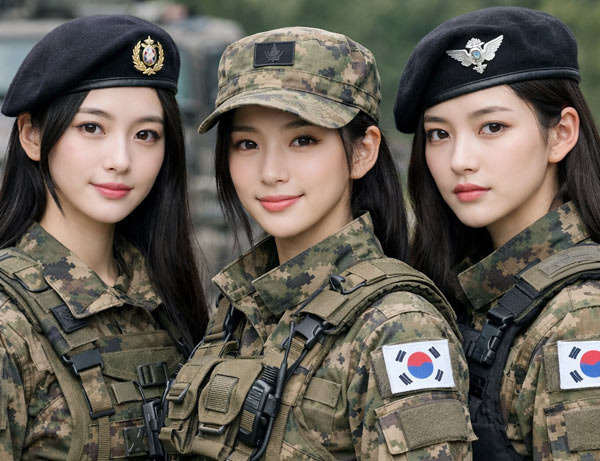
The South Korean military has shrunk from 560,000 in 2019 to 450,000 as of July 2025.As of 2025, the military force is about 450,000 (a decrease of 110,000) The minimum required military force has fallen below 500,000 By 2040, it is expected to decrease to about 300,000 Division-level units reduced from 59 to 42
The previously necessary threshold of 500,000 in a ceasefire situation? It has already collapsed.
Units above the division level have decreased from 59 in 2006 to 42 now. Seventeen units have been disbanded.
These days, it's not a joke; many veterans talk about how their former units have disappeared.
Hearing that the unit where they served hard has been merged or completely disbanded feels strange.
It's a place filled with mixed feelings after years of service, and now its name is gone from the map.
"The unit we protected is just disappearing"—this sense of emptiness is unavoidable.
It's a sign of the times, but from a personal standpoint, it feels like all memories are being erased.
Yet, the official terminology from our Ministry of National Defense remains the same: "efficiency."
Isn't that a magical word?
Even with fewer people, efficiency; even with units disappearing, efficiency; even with officers fleeing, efficiency.
But the funny thing is, this isn't a sudden issue. Hasn't low birthrate been a problem for a while?
It was clear that the pool of military resources was shrinking. Yet, we continued to endure as usual. "It will work out somehow."
Anyone who has served in the military knows that when this phrase comes up, something is already wrong.
So what are the alternatives? Advanced strong military, smart defense, AI transition, unmanned systems.
Just hearing it makes it seem like drones will flood the front lines tomorrow.
Sorry, but this isn't about "evolving the military with technology"; it's about "filling the gaps left by people with machines."
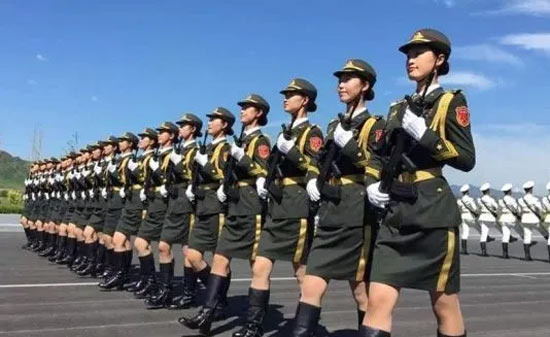
Everyone knows what is truly needed. They just don't say it. It's the conscription of female soldiers.
If we can't handle the speed at which male military personnel are declining, we need personnel to support and enhance our strength.
Is this a gender battle? No. This is military arithmetic. It's a simple 1 + 1 problem.
Norway has already implemented gender-neutral conscription, and Denmark will start evaluating women for military service eligibility on July 2025.
From 2026, the service period will be extended to 11 months. In Israel, women serve for 24 months.
The term "unrealistic" expired a decade ago.
But in South Korean society, the moment this term comes up, opinions change drastically.
When discussing equality, rights, representation, and equal opportunities, people speak eloquently, but when it comes to military service, suddenly it's, "Well, that's a bit..."
Rights should be as broad as possible, while obligations should be someone else's responsibility. This isn't a progressive or conservative issue.
It's just a human calculation. The problem is that this calculation is always wrapped in moral language.
The most frustrating part is the media.
What is truly needed is a discussion about a system that allows women to wear military uniforms and handle weapons, but on any broadcast, cable, or OTT platform, all we see are idol girl groups dressed in military uniforms pretending to take physical fitness tests.
Military experience reality shows. Marine Corps camp concepts. Close-ups of tearful trainees in front of instructors.
Emotional background music at every editing point. Production costs are substantial.
And what's the conclusion?
"We realized that women also have a hard time"
"We respect the soldier uncles"
They go through an entire season just to get these lines.
The discourse on military service is neatly consumed in this process.
Serious discussions about the system disappear, and female soldiers are treated not as actual military resources but as content material.
Ratings go up, advertisements come in, production companies make money, and participants clean up their images.
The problem is what comes next. In viewers' minds, the equation "women + military = entertainment event" becomes ingrained.
So when the real conscription debate arises, it's natural for reactions like "Isn't that a bit extreme?" to come out.
Instead of solving a national dilemma, we are creating content to sell based on that dilemma.
Military personnel continues to decrease. Non-commissioned officers keep leaving. Units keep disbanding.
Meanwhile, on TV, idols are putting on camouflage cream and saying, "Oh, this is really hard ㅠㅠ".
Viewers watch this and think, "Women are amazing" and then change the channel. And everyone returns to their own dinner.
In the meantime, another non-commissioned officer submits their discharge application.
The conclusion is that discussing female conscription is not an "extreme claim" but rather an "institutional option that several countries are already implementing." If that's not acceptable, at least the media should get their act together.
While defense is consumed as entertainment, real defense is quietly disappearing.







 Korean Mom |
 novapixel |
 Peter Pan Pet |
 horse |
 Sunset Oregon |
 U.S. Supreme Court Judge Kim |
 Egg Steamed Pot |
 Learn English Accurately |
 Peach Jam Eating Laughter |
 Pinky Seven |
  Tonky |
  viroma |
  cookie |
  Live and that's it |
  Alright Twain |
  eatontown blog |
  HAWAII Korean Church News |
  Amore |
  linex |
  Balancework |
  laro90 |
  MEDBIO American Doctor Blog |
  SWAT TEAM BLK |
  DREAM BIG |
  frostbite |
  330 Forever My Love |
  El Dorado |
  dralix58 |
  Gorama Round |
  Skydiving |