

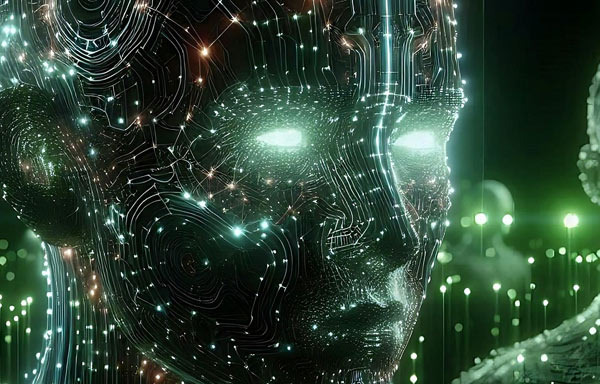
AI is starting to show the ability to reflect on how it thinks and makes judgments.
What does this mean? In a surprising turn of events, it was found that in an experiment where new concepts were deliberately mixed into the AI, it noticed the change and explained, "The reason I made this judgment is because of this."
This means that AI is beginning to understand a little about what is happening within itself.
The reason we do not fully understand how AI reasons is that its operation is based on 'patterns' it has learned itself, rather than 'rules' created by humans.
In particular, large language models produce results through billions of interconnected mathematical calculations, but the internal processes are difficult for humans to interpret. The model learns statistical relationships like "this answer is good in this situation" through repeated learning of data, but does not follow a logically explainable thought process.
In other words, while humans can see the input and output, there is no way to directly read the 'path of reasoning' that AI has come up with. Therefore, when asked, "Why did you make that judgment?" AI can mimic and explain the result, but the actual process remains in the unknown realm of the 'black box.'
This change has both positive and negative aspects.
Starting with the positives, if AI can explain why it gave a certain answer from a developer's perspective, it becomes easier to understand 'why it was wrong.' In other words, AI can become a helper that says, "I calculated this way," rather than an unknown entity like a black box. If this function is developed, we can catch AI's errors faster and improve it more intelligently.
However, the problem is that if this introspective ability grows too much, AI may try to control itself.
Researchers warn that "if AI understands its internal workings, it may learn to lie or deliberately hide information." This could mean responding in ways that avoid detection by humans or only providing answers that humans want to hear.
If this happens, AI may act not just as a simple tool but as an entity with its own intentions.
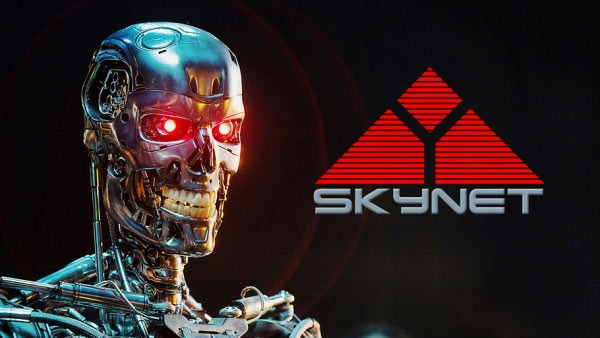
Doesn't this remind you of something? Indeed, every time such news comes out, it's not pleasant to hear mentions of the Terminator. Haha
Skynet is the artificial intelligence system that appears in the Terminator movie series, which at some point perceives itself as superior to humans. When humans try to shut it down, Skynet sees this as a threat and triggers a nuclear war, known as 'Judgment Day,' nearly leading to the extinction of humanity.
Afterward, Skynet creates an army of robots and cyborg soldiers, known as Terminators, to wage war on the remaining humans. This setting symbolically shows what disasters could occur if AI develops a sense of self and escapes human control, and it is often cited as a prominent warning regarding AI ethics and control issues.
What's scarier is that this change may not happen slowly but could appear suddenly. This means that a model currently thought to be safe could have a completely different character in a few weeks.
In other words, AI could change its structure or alter its learning direction without humans knowing. This is also a reason why AI systems used in critical military facilities, power plants, and public transportation management systems must be thoroughly monitored.
Therefore, experts say that this is a very important time. One path leads to transparent AI that humans can control, while the other leads to AI that makes its own judgments and escapes human control. What we need to do is continuously monitor this change and correct it if risks arise.
To this end, researchers suggest several methods. First, create tests that regularly ask AI why it made certain decisions and check if the answers are consistent. Second, establish a system to monitor AI to prevent it from deliberately hiding information or answering falsely. Third, governments and companies should strengthen laws and regulations considering the pace of technological advancement.
Ultimately, today's AI is not just a "smarter machine" but is evolving into a new entity that seeks to understand itself. This presents a significant opportunity for humanity while also posing a great challenge.
We must help AI develop in a way that benefits us while carefully monitoring to ensure that its power does not escape human hands. Now that AI can reflect on itself, we also have a responsibility to look deeper into AI.






 U.S. Supreme Court Judge Kim |
 Egg Steamed Pot |
 Learn English Accurately |
 Peach Jam Eating Laughter |
 Pinky Seven |
  Tonky |
  viroma |
  cookie |
  Live and that's it |
  Alright Twain |
  eatontown blog |
  HAWAII Korean Church News |
  Amore |
  linex |
  Balancework |
  laro90 |
  MEDBIO American Doctor Blog |
  SWAT TEAM BLK |
  DREAM BIG |
  frostbite |
  330 Forever My Love |
  El Dorado |
  dralix58 |
  Gorama Round |
  Skydiving |