

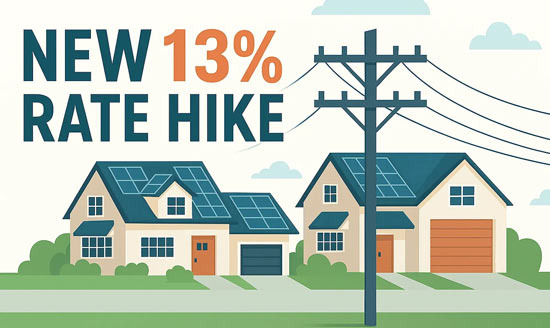
Owning a home in the notoriously hot Valley comes with the annual summer shock of the electricity bill.
I often put off opening it for days, and when I finally do, I'm left stunned by the numbers. $500. Some months it hits $600.
Even though my house has two stories, I don't run the air conditioning all day, so I can never understand how these numbers come about.
But trying to figure it out just gives me a headache, so I end up sighing and paying the bill.
The average electricity rate in California is about 28 cents per kWh, nearly double the national average.
Looking at the numbers, it's easy to ask, "Why is it so expensive?" but the more despairing fact is that it's unlikely to go down anytime soon.
When wildfires occur, the utility companies have to cover the costs, and the expenses for burying power lines are included in the rates, along with the costs for renewable energy installations, all of which we pay for.
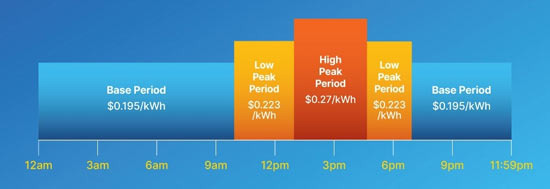
Instead, I've been trying various methods to lower my electricity bill, and here are a few that have actually worked for me.First, I changed the times I run my appliances. In my area, peak hours are from 4 PM to 9 PM, and the rates go up significantly.
So, I make sure to run the washing machine and dishwasher after 10 PM.
At first, it was a hassle, but after a month, I noticed a reduction of about $20 to $30 on my bill. That adds up to several hundred dollars over a year.
I really struggled with the air conditioning. During summer days when it's over 95 degrees outside, I can't live without it.
However, I found that by setting the temperature from 70 to 77 degrees and using a fan, the perceived temperature feels similar.
This change alone saves me about $50 a month. I also change the air conditioner filter every season and keep the blinds closed during the day to block out sunlight.
I can't ignore standby power either. My TV, PlayStation, microwave, and coffee maker consume electricity while plugged in.
I switched to power strips with switches and just turn off the ones in unused areas.
Replacing appliances with high-efficiency models can be costly, but when you do the math, it's worth it in the long run.
There's a significant difference in energy consumption between a refrigerator over 10 years old and a new Energy Star model.
California currently has mostly TOU (Time-of-Use) rate plans, so the key is not just day/night but when peak hours occur.
Currently, it roughly breaks down like this:
- 4 PM to 9 PM → most expensive (peak)
- Morning to early afternoon → moderate or relatively cheap
- Late night to early morning → cheapest (off-peak)
Honestly, even with these changes, California's electricity rates are still high.
However, even with the same house, the same air conditioning, and the same family, whether you manage it or not can make a difference of $100 to $200 a month.
That adds up to over a thousand dollars a year. Complaining won't lower the rates from the utility company, and if there's nowhere else to move, you have to find a way to cope within those constraints.







 gleeful |
 forevergee |
 mortrix |
 cherrydino |
 victoria 68 |
 productionblog |
 Big North |
 U.S. Military Recruitment Information |
 Healthy Local Fresh Information |
 fernando park |
  bravo777 |
  skyblue |
  Project Tomorrow |
  apricotla |
  Soy Angelino |
  nati8 |
  NE Hodori Preik |
  washington mom |
  celtics |
  Balancework |
  round1 |
  Way to easy |
  musicque |
  road98 |
  Churros Train Conductor |
  Burbank Lee |
  Olivia's Blog |
  Bushing Around Life |
  Active |