

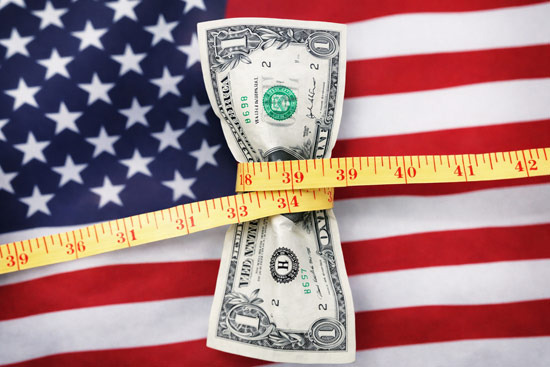
To Those Who Want to Save Money with Willpower
When it comes to saving money, the conversation usually follows a set script.
The common advice is to stop buying coffee, cut out delivery, and quit smoking.
While this isn't wrong, no one is unaware of these tips.
Everyone knows. The problem is that they can't follow through.
So today, let's take a different approach.
Even if it seems a bit sneaky, let's hack your bank account to genuinely save money.
Change Your Environment Instead of Relying on Willpower
Don't trust willpower. It only lasts until 9 AM and dies by evening.
So the solution is simple: create a structure that doesn't require willpower.
Carry just one credit card, and make sure it's a low-limit one.
Throw the rest in a drawer. Keep cash to a minimum. When your options are limited, your spending decreases.
This isn't a mindset; it's math.
Use Laziness as a Weapon
People tend to avoid things that are bothersome. Let's use this nature to our advantage.
Disable auto-login on shopping apps. Delete saved card information.
Make it so you have to enter your 16-digit card number, re-enter your shipping address, and input an OTP every time you want to make a purchase.
The desire to buy something can't withstand this process.
Half the time, you'll just close the window. Humans are inherently lazy. Acknowledging this will help you save money.
Leverage Social Pressure
This might seem a bit sneaky, but it works well. Announce to those around you, "I'm not buying anything this month."
And if you break that promise? You'll feel embarrassed. People dislike feeling embarrassed more than they dislike spending money.
So you stick to it. You're using your pride to save money. It may not be dignified, but your bank account will look better.
Make Saving a Game
If it's painful, you won't stick with it. It needs to be fun.
Try living on $50 for the week. Set rules like this.
If you succeed, reward yourself. If you fail, laugh it off and try again next week.
If you treat saving as a chore, you'll give up within two weeks.
If you make it a game, you can keep it up for months.
Cool Down Your Emotions, Not Just Your Time
"Put it in your cart and wait a day"—everyone knows this, but the key is not time, it's emotion.
Once the desire to buy fades, it's over.
One method: when you want to buy something, just write its name in a notebook.
Look at it the next day. Seven out of ten times, you'll think, "Why did I want to buy this?"
Desire has a much shorter shelf life than you think.
Use Free Resources
When something is free, people often overlook it. There's a bias that free equals cheap.
But if you think about it objectively, free is the most powerful. Libraries, parks, local events, free lectures. The satisfaction isn't low.
Ironically, we often spend money on things that are less enjoyable.
It's not that free things are bad, but rather that we have a habit of ignoring them.
Don't Reduce Spending, Reduce Spending Situations
This is the most important point. You spend money when you meet friends. You spend when you go to the mall.
You spend when you open delivery apps. So the answer is simple: reduce those situations.
Meet friends at home, go to the park instead of the mall, and delete delivery apps altogether.
If you eliminate the "situations" where spending occurs, your spending will naturally decrease. It doesn't require any willpower.
Preemptively Experience Regret
Before you hit the payment button, imagine yourself looking at next month's credit card statement. Picture yourself sighing.
If you can vividly visualize that scene, your hand will stop. People dislike future regret.
You're experiencing it in advance. It's a kind of self-deception, but it works.
Don't Aim for Perfection in Saving
This is the last point and actually the most important.
If you aim for perfection, you will fail 100% of the time. The moment you slip up, you'll think, "Oh well," and everything will fall apart.
It's just like dieting. So you need to create allowances from the start.
Allow yourself to spend freely once a month, or go out for a meal on the weekend. Having some leeway will help you last longer.
In summary, saving money is not a skill but a structure.
Don't trust willpower; manipulate all the situational events in your life.
Then money won't slip away from you.
It may seem a bit sneaky. But your bank account doesn't care about being sneaky...
To avoid worrying about money, your remaining balance is what matters most, everyone~
 USAToday







 cherrydino |
 victoria 68 |
 American Man in a Mask |
 kuku 100 |
 novent |
 Cherokee Rose |
 Dingho and USA News |
 Let's Be Like a Salt-like City Person |
 Maximum Pro |
 Bearded Strawberry Smoothie |
  maryland park |
  persiste |
  conte |
  blueman |
  Going Once |
  Eldorado 88 |
  garlic bread |
  middlekick |
  Moscow Kim |
  nivex85 |
  quanta7 |
  Tomato Health Club blog |
  horse |
  Egg Steamed Pot |
  Helpful Life Stories |
  UNI Lover |
  zen zeng |
  oh my salami |
  wendra |