

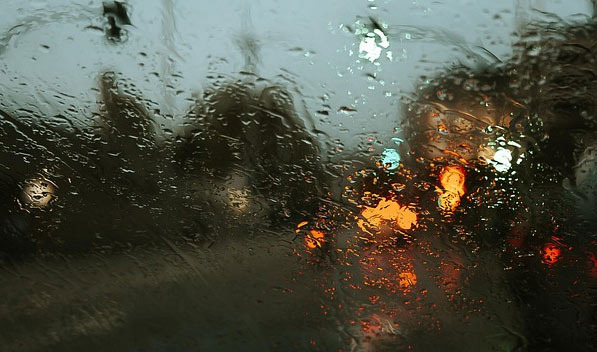
I have been living in LA for quite a while now.
I moved to the U.S. in my late twenties and settled in LA, and when I think about it, I can hardly count on one hand the times it has rained in the summer.
Here in LA, June, July, and August... even though it's summer, the sky looks the same every day.
The blue sky and bright sun make rain feel like a real 'blessing.'
At first, it was strange. Growing up in Korea, summer always came with the monsoon.
When the monsoon season arrived, it would rain not just for a day or two, but for 1-2 weeks straight, and I remember the days when an umbrella was a must-have.
But in LA, hardly anyone carries an umbrella in the summer. And it's no wonder, as there are many cases where not a single drop of rain falls from June to August.
But why does it not rain in the summer like this?
Simply put, the climate zone itself is different. Most of California, including LA, falls under the 'Mediterranean Climate.' The characteristic of this climate is that it is hot and dry in the summer, and mild with rain in the winter. So, most of California's rain is concentrated between November and March, meaning in the summer, high pressure prevents even clouds from forming.
Meteorologically, the strong North Pacific High that envelops California in the summer blocks the influx of moisture, leaving no room for rain clouds to form. Thanks to this high pressure, the sky is clear every day, and as the saying goes, sunny days continue in the 'California Dream.'
If it were like Korea, this would be a big problem. A country like Korea, where rice farming is central, not having rain in the summer? That would be a true disaster. Water is the most important thing in rice farming, and if water is not supplied by the summer monsoon, rice cannot grow. In fact, throughout Korean history, there have been many instances of crop failures and famines due to drought. Even during the Joseon Dynasty, if the monsoon did not come, people would hold rain rituals and conserve every drop of water.
However, California's situation is a bit different. Instead of rice farming, the focus is on crops like fruits, vegetables, nuts, grapes, almonds, and avocados, which can grow without being submerged in water like rice paddies. Of course, agriculture still requires water, but this region heavily relies on an 'agricultural water system' instead of natural rainfall.
A prime example is the massive agricultural water project centered around the Central Valley. The California state government and federal government store water collected from melted snow or winter precipitation in dams and send that water to farms through canals, pipes, and irrigation facilities. In other words, humans are compensating for the summer rain that nature does not provide with a system.
Of course, these days, the drought issue is serious, and California is always struggling with water shortages. In recent years, reservoir levels have dropped, and the news has frequently mentioned the 'Water Crisis.' However, despite this, because such a water supply system is in place, agriculture can somewhat maintain itself even with almost no rain in the summer. If it were Korea, without such a system, not having summer rain would be truly helpless.
Having lived in LA for nearly 30 years, I feel that the weather here is so consistent that while it's nice, sometimes it feels a bit 'boring.'
The romance of rainy days, the emotion of summer showers, and the scenery of walking down a rainy street with an umbrella are truly rare experiences here.
But then again, thinking about it... outdoor plans can go on without worrying about rain, and summer trips can go smoothly without cancellations.
There are many times when I feel grateful for this weather. Especially for those who farm, it must be even more so.
What if California had summer monsoons like Korea? Perhaps people in LA would be a bit more depressed.
In the end, whether it's nature or people, it seems that adapting well to one's environment is the answer.



 Make My Day |
 viroma |
 eatontown blog |
 Toaster Pizza Magic Show |
 US Embassy |
 Weekend Movie Blog |
 Beauty, Health, Lifestyle Blog |
 coloradoman |
 Superman Cat Blog |
 Blogging with a Heart Like the Sun |
  citrus pop |
  Onion Ring |
  phoenixia |
  viewtop |
  loverun |
  Kim Do Sun |
  SEVEN SEVEN |
  yentra |
  Victory 1988 |
  Tonky |
  cookie |
  Live and that's it |
  Alright Twain |
  HAWAII Korean Church News |
  Amore |
  linex |
  Balancework |