

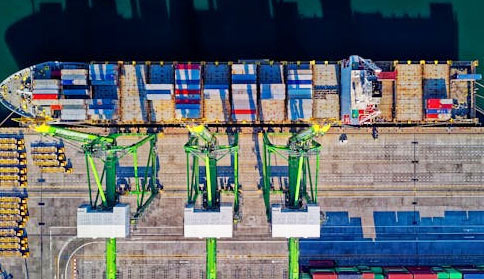
President Trump has begun imposing additional tariffs on products from Canada, Mexico, and China, marking the start of a tariff war. This measure will take effect on February 4, 2025, with tariffs of 15% imposed on Canada and Mexico, and a 10% increase on existing tariffs for Chinese products. President Trump declared this measure a national emergency, stating that tariffs will remain until issues related to fentanyl and illegal immigration are resolved.
This action is presented as an effort to address the influx of illegal immigrants and drug trafficking in the US, but it appears to be a strategy to exert pressure on trade surplus countries. Pressure on trade surplus countries, including Korea, is expected to increase, making revisions to existing trade agreements or new negotiations inevitable.
Korea is one of the countries recording a trade surplus with the US, benefiting from tariff-free access to many export items thanks to the Korea-US Free Trade Agreement (FTA). However, if universal tariffs are imposed, it could have a serious impact on exports to the US. In particular, since major industries such as automobiles, electronics, and steel have production bases overseas, like in Mexico, a 25% tariff could significantly weaken trade competitiveness.
President Trump has announced plans to impose additional tariffs on Korea's major exports, including semiconductors, steel, and aluminum, within months. If a universal tariff of 10-20% is implemented, Korea's exports to the US could decrease by up to $44.8 billion, and there are analyses suggesting that the Gross Domestic Product (GDP) could decrease by 0.7%.
In this situation, the Korean government and businesses need to prepare emergency measures to respond to changes in US trade policy. In particular, companies like Samsung Electronics, Hyundai Motor, and LG Electronics, which have production bases in Mexico and Canada, are facing concerns about weakened price competitiveness due to tariff impacts. Additionally, Korea's exports to the US are expected to decrease by $5.5 billion annually, about 8.4%, which could seriously affect export competitiveness.
Therefore, Korea needs to minimize economic shocks through trade diversification and supply chain restructuring, and actively respond to US trade policies.







 Balancework |
 Make My Day |
 viroma |
 eatontown blog |
 Toaster Pizza Magic Show |
 Beauty, Health, Lifestyle Blog |
 coloradoman |
 Weekend Movie Blog |
 Victory 1988 |
 Superman Cat Blog |
  silverpath |
  Komet Park |
  reliable |
  vexo90 |
  As Always Today |
  veltar87 |
  United States National Administrative Organization Stories |
  springwaltz |
  dense |
  Tiger Milk Foam Research Institute |
  Oreore Mushroom |
  optimistic |
  Good Good |
  berion88 |
  bravo777 |
  skyblue |
  Project Tomorrow |
  apricotla |
  Soy Angelino |
  nati8 |