
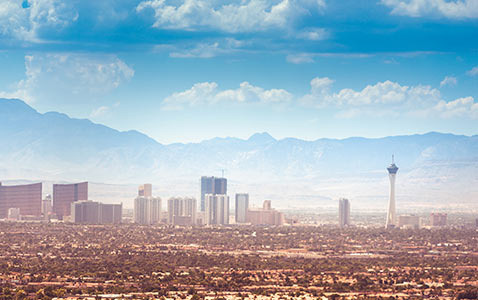
The desert city of Las Vegas may seem far from disasters like hurricanes or blizzards, but it is actually exposed to various natural threats, including earthquakes, floods, extreme heat, and strong winds. Understanding the unique patterns of natural disasters in Las Vegas before moving can help you respond more quickly in emergencies.
The risk of earthquakes exists throughout Nevada. Nevada is known to be the second most seismically active state in the U.S. after California. While Las Vegas itself is somewhat distanced from major fault lines, it can still be affected by earthquakes occurring in nearby areas.
In May 2020, a magnitude 6.5 earthquake occurred near the Nevada-California border, and vibrations were felt in Las Vegas. Buildings in Las Vegas are relatively constructed to earthquake standards, but residents of high-rise buildings or homes with many display cases should take basic earthquake preparedness measures, such as securing items.
Flash floods are a more serious natural disaster in Las Vegas than one might think. The soil in the Mojave Desert has a low ability to absorb water, so when rain falls heavily in a short period, the water quickly flows along the surface. During the summer monsoon season (July to September), sudden heavy rains can cause flash floods that inundate roads in just a few minutes. Flooding incidents have repeatedly occurred near the Strip, in underground tunnels, and on low-lying roads in Las Vegas.
In 2015, several people died due to a flash flood. Clark County provides a Flood Zone Map, and it is important to check whether an area is at risk of flooding before renting or purchasing a home. When a Flash Flood Warning is issued, do not attempt to drive through flooded roads.
Extreme heat is the most significant natural disaster in Las Vegas. Each summer, there are dozens of days when temperatures exceed 110°F (about 43°C), and in the summer of 2023, Las Vegas set a record with 43 consecutive days of temperatures above 110°F. Deaths due to extreme heat occur every year in Las Vegas, with the majority of victims being homeless individuals, the elderly, and outdoor workers.
Clark County operates Cooling Centers throughout the summer and advises residents to stay hydrated, avoid going out during the hottest parts of the day, and not leave pets in vehicles. Air conditioning failures can become a true emergency during the summer, so checking the HVAC system's condition after moving is essential.
Tornadoes are very rare in Las Vegas, but they are not completely absent. Dust devils frequently occur in desert environments, which are visually similar to tornadoes but much smaller in scale and generally pose a lower risk.
However, during the monsoon season, waterspouts (tornadoes over water) or weak tornadoes can occasionally be observed. The NWS (National Weather Service) Las Vegas office intermittently issues Severe Thunderstorm Warnings or Tornado Watches during the summer monsoon period, so it is advisable to enable weather alert notifications on your smartphone.
Haboobs (desert dust storms) primarily occur in the Las Vegas area during the summer and spring. This phenomenon involves strong downdrafts from thunderstorms lifting desert dust to heights of several meters, creating dust barriers that can completely block visibility for kilometers.
Traffic accidents and respiratory issues due to haboobs have been reported in open desert areas near Las Vegas. When a haboob warning is issued, it is safest to pull over, turn off your engine, and wait for the dust to pass. If you are starting life in Las Vegas, it is recommended to have a FEMA disaster preparedness kit (emergency food, water, first aid supplies) and to install the Ready Clark County app on your smartphone.
 Snowman
 HoneyWalker




 Rice Shop Uncle BLOG |
 My Town My Way Blog |
 Arizona AZ Cowboy |
 Valley Hong |
 Mr Oh |
 vegas mom |

 US Legal Consultation on Trials |
 hot chocolate |
 neroyo |
  Buckwheat Muktudari Notebook |
  Jellia Angel |
  Victory 1988 |
  ASURA |
  rapids |
  Softember |
  mykiwi blog |
  Maria Mom |
  Watch for possible danger |
  northpeak |
  Far East Movement |
  mariashin |
  lavender |
  Bridgo |
  Tamfa Fan |
  Sunny Sunday |
  mini hometown |
  torvia |