

I work in LA. The first thing I do when I arrive at the office in the morning is stand in front of the coffee machine.
I drink the first cup to wake up, the second cup after lunch when I feel sleepy, and the third cup around three in the afternoon when my focus starts to wane. This almost repeats every day. Yet, I can't help but wonder if drinking three cups every day is okay.
Recently, an interesting study came out regarding this question. After reading it, I felt somewhat reassured, but there was no immediate reason to quit.
This study is a large-scale analysis that tracked over 130,000 people for nearly 40 years.
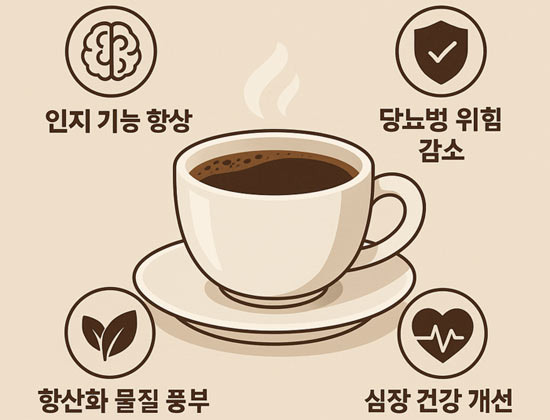
The results showed that people who drink caffeinated coffee have an approximately 18% lower risk of dementia compared to those who do not drink coffee. The most pronounced effect was observed in those who consumed 2 to 3 cups a day. For someone like me who drinks three cups, that's quite a comforting number.
Tea showed similar results. People who drank 1 to 2 cups of caffeinated tea also exhibited a similar trend. Interestingly, this effect was not observed with decaffeinated coffee. This suggests that the key factor may be caffeine rather than coffee itself. I have a colleague who insists on only drinking decaf, which might be disappointing news for them.
The researchers also advised against taking these results at face value. This study shows a correlation, but it does not prove a causal relationship between drinking coffee and a reduced risk of dementia. In simpler terms, it's unclear whether coffee prevents dementia or if healthier individuals tend to drink coffee in moderation.
In fact, those who regularly drink coffee tend to share common traits. They are often active, socially engaged, and lead structured lives. These lifestyle habits themselves could be factors that lower the risk of dementia. It's possible that it's not just a cup of coffee but the overall lifestyle that has an impact. Looking back, I realize that going for coffee with colleagues involves social interaction, which is a form of social activity.
The answer varies depending on the quantity and context. Moderate coffee consumption can enhance focus, stabilize mood, and reduce fatigue. Caffeine helps with brain alertness and increases blood flow, which can positively affect cognitive function. For someone like me, who works in an office and often feels sluggish in the afternoon, coffee is almost a survival tool, and it turns out it's not entirely bad.
However, things change if you exceed 4 to 5 cups a day. Side effects such as insomnia, heart palpitations, anxiety, and stomach irritation can occur. Those sensitive to caffeine or with high blood pressure or heart conditions should be more cautious. I once had a night of sleeplessness after exceeding four cups, which was quite a struggle. The saying that too much of a good thing can be harmful applies to coffee as well.
Based on current research, it seems that consuming about 2 to 3 cups of caffeinated coffee a day is the most reasonable level. This amount may help brain health while posing minimal risk of side effects. Conversely, expecting significant cognitive protective effects from only drinking decaf is difficult, as this study indicates.
One thing is clear: coffee is not a cure-all. Lifestyle factors such as exercise, sleep, diet, and social activities have a much greater impact. It's realistic to view coffee as a small contributing factor that can provide some assistance within that context.
As I sit down with my third Americano today, I reflect.There's no need to force myself to drink for health reasons, and if I enjoy it, I shouldn't feel guilty. However, it's best to stick to three cups as a limit.
The answer about coffee isn't simply good or bad; it depends on how much and how you drink it. I will stop at my third cup today. Probably.







 Korean Mom |
 novapixel |
 Peter Pan Pet |
 horse |
 Sunset Oregon |
 Weekend Movie Blog |
 Beauty, Health, Lifestyle Blog |
 coloradoman |
 Superman Cat Blog |
 Noodle Noodle |
  Tonky |
  viroma |
  cookie |
  Live and that's it |
  Alright Twain |
  eatontown blog |
  HAWAII Korean Church News |
  Amore |
  linex |
  Balancework |
  laro90 |
  MEDBIO American Doctor Blog |
  SWAT TEAM BLK |
  DREAM BIG |
  frostbite |
  330 Forever My Love |
  El Dorado |
  dralix58 |
  Gorama Round |
  Skydiving |