

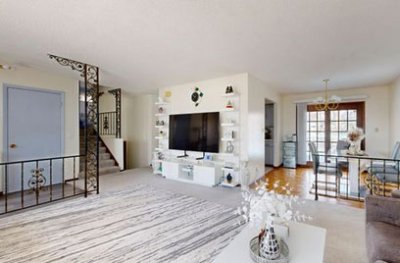
Cambridge is a city formed around Harvard and MIT, known for its school district and research hub, where it is often said that property tax rates are unusually low compared to home prices. This is not a coincidence but a result of Cambridge's unique commercial tax revenue structure.
Compared to the average effective property tax rate of around 1.1% in Massachusetts, Cambridge's effective rate is about 0.5%, which is less than half the state average. This is due to biotech and tech companies in the Kendall Square area bearing most of the commercial property taxes, allowing residential rates to remain low.
The median home price in Cambridge (including condos) is around $900,000. Applying an effective tax rate of about 0.5% results in an annual property tax of approximately $4,500, which is about half of what similar home prices would incur in Burlington or Lexington.
Insurance premiums are typically around $1,500 to $1,800 annually, reflecting the characteristics of densely populated urban areas and the winter risks in New England. For condos, HO-6 insurance is often used, and personal costs are frequently lower than this range.
Maintenance costs are estimated at about 1.5% of the home price, which means around $13,500 annually for a $900,000 home. However, in Cambridge, where there is a high proportion of condos, a significant portion of this is absorbed by monthly HOA fees, which range from approximately $400 to $700, or $4,800 to $8,400 annually, differing from areas focused on single-family homes.
When summing up the costs for single-family homes, property tax is about $4,500, insurance is around $1,650, and maintenance costs are about $13,500, leading to a total annual ownership cost of roughly $19,600 to $19,700. The low tax rate clearly offsets a significant portion of the overall cost burden.
Compared to neighboring Somerville or Alston (Boston), Cambridge has one of the lowest effective tax rates. The proportion of commercial districts is a key variable influencing property tax rates, demonstrating that even adjacent areas can have significant disparities in residential effective tax rates based on their commercial tax revenue structures.
Massachusetts operates an additional exemption program for low-income residents aged 65 and older, along with residential exemptions, and the city of Cambridge also has its own property tax deferral program for seniors and low-income households. If you meet the criteria, it is recommended to consult with the city's assessment office for individual advice.
While Cambridge's low tax rate makes the property tax burden relatively light, the high home prices still drive up maintenance costs and HOA fees. Rather than judging total costs based solely on the tax rate, it may be beneficial to develop a habit of calculating costs item by item for effective budget management.
 BlueTrail89
 foxriverdreamer1982






 |
| 
 Premium Gas Camp |
 CA Real Estate |
 cheesepup |
 breezem |
 sprinkletop |
 lollipop |

 Gold Bar |
  Banana Style Life |
  Tesla X |
  Old English |
  urbanmint |
  forestcloud |
  forever young |
  Arlington house |
  liquid asset |
  Who's watching? |
  eclipse |
  quietwave |
  Hajiwon Blog Hair Salon |
  hoosierdaddy |
  saffronroute |
  korvex93 |
  Mini Mee |
  Darnignac |
  vanilla |
  selvon |