

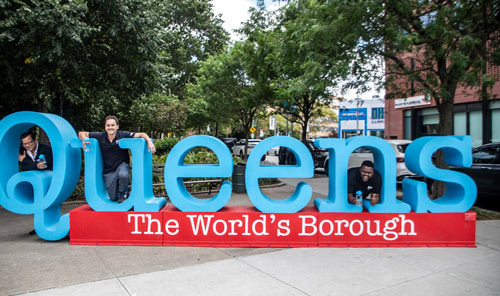
Queens Village is known as a quiet residential area, distinct from the hustle of Flushing and the congestion of Manhattan.
The cost of living index is 138, which is 38% higher than the national average (100). While it shares the same index as Flushing in Queens, the actual housing costs and living environment differ significantly, warranting a closer look.
In terms of housing costs, Queens Village is relatively reasonable within Queens. The estimated rent for a one-bedroom apartment is around $1,700 to $2,100, which is lower than Flushing ($2,900 to $2,400) or Manhattan (over $3,000).
Due to the area's high proportion of single-family homes, rentals and sales of single-family houses are more active than multi-family rentals. The median home sale price is around $500,000 to $600,000, which is relatively low within Queens but still high on a national scale.
Grocery costs reflect the high prices throughout New York City. In the Queens Village area, large chain supermarkets (Stop & Shop, C-Town, etc.) are accessible, and nearby Jamaica or Flushing offers Asian and Korean ingredients. For a family of four, a realistic monthly grocery budget is around $800 to $1,250. Regular trips to Flushing may be necessary for Korean ingredients, so it's advisable to factor this into transportation planning.
Transportation costs are one of the important considerations in Queens Village. The subway lines J and Z, along with the LIRR (Long Island Rail Road), operate in the area, but travel time to Manhattan can be longer than from Flushing (7 train). Utilizing a New York subway unlimited pass allows for public transportation at around $127 per month, but a significant number of households in Queens Village own cars. When factoring in New York state insurance and parking costs, monthly expenses can reach around $300 to $400.
Utilities (electricity, gas, water) are estimated to be around $200 to $300 per month. Due to the high number of single-family homes, utility costs may be somewhat higher than for apartments, with New York City's high electricity rates (Con Edison) being a major factor. Establishing an annual utility budget that accounts for winter heating and summer cooling costs can help maintain stable finances.
Compared to nearby areas, Queens Village (COL 138) shares the same index as Brooklyn (COL 138) and Flushing (COL 138), but actual rental levels tend to be lower than in central Flushing. It is somewhat higher than the Bronx (COL 130) and higher than Staten Island (COL 128). For families preferring a quiet and orderly residential environment while living in New York City, Queens Village is often mentioned as a compromise.
For Korean households, Queens Village offers access to the Korean infrastructure in Flushing via LIRR or bus, along with a relatively quiet residential environment, making it suitable for family living. However, it is practical to calculate the annual additional expenses indicated by the cost of living index of 138 and to check whether the household income and rent ratio can remain within a reasonable range (30% or less of income) before deciding to move.
 SbuxPaik
 SunrayPlus







 |
| 
 Premium Gas Camp |
 CA Real Estate |
 cheesepup |
 breezem |
 Tomato Health Club blog |
 Why Not Me |
 Chili Boy Club |
 Open Flex Mind |
 Bushing Around Life |
  California Kangaroo |
  zanero |
  station |
  Static |
  Star Way |
  American Blog Forge |
  MMORPG Games |
  Then you must be spring |
  Spicy Immigration Life |
  zenvor16 |
  The 2000 |
  toclick |
  wexlin84 |
  Hairy Poppins |
  daisypat |
  Taco Bell Candy Note Blog |
  MintO |
  My Town My Way Blog |
  New Mexico Friends MAX |
  Hajiwon Blog Hair Salon |