

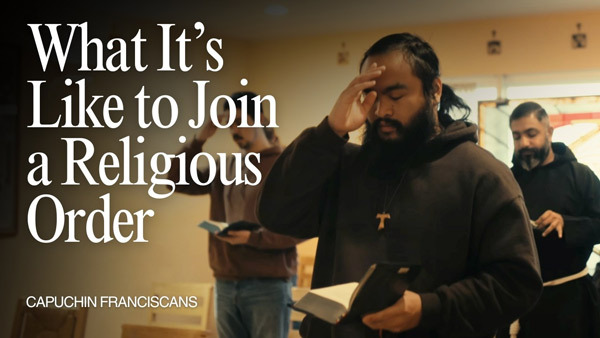
The Capuchin Franciscans, a name that may be unfamiliar even to Catholic believers, is one of the branches that split from the Franciscan Order, known for their strict adherence to poverty and simplicity.
The name 'Capuchin' comes from the large hood attached to the long brown robes worn by the friars, known as 'capucho.' The appearance of these friars has become a symbol worldwide, so much so that the name 'cappuccino coffee' is associated with the color of their robes.
The Capuchin Order began in Italy in the 1520s. At that time, some friars from the existing Franciscan Order initiated a reform movement, saying, "We have become too secular," and sought to return to the teachings of St. Francis. They chose humble monasteries over grand cathedrals and the company of the learned over that of the poor. They filled their days with prayer, fasting, and service, aiming to live a life 'closest to God' in the world. Thus, Capuchin friars seek out remote villages, mountains, and places where the sick and poor reside.
In the United States, the activities of Capuchin friars began in earnest in the mid-19th century. During a time when churches were being established primarily for immigrants from Europe, Capuchin friars continued their mission in the new land. They focused on caring for the homeless and the sick rather than on elaborate masses or organizations.
Today, cities like Detroit, Milwaukee, New York, and Denver have Capuchin Franciscan monasteries, shelters, and free meal programs. Among them, the 'Capuchin Soup Kitchen' in Detroit is a representative charity where thousands of people receive meals daily. The friars bake bread and share food from early morning, continuing their 'praying labor.'
The daily life of Capuchin friars is simple yet regular. They start the day with morning prayers and move according to their missions after communal meals. Some work on farms, while others visit the poor on the streets. Conversations among the friars are brief, avoiding unnecessary words, and they spend most of their time in silence.
Their motto remains true to the teachings of St. Francis: "We live in the world, but we do not belong to the world."
Their lifestyle is so frugal that it is hard to believe in a consumerist America. Personal rooms often contain just a bed, a book, and a cross. Friars do not own personal belongings and share only what the community needs. When there is a need to purchase something, decisions are made in community meetings, and expenditures for luxury or convenience are strictly prohibited.
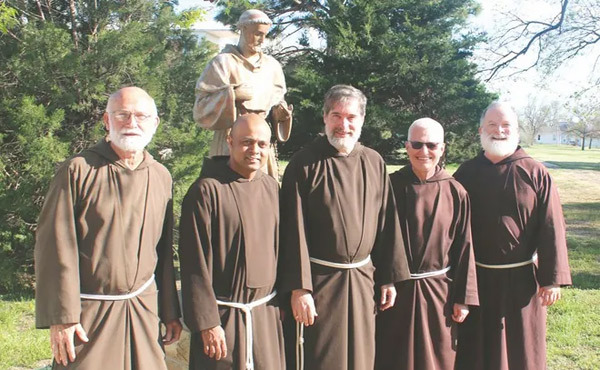
Even their robes are patched up when worn out, and they take pride in wearing shoes that have been used for a long time.
This simplicity does not romanticize poverty but stems from the belief that "the less one is entangled in the world, the closer one becomes to God."
I was once surprised to see a friar's cloak, which was quite tattered, at the airport. It was evident that he was not dressing for show but was wearing his actual clothes in a public place like the airport.
The Capuchin Order has a unique philosophy regarding service. They say they are not 'givers' of help but 'companions' in the journey. While providing food to the homeless, they do not merely solve hunger but engage in eye contact, call them by name, and converse. This attitude is rooted in the belief that "they too are created in the image of God." Because of this approach, Capuchin friars are sometimes referred to as saints of the streets and friends of the people.
Although the number of friars has decreased compared to the past, their presence remains profound across the United States.
Especially, Father Bled Francis of Detroit is a symbolic figure of the Capuchin Order. He has lived his life for the poor and is currently undergoing the beatification process.
In an age where material wealth is abundant but hearts are empty, the lives of Capuchin friars resonate deeply with many.
The Capuchin Order asks us, "How simply do you live?
Can you be happy with only what you truly need?"
As the world becomes increasingly complex and people calculate profit before caring for each other's hearts, these friars continue to live in the way of St. Francis from 500 years ago.
Even in the heart of America's big cities, they quietly pray, bake bread, and hold the hands of the poor.
That simple life resonates more strongly than anything else in the world.






 Famous Attractions in the United States |

 Rowland Mama |
 American History This and That |
 People Moon |
  laro90 |
  MEDBIO American Doctor Blog |
  SWAT TEAM BLK |
  DREAM BIG |
  frostbite |
  330 Forever My Love |
  El Dorado |
  dralix58 |
  Gorama Round |
  Skydiving |
  dreamport |
  Yellow Snowman |
  Toaster Pizza Magic Show |
  velvetnom |
  Anytime Journey |
  Mrs. Duluth |
  jaxter |
  Atlanta Mama |
  Baguette Blog |
  Tan Sol |