

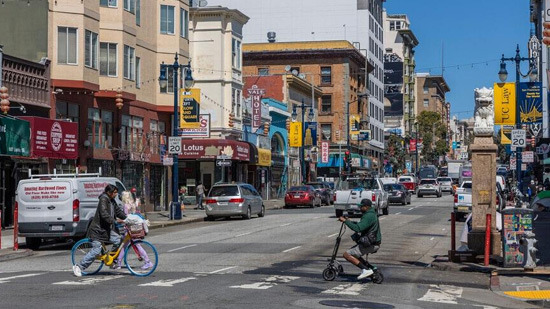
San Francisco and Oakland are cities that appear close together on the map, but their atmospheres are quite different.
Looking back, I think this area has undergone tremendous changes over the past decade.
In the last ten years, the issues of drugs and homelessness have significantly shaken the city's image.
San Francisco was originally a world-renowned tourist destination and a hub for the IT industry.
However, since 2019, the rapid spread of synthetic drugs, particularly fentanyl, has changed the situation.
In particular, the Tenderloin area has become known for frequent sightings of open drug dealing and use.
The number of overdose deaths peaked at 810 in 2023, and while there was a decline in 2024 and 2025, it remains much higher than before the pandemic.
Fentanyl was found in over 70% of the deceased. Ironically, it is said that the number of drug addicts is decreasing as more addicts continue to die.
Oakland is also facing a tough situation. There have been issues of wealth disparity and crime for a long time, but recently, the problems of drugs and homelessness have become more complex.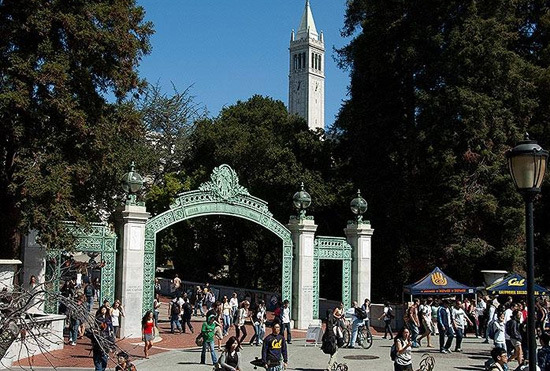
In particular, in some areas, the overlap of open drug dealing, vehicle theft, and property crimes has increased residents' dissatisfaction.
This shows that the drug problem has spread to a level that is now commonplace in both cities.
On the other hand, Berkeley is in a somewhat different position. Thanks to the University of California, Berkeley, it maintains its reputation as a world-class college town.
It is a representative public university in the U.S. that has produced Nobel laureates and world-renowned researchers, and it is also a preferred talent source for Silicon Valley companies.
However, Berkeley has also recently stopped being viewed solely as a 'clean college town.' Around the university and in some commercial areas, the issues of homelessness and drug addiction have increased, and the city is implementing various policies such as camp removals and temporary housing provisions.
The Bay Area, including San Francisco, Berkeley, and Oakland, is home to some of the world's leading tech companies and investment capital.However, high housing prices and living costs, mental health issues, and a lack of housing have pushed some residents onto the streets, and the spread of fentanyl has exacerbated social problems.
From a Korean perspective, these three cities may all feel like the same city, but the actual atmospheres are different.
Berkeley remains an education and research-focused city, San Francisco is a center for tourism, finance, and IT, while Oakland is a city strong in industry and logistics. However, all three cities have faced the common challenge of drug and homelessness issues over the past decade, which is considered one of the most difficult urban policy problems in the U.S.
Recently, some indicators have improved due to strengthened enforcement and expanded treatment policies, but many evaluations suggest that it is still difficult to say that the issues have been completely resolved to the extent that residents can feel it.
 midnightriverwalker1959
 LunaNote
 MasterOC
 UrbanForest70







 Korea Tiger News |
 Alpha and Omega World |
 Florida King |
 AH LALA |
 Victory 1988 |

 Nuchuhan Exploration BLOG |
 my town K blog |
 Peter Pan Pet |
 Smile Face |
  anchor |
  stalion |
  The Long Shot |
  Investment Beginner Company Information Encyclopedia |
  sweetfox |
  ceporta |
  H Leader |
  My tracks |
  Yes Dorian |
  novent |
  calviro |
  Enjoying Samba at Home |
  Once in a Lifetime |
  novapixel |
  Banana |
  rouge88 |
  toffee |
  King County |