

As people reach their 50s, many start to say things like, "My calves often feel stiff," "I get cramps at night," or "My legs feel tight after walking a little."
Most tend to brush it off as just part of aging, but what seems minor can actually lead to serious health issues.
In particular, Korean men often have a strong tendency to ignore these symptoms, which can result in delaying a visit to the doctor.
The issue is that calf pain can be just simple muscle soreness, but it could also be a significant warning signal from the body.
The most common cause is a muscle problem.
Sudden increases in exercise, dehydration, or a lack of electrolytes like magnesium can lead to calf cramps.
Getting cramps at night also falls into this category. If this is the case, adjusting your lifestyle can often lead to improvement. However, the problem may not end there. As we age, issues with blood vessels and nerves can become intertwined.
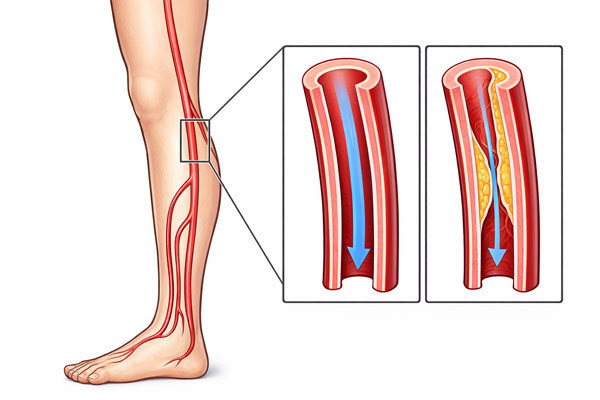
A key condition to suspect is peripheral artery disease. Simply put, it's a condition where the blood vessels leading to the legs narrow. When walking, you may feel stiffness and pain in your calves, which improves when you stop and rest.
Many people dismiss this as just a lack of exercise, but it could actually be a sign that blood vessels are becoming blocked. If it progresses, the distance you can walk may decrease, and in severe cases, pain can occur even when at rest. Once it reaches this stage, treatment becomes much more complicated.
Another issue that should never be taken lightly is blood clots. Especially after long flights or drives, if one calf is unusually swollen, painful to touch, and feels warm, you should consider the possibility of deep vein thrombosis.
This is not just a simple pain issue; if a clot travels to the lungs, it can become life-threatening. Ignoring it with thoughts like, "It's just a little swelling and pain; it will go away in a few days" can lead to danger.
Nerve issues cannot be overlooked either. If you have a herniated disc or spinal stenosis, pain can radiate down to the calves. In these cases, unlike simple muscle pain, symptoms like tingling, burning sensations, and sensory abnormalities often accompany it.
These symptoms tend to worsen with prolonged standing or walking, and improve when sitting or bending at the waist. If you notice this pattern, it's likely that the issue originates from the back rather than just the calves.
Diabetes is also an important variable. The prevalence of diabetes is quite high among Korean men over 50, and if blood sugar levels remain elevated for a long time, peripheral nerves can become damaged. This can lead to not only calf pain but also symptoms like tingling in the feet, decreased sensation, and burning sensations.
The problem is that this progresses gradually, so individuals may not feel the seriousness of the situation and continue to neglect it. This can lead to larger issues if they pass over injuries without realizing it.
A crucial point here is the "pattern of pain." Simple muscle pain improves with rest and naturally recovers over time. However, if you experience recurring pain while walking, swelling in just one leg, tingling or sensory abnormalities, or frequent nighttime pain, the situation is entirely different. This is a warning from your body.
Many people delay going to the hospital for similar reasons: "It's not a big deal," "It will get better in a few days," or "Isn't it just wasting money to get checked?" However, calf pain often hides much more significant underlying causes. In particular, vascular issues or blood clots can lead to irreversible situations if the timing is missed.
In conclusion, you should not dismiss calf pain as just a result of aging. If it recurs, appears in specific situations, or worsens over time, it's essential to identify the cause. Many cases can be confirmed with simple tests, and early detection makes treatment much easier.
It may feel a bit excessive, but it's much better to worry unnecessarily than to regret not going to the doctor later. Many people find themselves wishing they had gone to the hospital sooner.
Calf pain after your 50s is not something to just ignore; it's a signal that should be suspected and checked out. If you take it lightly, you could end up developing a serious condition.







 nivex85 |
 Old English |
 nixxon |
 LIZ Legal Information Blog |
 Karina's Blog |
 xylora |
 Aura-Infused WACAM |

 Texas Migration Story |
 Round and Round Children's Song Kingdom |
  Mia Flori |
  nova nova |
  healthy |
  leaves |
  sparkling |
  maryland park |
  persiste |
  conte |
  blueman |
  Going Once |
  Eldorado 88 |
  cherrydino |
  garlic bread |
  middlekick |
  Moscow Kim |
  quanta7 |
  Tomato Health Club blog |
  horse |