

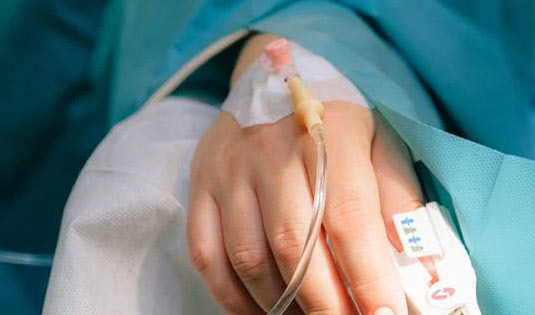
When I first immigrated to the United States, my biggest worry was 'English'.
What would I do if I had to go to the hospital? I was at a loss about what to say and what I would hear.
But after actually going to the emergency room, I realized that the real fear was not English, but the 'American healthcare system' itself.
One day, I suddenly had severe abdominal pain. I thought it would be okay if I just endured it and took painkillers, but as time went on, my condition worsened.
I hadn't eaten dinner and was enduring it, but as the night deepened, it got worse and I found it hard to breathe, so I hurriedly ended up going to the emergency room.
The place I arrived at was the emergency room of a hospital near my home in Honolulu. The hospital was surprisingly busy. I approached the reception desk and barely explained my symptoms.
"Severe stomach pain... I can't breathe well"
The staff entered my information and told me to take a waiting ticket and wait.
That was the beginning. The start of waiting.
If it were in Korea, I might have received treatment urgently. But in the American emergency room, the criteria for 'urgency' are different.
If your life is not in danger, no matter how much it hurts, you have to wait.
I sat there for 3 hours. There were people groaning around me, but no one moved quickly.
As time passed, my anxiety grew. I wondered if this was going to get worse.
Eventually, I was called into the examination room. The doctor suggested a basic blood test and a CT scan after a simple inquiry.
A little explanation, a short conversation, and then more waiting. The time spent waiting was much longer than the actual examination.
After a total of 5 hours, I received a diagnosis and was prescribed painkillers and antibiotics before returning home.
The doctor said, "Fortunately, it's not appendicitis, but come back if additional symptoms appear."
Until that point, I thought it had ended well.
The real problem was the bill that arrived at my home a few days later.
The bill was more shocking than the memories of that night
First bill: Basic emergency room treatment fee $1,950
Second bill: CT scan fee $3,600
Third bill: Blood test and diagnosis fee $1,200
Fourth bill: Specialist consultation $700
Total approximately $7,450
I had insurance. Fortunately, the insurance company covered some of the costs, but I still had to pay about $2,300.
I never expected it to be this expensive, even with insurance. That's when I understood why Americans are so afraid of going to the hospital.
Many immigrants talk about their fear of English, but the real threat lies hidden in the healthcare system.
-
How much is your own responsibility,
-
What treatments are covered by insurance,
-
How severe the price differences are between hospitals
This information is not provided at all, and most costs are notified only after treatment via a 'letter'. Even the same tests can have different prices depending on the hospital and the time of day.
In American hospitals, patients can feel like they are not customers but rather 'insurance claim subjects'.
If you are an immigrant, especially if you have children, I strongly recommend preparing the following:
-
Understanding insurance
Don't just feel relieved that you have insurance; you need to know your deductible, co-pay, out-of-pocket max, etc. accurately. -
The difference between Urgent Care and ER
Go to the emergency room only in life-threatening situations, and for minor illnesses, using Urgent Care or Walk-in Clinics is much cheaper. -
Prepare phrases to use in emergencies
It helps a lot to write down or save in an app the area of pain, intensity of symptoms, and medications you are taking in English beforehand.
"America is a country where you shouldn't get sick."
Many immigrants joke about this, but it is the harsh reality.
It's okay if you can't speak English. There are translation apps, and gestures can also work.
However, if you don't know and prepare for medical costs, insurance structures, and how to use hospitals, anyone can face significant costs and stress.
You understand once you experience American hospitals.
What is scarier than English is the system itself.







 neroyo |
 nivex85 |
 Old English |
 nixxon |
 LIZ Legal Information Blog |
 victoria 68 |
 TEX MEX STAR |
 Vacation on Hawaii |
 Hawaii Tourist Information |
 Finding Superfoods |
  lightyear |
  song bang |
  vexomo |
  Indiana Jones |
  meloncat |
  novapixel |
  mortrix |
  Esther 1983 |
  fortbliss |
  Moscow Kim |
  My Two Way |
  toastyfox |
  FLORIDA Acus |
  tracker |
  TONTON COFFEE |
  sunrise |
  ultron78 |
  uplifted |
  Folding Instructions |