

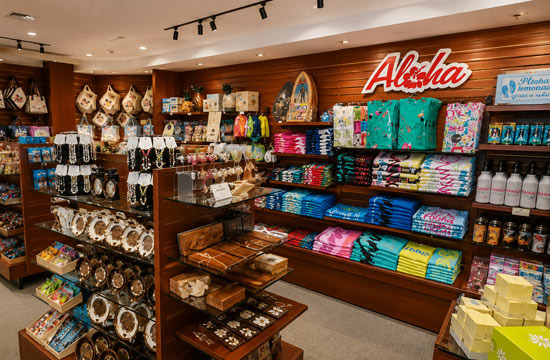
Aloha! This is the story of running a souvenir shop in Waikiki, a favorite item for Korean immigrants who settled in Hawaii in the 80s and 90s.
When you see the blue ocean, palm trees, and the crowds of tourists on Waikiki Beach, it's easy to dream, "If I just sell seashell necklaces or T-shirts here, I could build a fortune!"
However, behind this romantic wave lies the harsh reality of the 'Hawaiian business landscape' that is devoid of mercy.
Before opening a souvenir shop in Hawaii, it's essential to understand three key costs and the realistic survival conditions.
The cost of living index in Hawaii is a staggering 193. Haha.
This is nearly double the average in the U.S., a killer level of expense.
Here's how such high costs can drain a business owner's wallet, summarized in three points.
Waikiki is one of the most expensive commercial areas in the world.
The 'prime' locations that attract tourists have rental prices that are beyond imagination, and even within those areas, there are enormous premiums.
Whether business is good or bad, a massive monthly rent is deducted from your account like clockwork.
I'm reminded of a friend who sold goods in downtown LA and went bankrupt due to the crazy rent prices in the 2010s.
Moreover, the average hourly wage for service jobs (like hotel staff) in Hawaii exceeds about $14-15.
If you want to hire employees for your souvenir shop, you need to offer this level of pay to attract anyone.
Since a single owner cannot keep the store open 24 hours, even hiring just 2-3 employees can lead to fixed monthly labor costs in the thousands of dollars, returning like a boomerang.
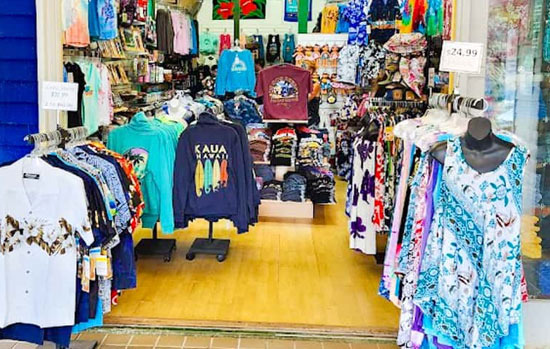
The key to souvenir sales is 'where you source your products and how much profit you make.'
Made in Hawaii: Locally made products are high-margin but require a significant initial investment due to high wholesale prices.
Imported: Low-cost imported souvenirs have a low unit price, but they are common products sold by everyone, making differentiation impossible except through price competition.
The real scary part of doing business in Hawaii is that while the weather is always warm, the 'temperature of sales' can vary dramatically.
During peak tourist season, it feels like you're raking in money, but when the off-season hits, Waikiki can become deserted, and sales can plummet.
However, fixed costs like rent and labor do not take a break during the off-season.
During the global recession of 2008-2009, Hawaii saw a drop of one million visitors, and tourist spending evaporated by about $3 billion. Many souvenir shops could not withstand the fear of the off-season and went bankrupt.
The structure is to earn a lot during the peak season and survive the few months of the off-season, but in times like today, with soaring prices and rents, that survival difficulty is at a 'hardcore' level.
While there may have been a time in the 80s and 90s when products sold easily, today's souvenir business in Hawaii relies solely on 'location' and 'product differentiation.'
If you haven't secured a prime location that perfectly aligns with tourist traffic or don't have exclusive local products (Made in Hawaii) that can only be found in your store, profitability remains shrouded in uncertainty.
 mintvalleybuilder1976
 SonataSoup
 MinneSonata

 Banana Style Life |
 crystalo |
 Investment Beginner Company Information Encyclopedia |
 Always Dreaming of Big Success |
 happy 9 |
 TEX MEX STAR |
 Hawaii Tourist Information |

 Vacation on Hawaii |
 Hawaiian Soft Tofu HASOON |
  Rhode Island Good People |
  Big North |
  Famous Attractions in the United States |
  Jin Soo V |
  Starbucks Reserve Roastery Closure |
  peppermint |
  Stable Co. |
  Purple Moons, |
  International Court |
  roma |
  horse |
  moodansa 77 |
  zymit |
  maplefox |
  Fun Flex Life |
  hopeful |
  Reeno |
  Coastal city |
  meonetoo |
  Winter bear |