
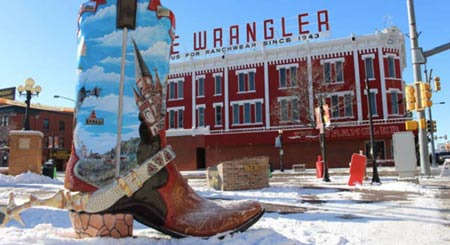
There's no topic more honest to discuss than the weather while living in Cheyenne. The weather here isn't flashy, but it definitely demands something from you.
If you want to live freely, you need to be ready to fight freely with the weather, in my opinion. To sum up Cheyenne's climate in one phrase, it's semi-arid continental. Summers are warm and dry, while winters are cold and snowy. The spring and fall between these two seasons are short but beautiful, which is another characteristic of this city. The distinct change of seasons felt strange when I first arrived, but now it's one of the reasons I love this city.
Let's talk about temperatures. January is the coldest month, with an average low of 14.8 degrees Fahrenheit, which is about -9.5 degrees Celsius. The hottest month is July, with an average high of around 81.9 degrees Fahrenheit, or about 27.7 degrees Celsius. It's much cooler than summer in Korea. This temperature difference is part of the charm of Cheyenne's four seasons. Summers aren't too hot, making outdoor activities pleasant, and while winters are definitely cold, they aren't as extreme as in the Colorado mountains. The elevation of 6,058 feet plays a role in keeping summer temperatures low. Due to the characteristics of a high-altitude city, there are days in summer when a jacket is needed in the evening. The amplitude of the seasons is the personality of this city.
Rain is not abundant. The average annual precipitation is 17 inches, or about 432 millimeters. June is the month with the most rain, while August is the driest. Due to the dry climate, a common piece of advice from locals is to take care of your skin. The low humidity makes the summer heat feel bearable, but the winter cold can feel dry and penetrating. Moisturizers become a necessity regardless of the season. Interestingly, once you get used to the dry weather, you may feel uncomfortable when traveling to more humid areas. It takes about a season for your body to adapt to this dryness, but after that, the air feels more comfortable.
Snow is something to take seriously. The average annual snowfall is 58 inches, or about 147 centimeters. Snowfall usually starts in November and continues until March. This means it can snow for five months. Of course, not all 58 inches accumulate every year, as there's a pattern of melting and coming back. Still, winter tires are not optional; they are essential. The road conditions on I-25 and I-80 can change rapidly due to snow, so it's a basic habit to check the weather app frequently. Before winter drives, you must check the WYDOT road conditions. I've witnessed many situations where people got into trouble by going out unprepared.
We can't forget about the wind. Cheyenne is located on the Wyoming plains, so there are many windy days. In spring, strong winds are especially common, significantly lowering the perceived temperature, so it's good to check the wind chill before going out. On windy days, it can feel much colder than the actual temperature. This is often the part that surprises newcomers the most. Knowing that the wind can make the same temperature feel colder than in other cities can help you adapt much better. A windbreaker is an essential item for survival in this city.
Sunshine is the pride of this city. There are an average of 236 sunny days per year. That's 65% of the year with sunshine. Even in winter, there are many days when it clears up beautifully after snow, making the sky look really pretty. With about 92 days of precipitation annually, that leaves 273 days without rain or snow. Many people say that it's this sunshine that helps them endure the winter. Before giving up on Cheyenne because of the weather, I recommend considering those 236 days of clear skies. The weather in this city is a challenge, but those 236 days of sunshine make it bearable.
 PoliceAcademy
 sungkim88




 TEXAS Fishing Boat |
 Study Abroad Life Know-How Tips |
 pravix22 |
 American Hardcore Band |
 Rice Shop Uncle BLOG |
 FROM Wyoming |
 Real Estate |
 celtics |
 logger |
 yenne |
  Park M.Y. |
  tredon |
  Poppin News |
  metsoo |
  dewyo |
  Casa Mia |
  Asparagus Blog |
  dorange |
  hiddenkong |
  some fame |
  Godory Life |
  Lime Juice |
  French fries |
  Rynex |
  Caribbean |
  Let's Be Like a Salt-like City Person |
  Belgray Miscellany |
  sweetvan |
  Augusta Univ |
  Round and Round Children's Song Kingdom |