

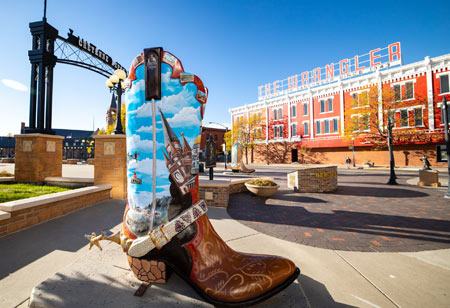
How should immigrants view Cheyenne? I have asked myself this question many times while living in Cheyenne.
When I first moved to this city, many people around me asked why I chose Wyoming of all places. It's not a big city, there isn't a Korean community, and it's not a famous tourist destination—so why this small town? To answer that question honestly, I need to discuss both the advantages and disadvantages. Cheyenne is definitely a city that suits the right people. However, it's also a place where those who don't fit in will realize it quickly. I will bravely discuss both sides.
Let's start with the advantages. The most noticeable one is taxes. Wyoming has no personal income tax. Compared to California, which can impose up to 13.3%, this difference accumulates over the years. There's also no corporate tax, which provides significant financial benefits for immigrants running small businesses or working as freelancers. Additionally, housing prices are reasonable. The median home price in Cheyenne is around $310,000, and rent for a two-bedroom apartment ranges from $1,100 to $1,400. In comparison to Denver or Seattle, it can be less than half. It's nice to be able to buy a home here and have extra funds for other things, rather than spending a lifetime trying to afford a house in a big city.
The people are also a plus. Generally, Wyoming residents are open and have a culture that cares about their neighbors. Immigrants don't often experience exclusion or uncomfortable stares. When I introduce Korean food, they show genuine interest, and discrimination due to cultural differences is rare. The safety is relatively good, which eases concerns for those raising children. With 327 days of clear weather a year and the geographical advantage of being at the foothills of the Rocky Mountains, it's an attractive environment for those who enjoy outdoor activities like hiking or fishing, with places like Curt Gowdy State Park nearby.
However, there are definitely downsides. The most significant is the lack of Korean community infrastructure. To find Korean ingredients, you have to drive 97 miles to Denver. There are almost no Korean churches, restaurants, or markets. It's also hard to expect Korean-language medical or legal services. At first, it may not seem like a big deal, but the absence of familiar things can weigh on your mind longer than you might expect. This feeling is especially strong during holidays or birthdays.
Winter is also quite challenging. The long cold from October to April and Wyoming's unique strong winds can be shocking for newcomers. When heavy snow falls, transportation in this city, which lacks public transit, becomes quite limited. Life is difficult without a car, and even with one, poor road conditions in winter can be quite inconvenient. For those used to milder climates, especially from Southern California or Texas, this can be the hardest adjustment.
The limitations of the job market also need to be addressed. It's not easy to find high-paying professional jobs in the private sector in Cheyenne. There are many positions related to F.E. Warren Air Force Base and federal or state government jobs, but options in fields like IT or finance are much narrower compared to big cities. This isn't a major issue for those working remotely or self-employed, but if you want to build a career locally, you need to do your research in advance.
In conclusion, Cheyenne is not a city for every immigrant. It's worth serious consideration for those who prioritize tax savings, a quiet lifestyle, natural surroundings, and reasonable housing costs, and who can live independently without a Korean community. On the other hand, if you desire a Korean network, diverse cultural infrastructure, and a vibrant city life, cities like Denver or Seattle may be a better fit. Either way, this city is honest. Those who fit in will settle quickly, while those who don't will realize it early on.
 JellyPower
 ORAVEZIN



 US Regional Information Local News |
 nero kim |
 OC Real Estate Business Information |
 Nevada Vegas UNLV |
 My Love DS |
 cantsay |
 yenne |
 heeve |

 Wenda |
  Roman Pan |
  Nuchuhan Exploration BLOG |
  Who's watching? |
  Strawberry Pancake Warrior |
  What can make money? |
  Egg Steamed Pot |
  New Jersey News Local Stories |
  Study Abroad Life Know-How Tips |
  Leapfrog Move |
  Finding Superfoods |
  COLO COLO |
  morixa |
  USA Hyundai Kia |
  My Town My Way Blog |