

The term defund, which may sound somewhat unfamiliar, essentially means to cut or reduce funding.
It refers to the method of eliminating or cutting budgets allocated to institutions, programs, or organizations, making their operations difficult, and it also includes preventing the execution of already allocated budgets. Often, the goal is to weaken functions by halting support altogether, and it can be used as a political pressure tactic.
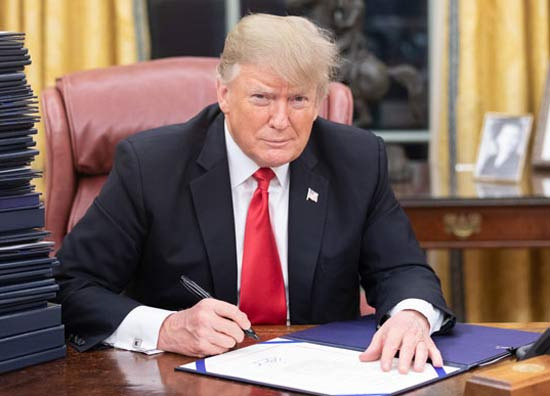
Looking at the cases where the Trump administration has reduced or completely cut funding, there is a notable consistency.
Broadly speaking, welfare and health, environment and science, international health, and culture and media sectors have been hit hard.
While the rhetoric is about "saving taxes and creating a smaller government," a closer look reveals that rather than saving money, safety nets are becoming weaker.
For instance, Medicaid, SNAP (food stamps), and support for Obamacare premiums have seen reductions and stricter conditions, and when support for low-income healthcare and food decreases, the impact is immediately felt by local hospitals and vulnerable populations.
Reducing medical expense support may seem like a way to save money in the short term, but in a few years, it leads to a surge in chronic illnesses and increased emergency room visits, resulting in greater costs, along with job losses and local economic downturns, ultimately affecting tax revenues.
The cessation of funding for family planning organizations like Planned Parenthood is also a symbolic case of defunding. Although the abortion issue was highlighted, the actual impact led to reductions in basic medical services such as contraception, cancer screenings, and STD testing, with rural and small-town clinics closing, leaving low-income women to experience the lack of care first.
While a political message was sent, in real life, prevention is hindered, leading to more expensive consequences later on. The environment and science sectors are almost always on the budget cut list.
By cutting the EPA budget and pressuring reductions in climate, air quality, and water quality monitoring personnel, the administration presented the logic that "deregulation = strengthening American economic competitiveness," but in reality, the necessary grants for tasks shifted to state governments were also reduced, resulting in a situation where "the responsibility is yours, the money is up to you."
Reducing monitoring personnel and research funding may keep things quiet until an accident occurs, but once it happens, the cleanup costs far exceed the savings from budget cuts. The reduction of WHO and overseas health support is also ironic for a country that has experienced a pandemic.
When U.S. support is withdrawn, budgets for HIV and malaria responses decrease, and the global monitoring network becomes lax, making early detection of the 'next disease' more difficult. In short, it feels like current savings are just deferring future risks.
Cuts to cultural, artistic, and public broadcasting budgets are also quite symbolic.
Even though their share of the total federal budget is minimal, the framing of "why use taxpayer money for the arts" leads to the first impacts being felt by rural libraries, public radio, and children's programs, which serve as light safety nets.
Leaving massive military and infrastructure spending intact while cutting education and cultural areas that citizens feel is more about political image than numbers.
Trump's style of defunding is less about cost savings and more about prioritization. It is less about "where to cut government operating costs?" and more about "let's cut from sensitive areas that won't face political backlash first."
And the repercussions gradually spread downwards. On the budget sheet, the cuts may appear as just a few lines of numbers, but what disappears on the ground are clinics that provided vaccinations, affordable contraceptives, air quality monitoring equipment, WHO collaboration networks, and a few lines of books from local libraries.
Thus, the defunding list appears not simply as "which budgets were cut" but as a list of "who will bear the costs instead."
Is it right to reduce costs? Or are we just pushing costs into the future?
I'm concerned that the aftershocks of what we lose may be greater than the money saved, and that the first to feel it will be ordinary people like us.







 El Dorado |
 lightyear |
 Moscow Kim |
 coloradoman |
 Montgomery Mom |
 garlic bread |
 Popular Song Exciting Song |
 Yo Lock Me Up |
 Burbank Lee |
 California Information News |
  Tonky |
  viroma |
  cookie |
  Live and that's it |
  Alright Twain |
  eatontown blog |
  HAWAII Korean Church News |
  Amore |
  linex |
  Balancework |
  laro90 |
  MEDBIO American Doctor Blog |
  SWAT TEAM BLK |
  DREAM BIG |
  frostbite |
  330 Forever My Love |
  dralix58 |
  Gorama Round |
  Skydiving |