

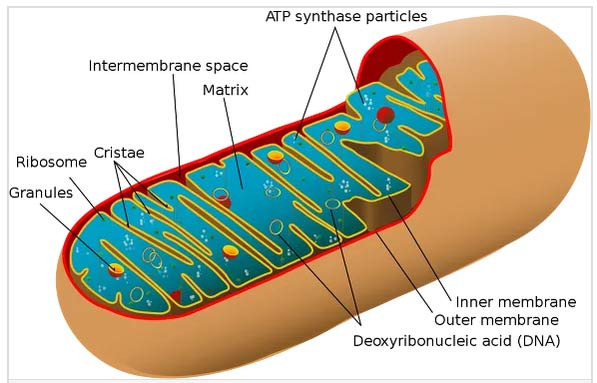
Think of a cell as a very small machine. Just as this machine needs a battery to operate, the cells in our body use a battery called 'mitochondria' to move.
However, mitochondria can lose power and become damaged over time. As we age, experience stress, or become ill, mitochondria can be harmed, preventing cells from generating sufficient energy. This can lead to fatigue and various diseases.
In short, mitochondria act like small power plants within cells. Just as a power plant burns fuel and goes through several stages of energy conversion to generate electricity, mitochondria oxidize organic matter to pull ions into the intermembrane space, creating potential energy, which is then used for ATP synthesis.
The concept explaining this process is the chemiosmotic theory. Cellular respiration occurs in three main stages: glycolysis, the citric acid cycle, and oxidative phosphorylation, with glycolysis taking place in the cytoplasm and the other processes occurring in mitochondria. If mitochondrial function declines, ATP production decreases, leading the body to feel energy-deficient, resulting in easy fatigue and difficulty regulating body temperature.
To compensate, metabolism may increase excessively, causing weight loss or increased sensitivity to cold, and in severe cases, various diseases such as stroke and muscle issues may arise. For this reason, mitochondria can be considered a crucial structure for sustaining life.
There is originally a system in the body that can gradually replace damaged mitochondria. Healthy cells share their mitochondria with sick cells, but the problem is that this process is too slow and cannot sufficiently replenish what is needed.
Therefore, some scientists began researching whether there could be a faster and easier way to replace cellular batteries.
A research team from Texas A&M University conducted experiments by creating very small nanostructures and introducing them into stem cells.
Stem cells are special cells that can transform into various types of cells. By introducing the nanostructures, they helped mitochondria within the cells to be replaced more quickly, ultimately showing the potential for cells to regain their strength.
Although it will take more time for this research to be fully applied in real life, if it successfully develops, it could greatly assist in recovering weakened bodies or damaged tissues due to aging or illness. In simple terms, it means that a technology could emerge that replaces the batteries in our bodies with new ones.
One day, there may come a time when we can replace cellular batteries to regain health when we feel tired or become ill. While we are currently in the research phase, this is why the future is promising.







 Tora Tora |
 neroyo |
 nivex85 |
 Old English |
 nixxon |
 nova nova |
 TwinBee |
 Living in the Eastern United States |
 Whisper |
 MintO |
  dralix58 |
  Gorama Round |
  Skydiving |
  dreamport |
  Yellow Snowman |
  Toaster Pizza Magic Show |
  velvetnom |
  Anytime Journey |
  Mrs. Duluth |
  jaxter |
  Atlanta Mama |
  Baguette Blog |
  US Embassy |
  Korean Mom |
  My NYC |
  moo moo |
  Mr Oh |
  forevergee |
  festival |
  manchester |